

As a London Tour Guide for well over a decade, I know that many of my visitors find the public transport system in London to be a little overwhelming.
One of the questions I get asked about the most, "What's the best way to travel through London?"
My answer is almost always: The London Underground! But if you're going to take the tube, what's the best way to pay?
There are more options than you might initially think.
So, I've put together this post to compare and contrast different Oyster Cards and Travelcards.
I'll also give you information on using your contactless debit/credit cards (my choice!) or Apple or Google Pay while you use the London Transport Network.
- What is an Oystercard?
- Using Contactless Debit or Credit Cards
- Using Apple Pay or Google Pay
- Benefits of an Oyster Card
- Visitor vs. Regular Oyster Card
- Travelcard
- Group Travelcard
- Which One, If Any, Should You Buy?
- Tips On Using the Underground
- Things to Do in London
WHAT IS AN OYSTER CARD
An Oyster Card is a plastic smart card, which you can use to store money for rides on the London Underground and throughout the London public transport system (known as TFL).
This also includes buses, trams, DLR, London Overground, Elizabeth Line, TFL Rail, most National Rail services in London, the IFS Cloud cable car, and Uber Boat River Bus Services.
Essentially, they replaced paper tickets and allow you to avoid buying a ticket each time you ride.
I always found Oyster Cards super convenient! Rather than inserting a ticket, I just tap my Oyster onto the yellow card readers on the ticket barriers at the start and end of my journeys.
It might seem like that's not much of a time saver but I quite vividly remember a time where Oyster Cards were not widely used and how long it would take some people to faff around with their paper tickets!
There's nothing quite like holding heavy bags of shopping while standing behind somebody struggling to insert their ticket into the slot...
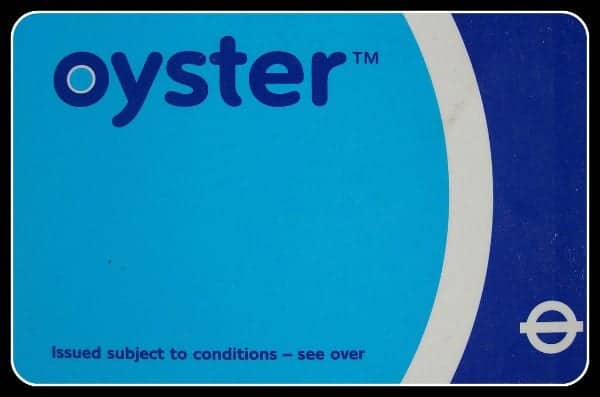
There are 2 different types of Oyster Cards: a Visitor Oyster Card and a Regular or Standard Oyster Card.
They function in essentially the same way but with a few key differences.
For example, both cards operate on a pay-as-you-go basis, but only the Regular Oyster Card can also load travelcards, which are 1 day, 7 day or 1 month passes.
I explain more of these differences in the following sections.
Truthfully, I find picking up a regular Oyster Card at the airport when I pick up any visiting guests to be better than ordering a Visitor Card in advance.
But I am definitely "a planner" so I appreciate that some people may like to have it done and dusted before they leave home!
NOTE: You will need one Oyster Card per person!
I've seen many people caught out by this - you can't tap "in" the barriers more than once on the same card.
Children under the age of 11 can travel on all London transport networks for free (including the Underground, Overground, some National Rail Services and buses), provided they are with an adult who has a valid Oyster Card, Travelcard, or single-ride ticket.
Children aged 5 - 10 can travel for free with the Zip Oyster Photocard.
Honestly, I have never found a need for this, as when I'm with my young niece or nephews, they just come through the barriers with me.
NOTE: When travelling with kids, I always head to the larger gate designated for wheelchairs, suitcases, prams and, indeed, small children.
Children from 11 - 15 who live in the UK qualify for a Zip Oyster Photocard (free travel). This also comes with a one off £15.00 admin fee.
However, if you're just visiting, you can take advantage of the Young Visitor Oyster Discount, which is a concession added to a regular Oyster card and is valid for 14 days.
Single fares and daily cap for the underground and buses are 50% cheaper than adults with the above concession.
I've done this twice and it's very straight forward but some people might be disappointed to hear that I had to speak to a member of staff at an Underground station to set it up - I couldn't do it on the machines.
Also, I discovered (to my dismay) that the child in question had to be with me when I went to add it to the card!
That merited me a needless trip to the station so don't make the same mistake I did.
NOTE: The TurboPass, one of the tourist concession passes, includes a Visitor Oyster Card for free.
Using Contactless Debit and Credit Cards

Contactless payment cards are now accepted across all London transport networks and work in the same manner as an Oyster Card. See if yours is valid here.
I will never go back to an Oyster Card now that I can use my debit card on TFL services.
And I don't know a single person who still uses an Oyster Card.
The vast majority of Londoners now simply use their contactless debit/credit cards rather than an Oyster Card - and you can, too!
I always recommend this as the easiest way to pay for your travel in the city.
But, please make yourself aware of your bank's policies and card issuer policies before you travel.
Most contactless cards will work including Visa, Mastercard and American Express, but you may be subject to foreign transaction fees.
My grandfather got stung by his banks fees and didn't realise until it was too late.
The reason I'm such a big fan of travelling this way is there is zero preparation needed when I want to travel.
I just tap in and out with the card I already carry around with me.
And I don't ever need to "top up" like I used to with my Oyster Card.
I've found there are fewer frustrating things in life than waiting ages for a bus in the pouring rain, only to find out my Oyster Card had insufficient funds when I finally tried to board!
What's more, contactless cards are also subject to the same price capping as an Oyster Card.
So, I never pay more than I would have spent if I had purchased a daily travel card.
This also enables to me to take advantage of the Bus Hopper fare.
This is a single payment that gives me unlimited journeys within 1 hour of tapping onto the first bus!
As an aside, I always recommend trying to take the buses in London a few times if you can.
Our Underground system is incredible but I find that taking the bus enables some sightseeing while travelling which is nice to make the most of my time.
To learn how to use the cards and other tips on using the Underground, read my post on navigating the London Underground.
However, I do know of some people who prefer not to use their contactless cards on TFL and I have explained further under the Apple Pay section below.

Using Google Pay or Apple Pay
If you have Google Pay or Apple Pay on your smartphone or smartwatch, then you don't need to buy an Oyster card, or a travel card, at all.
These two payment methods will get you the exact same rates, and price capping (listed below) that you would be subject to when using an Oyster Card.
As with contactless credit and debit cards, you are also able to take advantage of the 'bus hopper' fare.
(However, you won't get the same concessions available with the Visitor Oyster Card.)
I am rubbish with technology, so don't use my Apple Pay often, but it is nice to know that should I misplace my card (it's happened more than once...usually at a pub), I can still get home with the card linked to my phone.
I've had to buy Oyster Cards for a single journey home after losing my debit card before which was very annoying.
In the interest of fairness, I have noticed quite a few comments on our London Travel Tips Facebook Group made by people who say they don't like using their contactless cards or their Google/Apple Pay on the TFL Network.
This is because some of them are nervous about having their cards or phones stolen (something to be aware of - but not afraid of - in my opinion) or misplacing them as they take them in and out of their pockets and bags.
Benefits of Using an Oyster Card
In the list below, I will lay out the general benefits of an Oyster Card, whether it's a Visitor or Regular Oyster Card.
But remember, all of these benefits and rates apply to visitors using their contactless cards, Google Pay, and Apple Pay.
Cheaper Than Single Paper Tickets
A few years back, TFL changed the fares for paper tickets by raising them quite a bit.
In fairness, I've noticed the rates go up nearly every year in the 20 I've spent here, but this was a deliberate choice to try to stop people purchasing paper tickets.
I can tell you with absolute authority that it has worked!
This means almost any way I pay, I'll spend less than I would for a paper ticket.
As you can see below, most visitors traveling in Zones 1 and 2 can save between £2.50 and £3.50 per ride.
| Zones Traveled | Single Ticket Adult | Single Ticket Chld | Oyster and Contactless Cards (Peak) | Oyster and Contactless Cards (Off-Peak) | 7-Day Travelcards |
| 1 | £6.70 | £3.30 | £2.80 | £2.70 | £42.70 |
| 1-2 | £6.70 | £3.30 | £3.40 | £2.80 | £42.70 |
| 1-3 | £6.70 | £3.30 | £3.70 | £3.00 | £50.20 |
| 1-4 | £6.70 | £3.30 | £4.40 | £3.20 | £61.40 |
| 1-5 | £6.70 | £3.30 | £5.10 | £3.50 | £73.00 |
| 1-6 | £6.70 | £3.30 | £5.60 | £5.60 | £78.00 |
I have noticed that the vast majority of visitors I meet on my tours are staying within Zones 1-2, central London, although some have hotels or Air B&Bs outside of the city centre.
If you are flying in and/or out of Heathrow Airport (I'd say around 75% of my tour guests come in this way), then your fare would be from Zone 6-1, or to wherever your final destination is.
The Elizabeth Line to Heathrow Airport is priced differently - any journey to Heathrow that begins, or passes through Zone 1, is priced at £12.20 - £13:30, depending how far east you travel.
Don't be put off by the higher price, though! I find the Elizabeth Line to be a quick and convenient way to get to the airport, and sometimes worth the extra money.
(Although the Piccadilly Line is still my top choice for myriad reasons. You can find out more on my post about Travelling to Heathrow Airport.)
Children under 11 travel for free and there is a 50% concession on Oyster Card fares for children 11-15 years of age with the Young Visitor Oyster Offer.
Daily Limit
In addition to cheaper individual rides, when traveling with an Oyster Card, a 'cap' is automatically applied once you reach a certain amount each day.
This has been my favourite change to the London transport network since I moved here!
The daily cap means the most I will ever spend in one day when traveling within zones 1 & 2 with an Oyster Card is £8.10.
For the Young Visitor Offer (ages 11 - 15), the cap is £4.05.
I used to find it so tricky trying to work out if it was going to be worth it for me to buy a daily travelcard or not.
Now I don't even have to think about it!
No matter how many times I tap in and out, I'll never be charged more than I would have if I'd bought the daily card.
NOTE: There are different caps for each zone as the cost of travel depends on the distance you go and the time of day.
Here you can see my recommendation of how much to put on your card per day, but you can see the full price and cap table here.
Buses also cap out at £5.25 per day (with each ride costing £1.75).
As I mentioned, contactless debit and credit cards are also subject to price capping which is another reason why this is what I choose to use.
Hopper Fare on Buses
This is probably my second favourite change to TFL fares in the time I've lived here.
The Hopper Fare means that I can switch between as many buses as I like within 1 hour of tapping on the first one - without being charged more than the initial £1.75 fare.
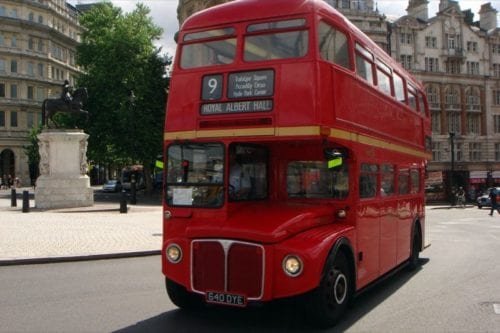
I love this as I really enjoy traveling by bus (I've lived here for 20 years but still like to watch the city pass me by) and will sometimes choose to take a number of buses as I travel through town and nip into shops.
Previously, that would sometimes cost me more than it would have for a single tube journey, but this slashes my costs considerably!
Also, I've noticed that some people underestimate the side of our city...London is huge and many journeys require that you take 2 or more buses to get there.
With the hopper fare, you will only need to pay £1.75 total for all of those rides as long as the total time does not exceed 1 hour.
(Note that the hopper fare is applicable for all journeys made by bus & tram!)
Valid to get to and from Central London Heathrow and Gatwick Airports
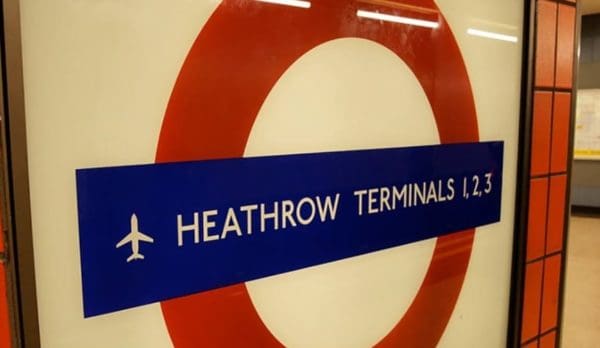
Heathrow Airport is at the very end of the Piccadilly Line (and the new Elizabeth Line) and therefore can be reached via the Underground with an Oyster Card or Travelcard.
Unfortunately, Oyster Cards do not work on the Heathrow Express - yet!
Gatwick Airport, which is not on an Underground Line, can only be reached by bus or train.
However, I can still use my contactless card (or an Oyster Card) on the buses and trains to Gatwick Airport. I just tap on at Victoria and off at the Airport.
Contactless is also usable on the Gatwick Express - the fastest way to get to the airport.
I do sometimes choose the Gatwick Express and you can see why it might be the best way for you to travel by reading my blog post on the topic.
Oyster Cards Never Expire
A topic that I see come up a lot on our London Travel Tips Facebook Page is Oyster Card expiry dates.
The easy answer to this is: They don't expire!
If you plan to visit London again in the future, then you can simply hold onto the card and it, as well as the money on it, will never expire.
When I got married, I bought a bunch of Oyster Cards for my friends and family flying over.
Everybody used their cards and left them with be when they returned home.
For some of them, I was able to return the card and withdraw the remaining money that was loaded onto it.
But I held on to some of them and routinely use those for my visitors.
NOTE: I get my refunded Oyster Card credit by using the automated machines at the stations.
It's capped at a maximum of £10, however.
VISITOR OYSTER CARD
Truthfully, I don't find much value in a Visitor Oyster Card.
However, I am friends with people who are big-time planners and like to have eeeeeeverything set up in advance so if you're in that category, this could be the option for you.
The Visitor Oyster Card can be purchased in advance and mailed to you anywhere in the world.
It comes pre-loaded so you don't need to even think about topping up when you arrive.
To me, this is the biggest/sole benefit of a Visitor Oyster Card.
However, one upside that I do find some people take advantage of is that there concessions that can be applied to certain restaurants and tourist attractions with the Visitor Oyster Card.
But, in my opinion, none of the deals are that spectacular and I generally see much better offers with a tourist attraction concession pass but check out their list in case any appeal to you.
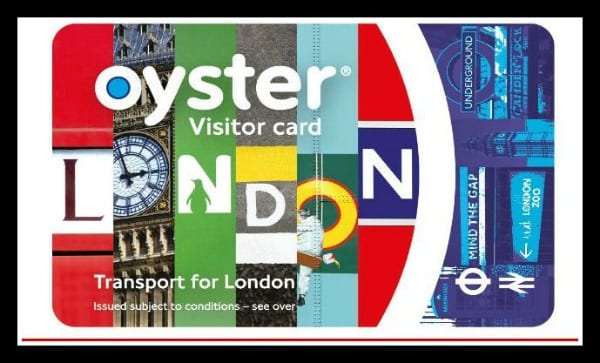
Adding money to your card is easy and I explain this process in the next section.
However, there are a drawbacks to the Visitor Oyster Card.
Firstly, it costs £5 PLUS postage for the card to be sent and it has to be preloaded with a minimum of £10.
Secondly, you can't register a Visitor Oyster Card, something you can do with a Regular Oyster Card.
So, if you have a tendency to lose things (remember what I said about leaving my cards in pubs...), then this might be a consideration for you.
The larger drawback is that you can't apply any of Travelcards (these are explained later) longer than 1-day to the Visitor Oyster Card.
NOTE: The TurboPass, one of the tourist concession passes, includes a Visitor Oyster Card for free.
Ultimately, if you want to have your card before arriving in the UK, or are not likely to benefit from a travelcard, then buy a Visitor Oyster Card.
Otherwise, I say you may as well just get the regular Oyster Card - or use your contactless card as I do.
Regular Oyster Cards are very simple to buy and can be purchased all over the city, including the airports.
I also want to mention that I always see staff at the Heathrow Airport Underground Station (something I can't say for many of the stations on the network).
So, if you are worried at all about figuring out how to do it on your own, don't worry, I guarantee there will be somebody there to help you!
REGULAR OYSTER CARD
Just about everybody who lives in London used to have an Oyster Card!
These days, however, most of us use our contactless cards instead.
These days I also see more and more locals scanning their phone or watches when going in and out of the tube barriers.
However, some people still like to use an Oyster Card.
I mentioned above that I know some people who are wary of flashing their smart phones and credit cards around, or who are worried they may lose them while constantly taking them in and out of their pockets or bags.
So I do think this could still be the best choice for some visitors!
NOTE: Oyster fares are the same fares you will pay using your contactless cards, phones, or watches. Another reason why I stopped using one as soon as I got my contactless debit card.
To load money onto an Oyster Card, just simply tap it at one of the self-service machines at any Underground or Overground Station.
Or, you could top up at any of the roughly 4000 shops in London where you see an Oyster Card sign - known as Oyster Ticket Stops.
When I had an Oyster Card, I utilised this a lot as there are no machines to top up Oyster Cards at bus stops - but there is often a small corner shop nearby where I could do it.
You can also top up your Oyster Card at a Transport for London visitor centre, including Heathrow Airport, Kings Cross St. Pancras International Station, Victoria Station, Piccadilly Circus Station, and Liverpool Street Station.
It is very simple to do and I will walk you through this process in the next section.
The other options are to load your Oyster Card with a 1-Day-Travelcard , a 7-Day-Travelcard, a Monthly Travelcard, or even a Yearly Travelcard.
I find the 1-Day card pointless as the daily price cap will take care of this for you automatically and as of 2025.
I explain more about Travelcards and when you should choose them later in this post.
Oyster Cards are reusable so you can load and reload your card as many times as you need to while you’re here.
Visitors can even take their Oyster Cards back home with them and either keep them as souvenirs or hold onto them until their next trip to London.
I have friends who are using ones over a decade old!
How to Buy a Regular Oyster Card
To get yourself an Oyster Card you can simply go to the window at any London Underground Station, including Heathrow Airport, and request one, or use some of the many self-service ticket machines at any Underground Station.
It costs £7.00 for an Oyster Card (yet another reason I like to use my contactless card). This fee used to be refundable but now is not.
But, remember, unused money on your card can be refunded!
I have done this multiple times and I find it very easy to do at one of the self service machines.
However, again, the money you have loaded onto your Oyster Card does not expire, which means if you don’t spend it all before you leave, it will remain on your card until your next visit.
My father went 5 years in between visits once and used the same cash he had left over on his card!
So if you plan to come back, and I think you should...) simply hold onto your card.
Of course, for those who like to plan in advance, it is possible to order a pre-loaded Visitor Oyster Card to be sent to you before you even leave the house!
How to 'Top Up' an Oyster Card
I know I keep going on about how much I prefer to use my contactless card...but I'm not going to stop!
When using contactless, or Google or Apple Pay, topping up is a step I get to skip.
However, for those of you still wishing to use an Oystercard, topping up isn't difficult.
You simply go to a kiosk inside any Underground station and tap your Oyster Card on the card reader.
Select how much money you want to add to the card. Pay that amount either by credit/debit card or cash.
Then tap the yellow card reader again to close the deal. Watch the video below for a visual guide.
But, make sure to keep an eye on the top of machine to see if it accepts cash!
Many of them don't nowadays and I have seen far too many people get to the payment stage before realising they can't use their coins to top up.
This means they have to cancel the purchase and queue up to use a different machine.
Alternatively, as mentioned above, you can also add money to your Oyster Card at any of over 4000 shops that have the blue "Oyster Card" sign in their window.
These are called Oyster Ticket Stops.
These are literally EVERYWHERE, so don't worry about not being able to find a place to top up. You can even find out where the nearest one is online.
I always recommend keeping an eye out as the little store you might nip into to buy a packet of gum or a bottle of water could be a convenient place to top up while you're there.
The one thing you should be mindful of is that you cannot top up your Oyster Card on a bus or at a bus stop.
This is when those Ticket Stops would come in handy for me, as many of them were near bus stops I frequented.
If you board the bus and it flashes red for insufficient funds, the driver will tell you to leave.
I have had this happen multiple times and saying it's frustrating doesn't really cover it!
So make sure you've got money on your card before getting to a bus stop - that's a lesson I had to learn the hard way.
How Much Money Should You Add?
Because of the daily caps, you can have some certainty as to how much you need to add to your card.
Below is an example that assumes that you will be flying into and out of Heathrow Airport (during peak hours), will otherwise travel exclusively in Zones 1-2, and also assumes that you will reach the cap each day.
These prices could be slightly higher or lower, so do check out the fare table to make your calculations.
- 1-Day - £20.00 (see note below)
- 2 Days -£31.50
- 3 Days - £45.60
- 4 Days - £60.80
- 5 Days - £76.00
- 6 Days - £91.20
- 7 Days - £106.40
You can also use the single fare finder on the Transport for London website to help you budget: www.tfl.gov.uk
TRAVELCARDS
Travelcards are prepaid cards that give you unlimited access to specific zones within London.
You can choose to either order these in advance (in which case you will be given a paper Travelcard) or you can buy them upon arrival (in which case you will be using a plastic Oyster Card with the Travelcard loaded onto it).
They work in the same way and can both be used on the Underground and buses and also give you a 3rd-off concession on Uber Boat Thames Clipper rides.
(To me, this is the only benefit of a Travelcard! I love the Uber Boats.)
The only difference is that you must pay shipping and handling fees to receive the paper card, and in my opinion, these are much easier to lose!
As mentioned above, there are 4 different durations of Travelcards, but the most pertinent to visitors are the 1-Day Travelcard or the 7-Day Travelcard.
(There's also a 1 month and 1-year Travelcard, although the only people I know who have one of those are people who commute into the city daily which U've noticed is even less popular post-pandemic.)
However, there's little reason you would ever need the 1-Day Travelcard as there is already a cap on Oyster Cards that limits the amount you can be charged per day (£8.10).
Since 2024, daily Travelcards are valid for zones 1-4 or 1-6 and cost almost double the daily price cap (£15.90).
So, if you're only travelling through zones 1 and 2, you'll spend more with a Travelcard than you would if you'd just used pay-as-you-go/contactless cards.
(Do I need to mention again how easy I find it to just use my contactless card?
The automatic daily cap just can't be beat. Well, almost...read below.)
However, one benefit to mention is that the 1-Day Travelcard makes you eligible for the 2-1 ticket program when your travelcard is purchased from National Rail stations.
In my opinion, this is the biggest bargain you can get in London! Many of London's top attractions allow you to get 2 tickets for the price of one when you show a valid travelcard.
Before I got a membership, I would use this offer for entry to the Tower of London and my friends and I would literally split the cost of a single ticket - it saved us £15 each!
A 7-Day Travelcard can be worth your while, as a 7-Day Travelcard for any zones costs £42.70 which works out less per day than the £8.10 daily cap.
If I have friends or family visiting, or I have been booked for multiple private tours in a week, I will sometimes go for this option as I know it will be worthwhile for me.
It might also be worth considering if you purchase it through the London Public Transport Card, which includes a free private airport transfer.
For children aged 11-15 a one 1-Day Travelcard is £7.90 - but a one day price cap is just £4.25 (or £1.80 for off peak travel).
GROUP DAY TRAVELCARDS
If you are visiting with 10 or more people, then a Group DayTravelcard may be the way to go.
All ticket holders must travel at the same time for the tickets to be valid, so keep that in mind!
I have found this particularly useful for bachelorette and birthday parties when my group of friends from all over convene in London for a weekend.
Group travel cards are valid Off-Peak only so they are usable from 9:30 on Mondays to Fridays but any time on weekends and holidays.
Group travel cards cover Zones 1 - 6 and cost £10.50 for adults and £5.20 for children aged 5 - 16.
These can be purchased in advance or from ticket machines at Underground stations - which is usually what I do.
WHICH ONE, IF ANY, SHOULD YOU BUY?
As I said above, if you have a contactless card or Google Pay or Apple Pay on your smartphone or watch, just use that!
If you don't, read below to find out the best option for your travel needs.
Truthfully, the best method for you will likely depend on what it is you want to do and where you want to go! Note that the London Underground Map is divided into 9 different zones.
Zones 1 and 2 are in the centre, where most of the popular visitor attractions are.
I usually tell my guests that if they aren't planning to travel to Windsor or Wimbledon, to just ignore everything past Zone 2 on the map.
I often travel to Zones 3 and 4 because I have friends that live there.
So, unless you're visiting friends and family I highly suspect you won't need to worry about the higher numbered zones.
(Although your trip from the airport should be considered, of course.)
When traveling across London, it’s worth remembering that the further outside of Zones 1 and 2 you need to go, the more expensive your journey can become.
As a general rule of thumb, you can determine which ticket will be best for you depending on the length of time you are in town.
In London for 6 Days or Fewer
Pay-As-You-Go! The best part of Oyster Card (or contactless debit/credit card) Pay-As-You-Go is that you will never be charged more than it would cost to purchase a 1-Day-Travelcard.
In fact, since 2024, the daily cap is almost HALF the cost of a Daily Travelcard.
Note: Oyster Card Pay-As-You-Go can also be used on the Uber Boat services!
I also want to mention that just as I recommended occasionally taking a London bus, you should definitely take a boat, too!
I love cruising along the river on a nice day. And there's a bar on board with some above-average rose'...
In London for More than 6 Days:
Travelcard! A 7 Day Travelcard is cheaper than 7 daily price caps.
I occasionally have people on my tours who are studying in London for a semester and, if you are doing similar, you may find a Monthly Travelcard to be worth your while.
They're around £164.00 which means £5.46 per day, if you travel each day.
That's a great bargain so I do encourage people to look at these, even though they aren't applicable for most of my visitors.
What are the Ticket Rates for 1-Day-Travelcards?
Rates vary depending on how many zones you want to cover.
Zones: Most London attractions are within Zones 1 – 2 but a Zone 1 – 6 covers (almost) absolutely all of them, as well as Heathrow airport!
(Technically we have 9 Zones in London but I would be shocked if you were going any further than Zone 6 while you're here.)
Travelcards used to have peak and off-peak pricing but this is no longer the case.
I really like that as I find the timings to be the most confusing thing for visitors I've met!
However, single fare journeys are still subject to differing hours, which I've put into the chart below.
NOTE: Don’t forget that you can get the 1-Day Travelcard with a London Public Transport Pass, which also provides a private transfer from the airport to the city centre.
If you need both services, this could be a good way to lower the overall price you’ll pay for a 1-Day Travelcard.
| Ticket Type | Rate | |
| 1-Day-Travelcard Zones 1 - 4 (Adult) | £15.90 | |
| 1-Day-Travelcard Zones 1- 4 (Child) | £7.90 | |
| Single Fare in Zones 1 - 2 (Cash) Peak: Monday to Friday from 0630 to 0930 and from 1600 to 1900. | £6.70 | |
| Single Fare in Zones 1 - 2 (Oyster Pay-As-You-Go/Contactless) Monday to Friday from 0630 to 0930 and from 1600 to 1900. | £2.80 | |
| Single Fare in Zones 1 - 2 (Cash) Off Peak: All Other Times | £6.70 | |
| Single Fare in Zones 1 - 2 (Oyster Pay-As-You-Go/Contactless) Off Peak: All Other Times | £2.70 | |
| Bus Journey (Oyster Pay-As-You-Go or Contactless) | £1.75 | |
Anything Else?
I have some more interesting facts on our blog.
Remember, this guide is only an overview of the most popular, cheapest, and easiest tickets you may need while you are in London.
For more information, including tickets for children, travel beyond Zone 6, or bus and tube maps please see the Transport for London Website: www.tfl.gov.uk.
If you found this post helpful, please share this with friends and family!
Also, be sure to check out our London walking tours.