

March is a great time to visit Charleston if you want to experience the city before the heat and humidity of summer arrive. Charleston weather in March can vary quite a bit, though. Early March can still feel chilly, while afternoons later in the month can be pleasantly warm.
As both a tour guide and a retired meteorologist, I can tell you that March is one of those months when it's best to be prepared for changing conditions. You may start the day in a jacket and end the afternoon comfortably in a short-sleeved shirt.
Charleston Temperatures in March
March temperatures gradually warm as the month progresses.
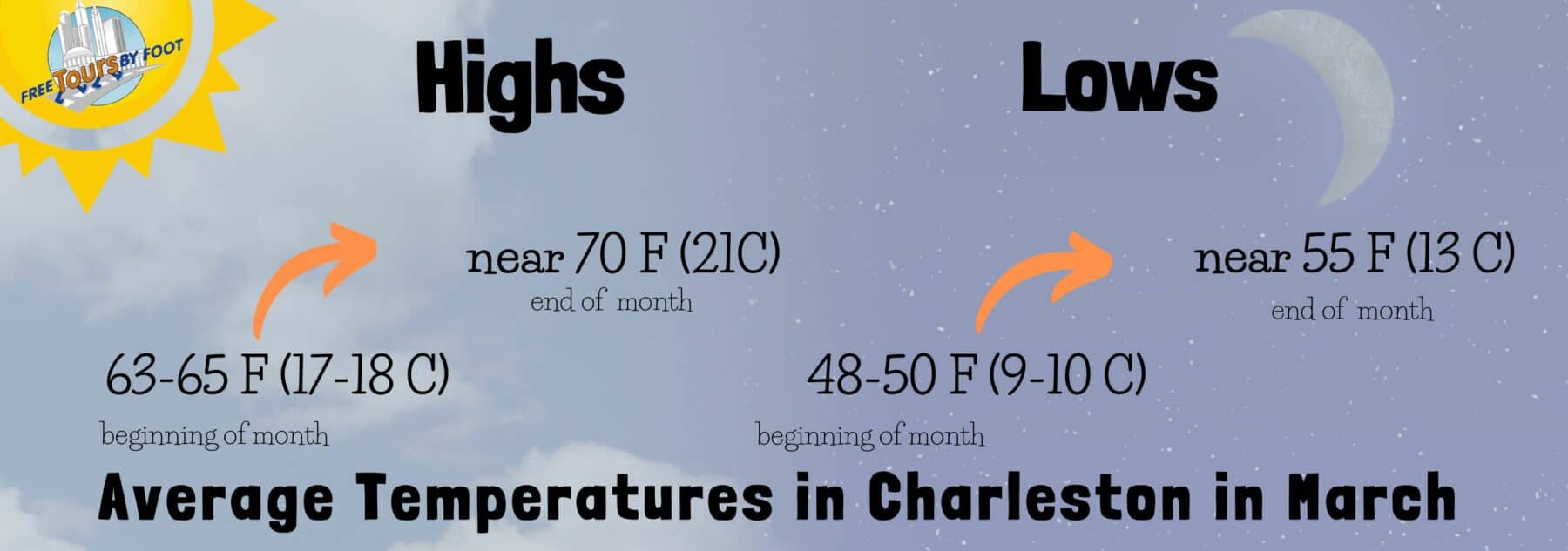
Based on the 1991–2020 climate normals for downtown Charleston, the average March high is about 66°F (19°C) and the average low is about 52°F (11°C).
Early in March, overnight and early-morning temperatures can still be in the 40s, while afternoons are often in the 60s. By the end of the month, warmer afternoons become increasingly common.
A few days can be considerably warmer. Charleston can reach the upper 70s or even 80s during a warm spell, particularly later in March.
At the same time, don't assume that spring means consistently warm weather. Cold fronts can still bring chilly mornings and afternoons, especially early in the month.
Bottom line: March in Charleston is generally mild, but you'll want to pack layers.
Sun and Rain in Charleston in March
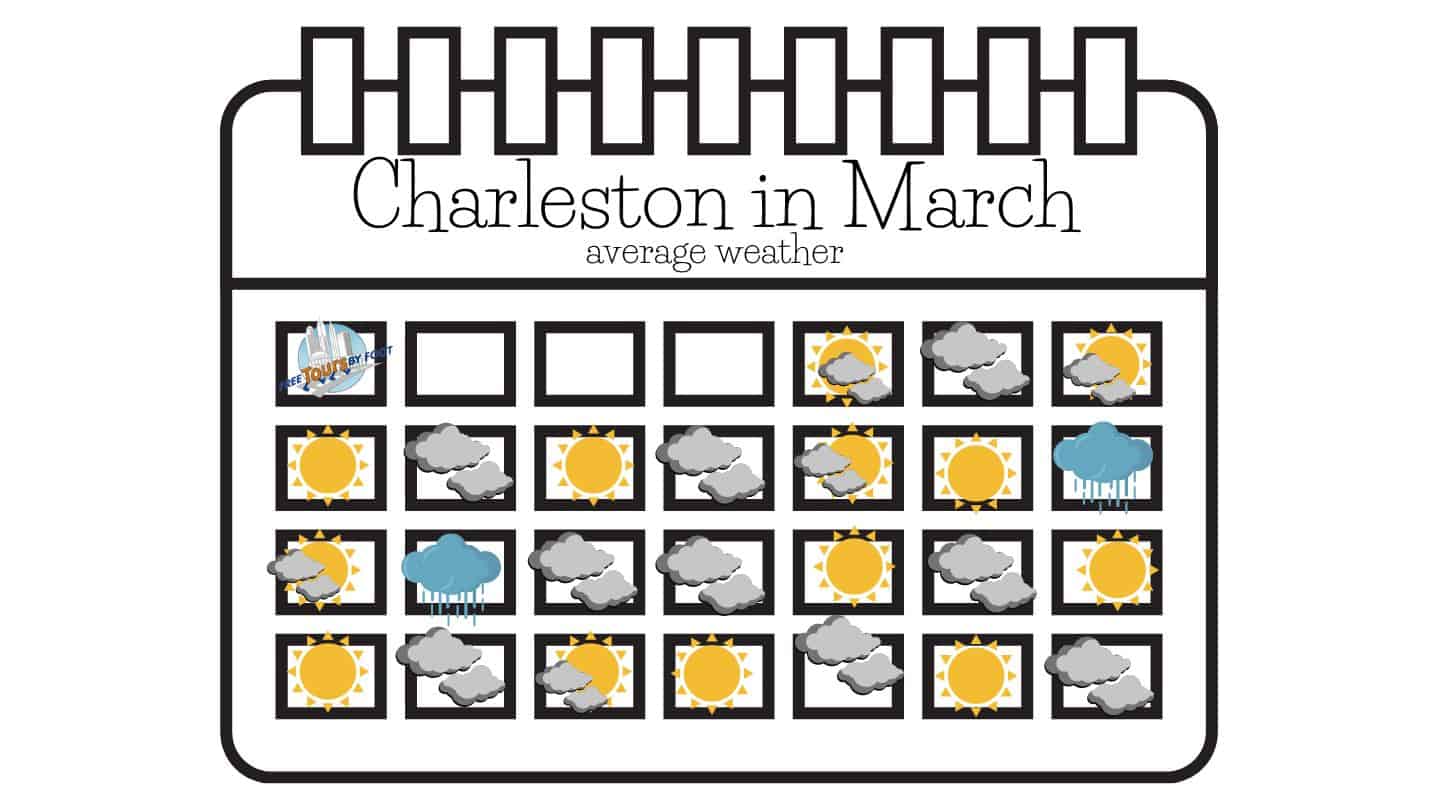
March can bring a mixture of sunshine, clouds, and rain.
Charleston typically receives several inches of precipitation during March, so there's a reasonable chance you'll encounter a rainy day during your visit.
The good news is that rain doesn't necessarily last all day. Spring weather systems can move through relatively quickly, followed by clearer and more comfortable weather.
If you're planning to take a Charleston walking tour, I recommend checking the forecast the morning of your tour and bringing a compact umbrella or lightweight rain jacket if rain is in the forecast.
Snow is extremely unusual in Charleston in March.
Daylight in March
One of the nice things about visiting Charleston in March is how quickly the days get longer.
At the beginning of March, Charleston has about 11½ hours of daylight. By the end of the month, there are about 12½ hours of daylight.
That gives you considerably more time to explore the historic district, visit attractions, enjoy a harbor cruise, or take a walking tour.
Daylight saving time also begins in March, so sunset gets noticeably later during the month.
Wind in Charleston in March
March is generally a fairly breezy month in Charleston. Average winds are moderate, although conditions can become noticeably windier when a cold front or storm system moves through.
A light jacket or sweater can therefore be useful even when the thermometer suggests comfortable temperatures.
This is particularly noticeable near the waterfront, where a breeze can make a 60-degree afternoon feel cooler.
Ocean Temperatures in March
If you're hoping to spend time swimming in the Atlantic, March is generally too cool for most visitors.
Ocean temperatures around Charleston are typically in the low-to-mid 60s°F during March. That's fine for walking along the beach, but most people will find the water too chilly for extended swimming.
March is much better suited to enjoying Charleston's beaches, waterfront, and outdoor attractions without planning your trip around swimming.
What to Wear in Charleston in March
What you wear in Charleston in March depends partly on when you're visiting.
For most March trips, I recommend packing:
- Long-sleeved shirts
- A sweater or light jacket
- Jeans or other long pants
- A few short-sleeved shirts for warmer afternoons
- Comfortable walking shoes
- A lightweight rain jacket or compact umbrella
Layers are the key to dressing for Charleston in March. Mornings can be cool, afternoons can become quite comfortable, and temperatures can change quickly when a front moves through.
And don't underestimate the importance of comfortable shoes. Charleston is a walking city, and you'll likely spend a lot of time exploring the historic district on foot.
Is March a Good Time to Visit Charleston?
Yes. March is one of my favorite times of year for exploring Charleston.
The weather is generally much more comfortable for walking than it is during the hot and humid summer months. The days are getting longer, spring is arriving, and there are plenty of opportunities to enjoy Charleston's historic streets and outdoor attractions.
The one thing to keep in mind is that Charleston weather in March can be unpredictable. A beautiful 75-degree afternoon can be followed by a chilly day when you need a jacket.
That's why I recommend packing layers rather than planning your entire wardrobe around warm weather.
Things to Do in Charleston in March
March is a particularly good month for outdoor sightseeing because temperatures are generally comfortable for walking.
Take a Charleston Walking Tour
If the weather cooperates, consider joining a pay-what-you-wish Charleston walking tour and explore the city's historic district with a local guide.
Walking is one of the best ways to experience Charleston's historic streets, architecture, churches, and public squares.
Explore Charleston's Waterfront
A pleasant March day is also a good time to explore the Charleston waterfront.
You can stroll along the Battery, visit Waterfront Park, or consider a Charleston harbor cruise for a different view of the city.
Visit Fort Sumter
March weather can also be ideal for visiting Fort Sumter, especially on a sunny day when you can enjoy the boat ride and views of Charleston Harbor.
If you encounter a rainy or unusually chilly day, there are plenty of indoor attractions and museums to explore instead.
For more ideas, see our complete guide to things to do in Charleston.
Fred Pickhardt