

Just a short streetcar ride from the French Quarter, New Orleans' Garden District feels like a world apart. On our Garden District walking tour, you'll stroll beneath magnolia trees and past some of the city's most beautiful historic homes while your local guide shares the stories behind the neighborhood.
The Garden District is known for its grand mansions and carefully preserved architecture, but there's much more to discover than beautiful houses. As we walk through the neighborhood and Lafayette Cemetery No. 1, we'll explore stories of wealth and ambition, tragedy and epidemics, movie stars and celebrity chefs, legends and haunted spirits.
Join Tours by Foot for a 2-hour guided walking tour of the Garden District and discover the people, places, and stories that helped shape one of New Orleans' most distinctive neighborhoods.
What You'll See on Our Garden District Walking Tour
The Garden District is famous for its spectacular homes, but every building and street has a story. Your guide will point out notable landmarks and explain the history, architecture, and characters that make this neighborhood unique.
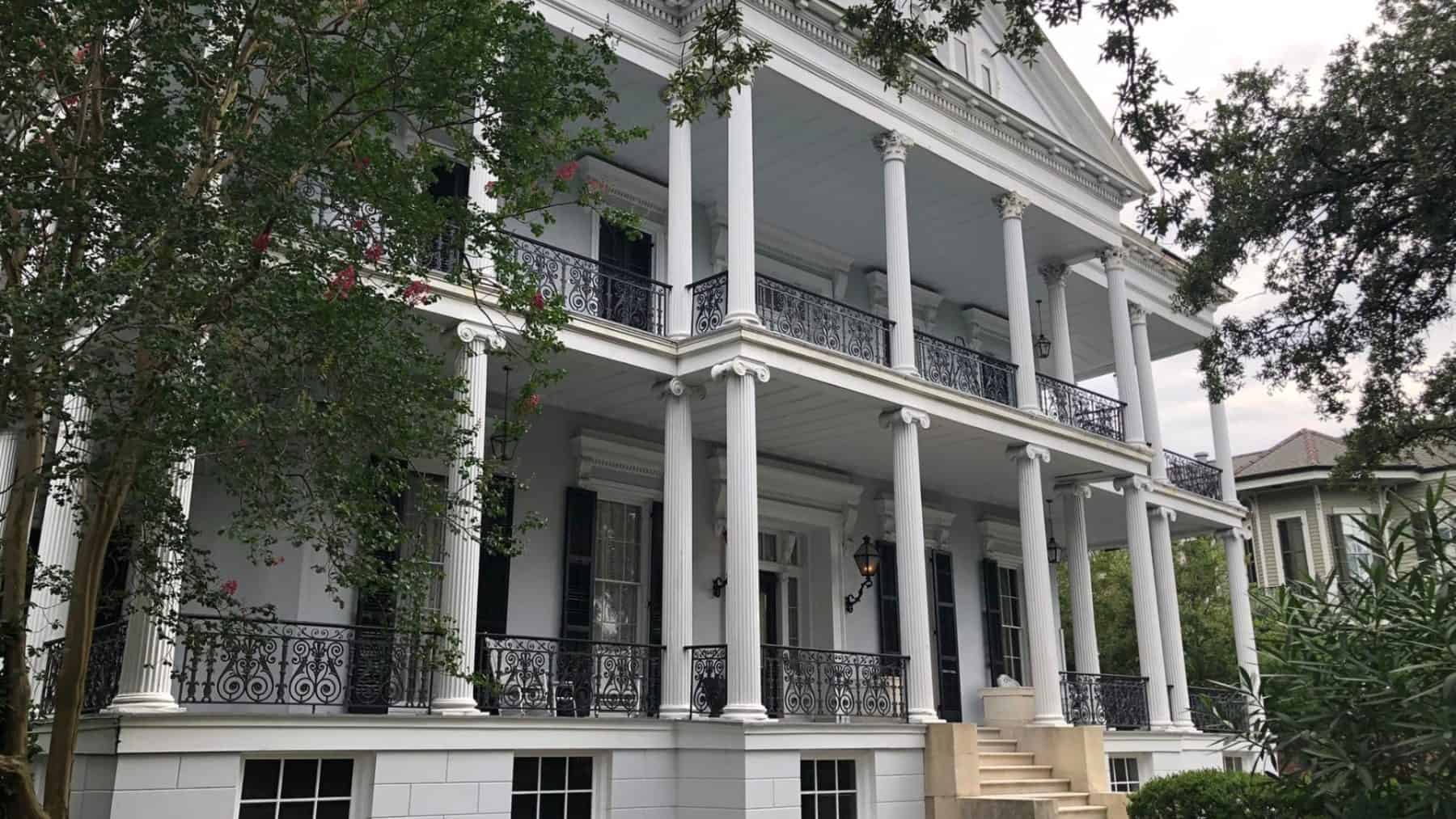
Colonel Short's Villa
Admire Colonel Short's Villa, an ornate example of Greek Revival architecture known for its distinctive ironwork and beautiful corner location. Your guide will share the story behind this remarkable Garden District home and the people who lived there.
Briggs-Staub House
See the Briggs-Staub House, one of the Garden District's most unusual residences. Its Gothic Revival architecture stands out among the neighborhood's more familiar Greek Revival and Italianate homes.
Commander's Palace
Pass by Commander's Palace, one of New Orleans' best-known restaurants and a Garden District landmark since 1893. Its distinctive architecture and colorful history are part of the story of how the neighborhood evolved over time.
Toby's Corner
See Toby's Corner, one of the Garden District's historic residences, and learn about the early development of the neighborhood and the architectural traditions that shaped it.
Manning House
Admire the Manning House and its Greek Revival architecture while learning about the prominent New Orleans family associated with the property.
Brevard-Mahat-Rice House
See the Brevard-Mahat-Rice House, another striking Garden District residence, and discover how the neighborhood's architecture reflects the wealth and ambitions of 19th-century New Orleans.
Rosegate
Take in Rosegate, with its grand columns, historic architecture, and lush grounds. Your guide will explain how homes like this helped give the Garden District its distinctive character.
Payne-Strachan House
See the Payne-Strachan House and its Italianate architectural details, including its decorative brackets and wide porch.
Lafayette Cemetery No. 1
The Garden District is also home to one of New Orleans' most famous historic cemeteries. We'll visit Lafayette Cemetery No. 1 and discuss the city's distinctive above-ground burial traditions and the people and events connected to this historic burial ground.
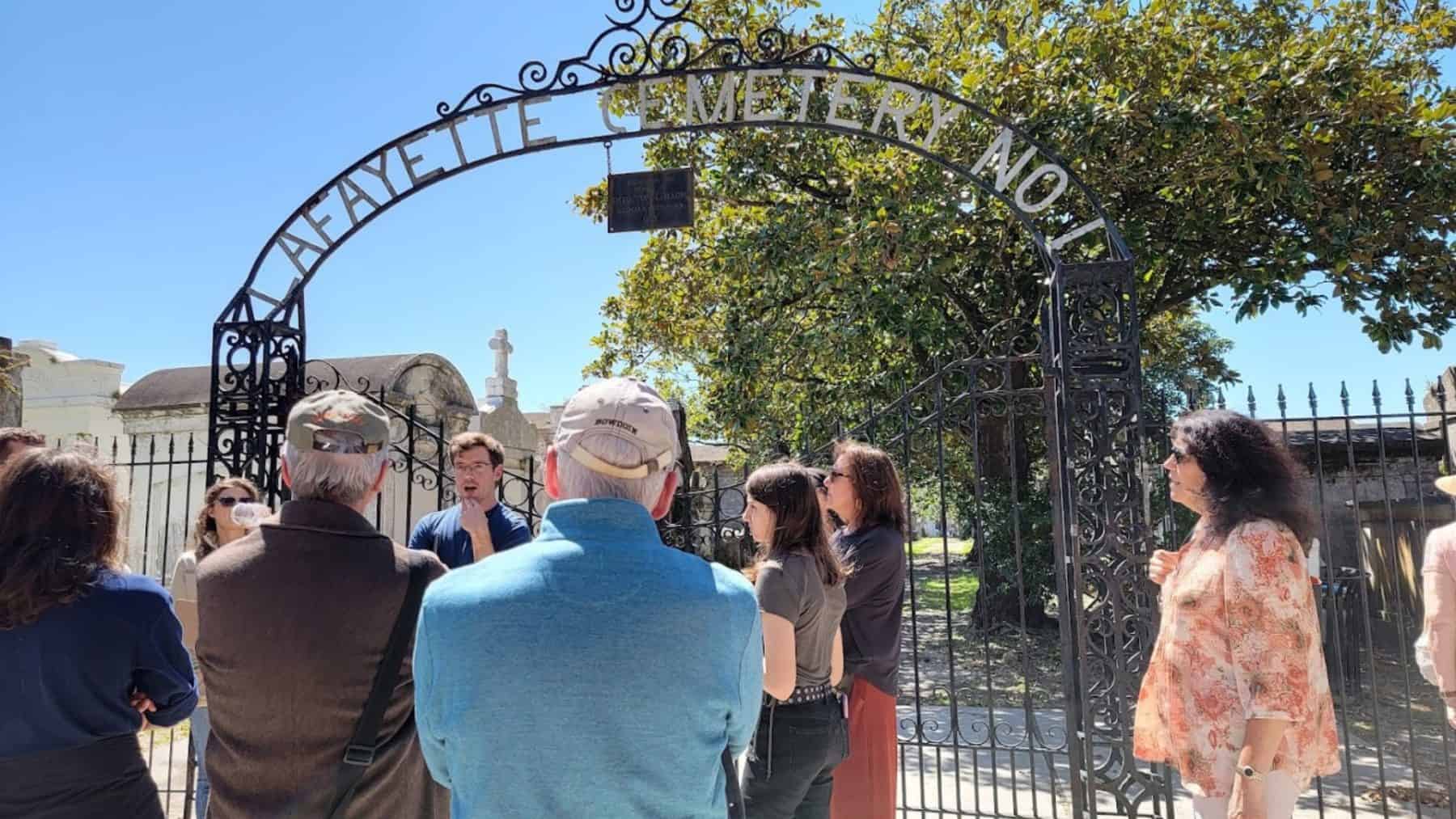
Lafayette Cemetery No. 1 is currently closed for maintenance. We will still discuss the cemetery and its history from the entrance.
History, Architecture, and Stories of the Garden District
A Garden District walking tour is about more than admiring beautiful houses. As we explore the neighborhood, we'll look at how New Orleans' history is reflected in its architecture and hear stories about the people who lived here.
Depending on the route and time available, your guide may discuss:
- The development of the Garden District as a residential neighborhood
- New Orleans' distinctive architectural styles
- Wealth, social life, and changing fortunes in the 19th century
- Famous residents and visitors
- Epidemics and the challenges faced by earlier generations
- Movies, television, and celebrities connected to the neighborhood
- Local legends, unusual stories, and tales of haunted places
- The history and traditions of New Orleans cemeteries
The result is a look at the Garden District that goes beyond the mansions to the people and stories behind them.
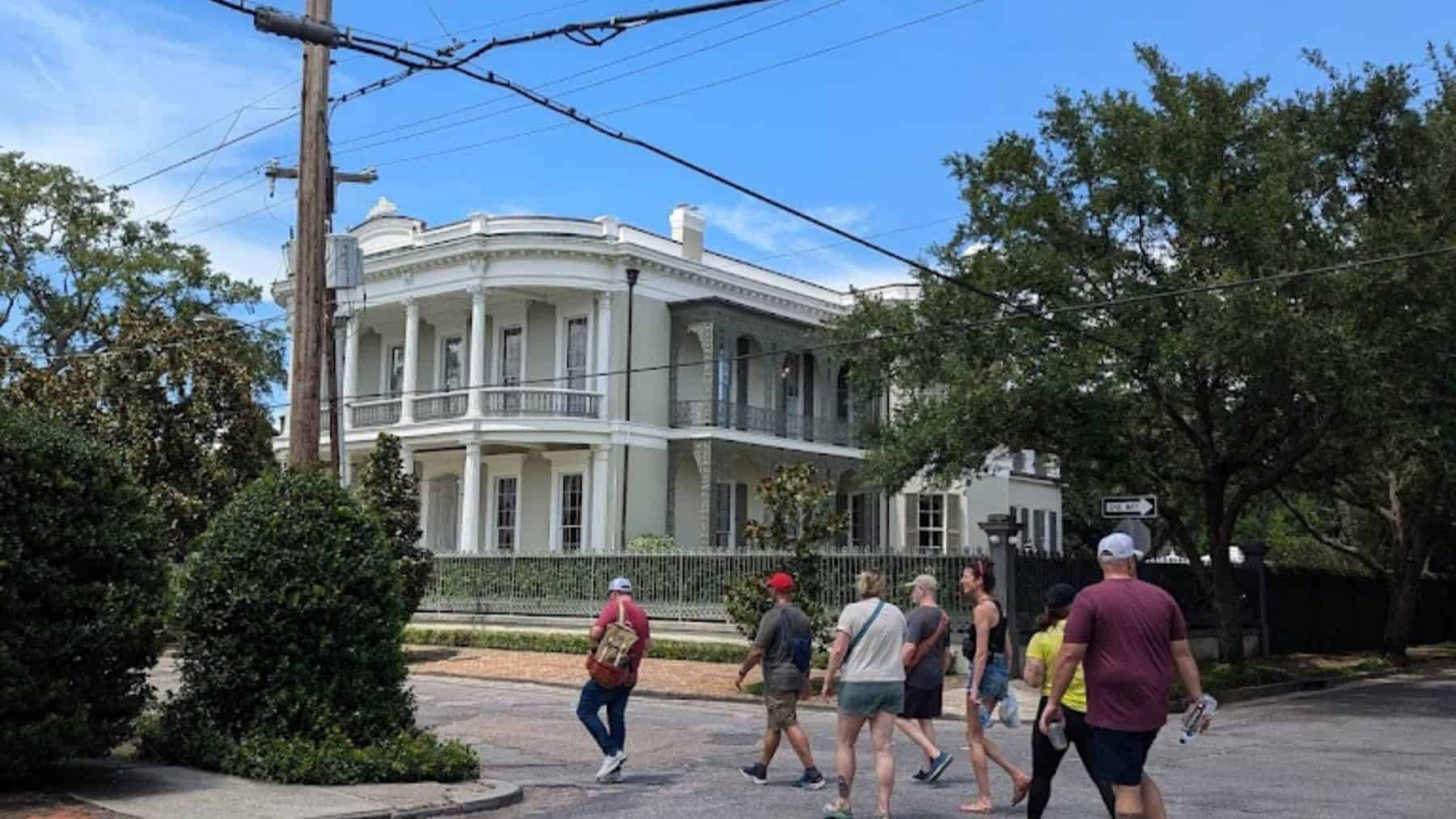
Garden District Walking Tour Details
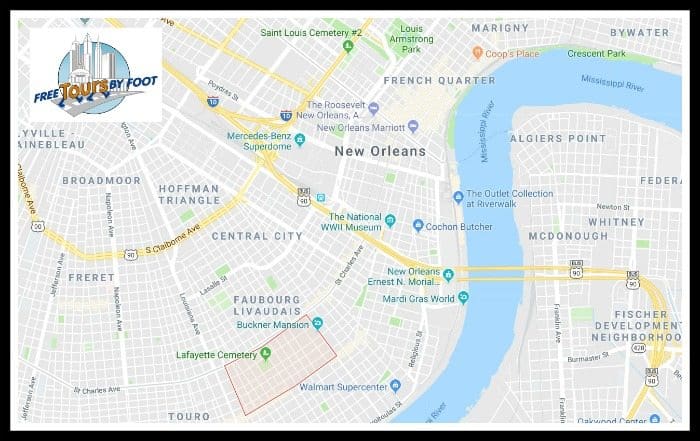
Meeting Point: Meet your guide at the southwest corner of Prytania Street and Washington Avenue, next to the white wall (map).
Tour Duration: Approximately 2 hours
Walking Distance: Approximately 1 mile
End Point: The tour ends outside Commander's Palace Restaurant. If you're planning to dine there afterward, please note that the restaurant has a dress code.

A Note About Walking
New Orleans is known for its uneven streets, and the Garden District is no exception. Please wear comfortable, flat shoes for the tour. If anyone in your group uses a cane, walker, or other walking assistance, please let us know in advance.
Frequently Asked Questions About Our Garden District Walking Tour
How long is the Garden District walking tour?
Our guided Garden District walking tour lasts approximately 2 hours and covers about 1 mile on foot.
What will I see on the Garden District walking tour?
The tour includes historic Garden District homes and landmarks such as Colonel Short's Villa, the Briggs-Staub House, Commander's Palace, and Lafayette Cemetery No. 1, along with other notable buildings and locations in the neighborhood.
Is Lafayette Cemetery No. 1 open during the tour?
Lafayette Cemetery No. 1 is currently closed for maintenance. We will still discuss the cemetery and its history from the entrance.
How far is the Garden District from the French Quarter?
The Garden District is easily reached from the French Quarter by the St. Charles streetcar. Your guide can also help you with information about getting between the two neighborhoods.
Is the Garden District walking tour difficult?
The tour covers approximately one mile, but the streets can be uneven. Comfortable, flat shoes are recommended, and guests who use walking assistance should let us know in advance.
Does the Garden District tour include the French Quarter?
No. This is a dedicated Garden District walking tour. The tour begins in the Garden District and focuses on its architecture, history, landmarks, and stories.
Self-Guided Garden District Audio Tour
Want to explore the Garden District on your own? Our GPS-enabled self-guided audio tour lets you discover the neighborhood at your own pace, whenever it works for you.
The tour works on your phone and includes information about the Garden District's historic homes, architecture, landmarks, and stories. You can stop and start the tour as you explore and spend as much time as you like at each location.
We also offer audio tours of the Garden District, Lafayette Cemetery #1, and an audio tour of our Arts, Music, and More Tour.

How the Audio Tour Works
- Purchase the audio tour.
- Receive a confirmation email with the tour details, including the audio files, PDF, and Google Map.
- Explore the Garden District at your own pace.
Garden District Audio Tour: $6.99. Here is an audio sample:
Other New Orleans Audio Tours
We also offer self-guided audio tours covering other New Orleans neighborhoods and attractions, including:
- French Quarter
- Lafayette Cemetery No. 1
- Hurricane Katrina Rebirth
- Music, Arts, and More
- St. Charles Streetcar
Even without downloading an audio tour, you'll have access to helpful information for sightseeing, eating, and exploring New Orleans

Free Self-Guided Garden District Walking Tour
Want to explore the Garden District on your own? Our free self-guided Garden District walking tour takes you through one of New Orleans' most beautiful and historic neighborhoods.
Along this walking route, you'll see historic mansions, distinctive New Orleans architecture, Lafayette Cemetery No. 1, famous former residences, movie locations, and landmarks connected to some of the city's most interesting stories.
The self-guided walking tour takes approximately 60–90 minutes, depending on how long you spend at each stop. You can follow the route on your own using the map on your smartphone.
How to Get to the Garden District
The Garden District is approximately 2–3 miles from the French Quarter, depending on where you start. You can reach the neighborhood by streetcar, bus, taxi, or rideshare.
For many visitors, the St. Charles Avenue streetcar is the most enjoyable way to get there. The historic route takes you through several New Orleans neighborhoods and along beautiful St. Charles Avenue.
If you're interested in exploring Magazine Street, the #11 bus runs along much of the street.
View the starting point on Google Maps
View the self-guided tour route on Google Maps
By Streetcar
If you're coming from the French Quarter, take the St. Charles streetcar from the Canal Street area and ride uptown toward the Garden District. The Washington Avenue stop is convenient for reaching the Garden District and Lafayette Cemetery No. 1.
The streetcar ride is part of the experience. Along the way, you'll pass historic homes, live oak trees, and several of the neighborhoods that make New Orleans unique.
Want to learn more about what you're seeing along the way? Our GPS-enabled St. Charles Streetcar Audio Tour lets you explore the route while listening to stories about the neighborhoods, architecture, history, and landmarks along St. Charles Avenue.
Click here to get the audio tour.
For current fares and service information, check the New Orleans RTA before you travel.
Garden District Self-Guided Walking Tour Map
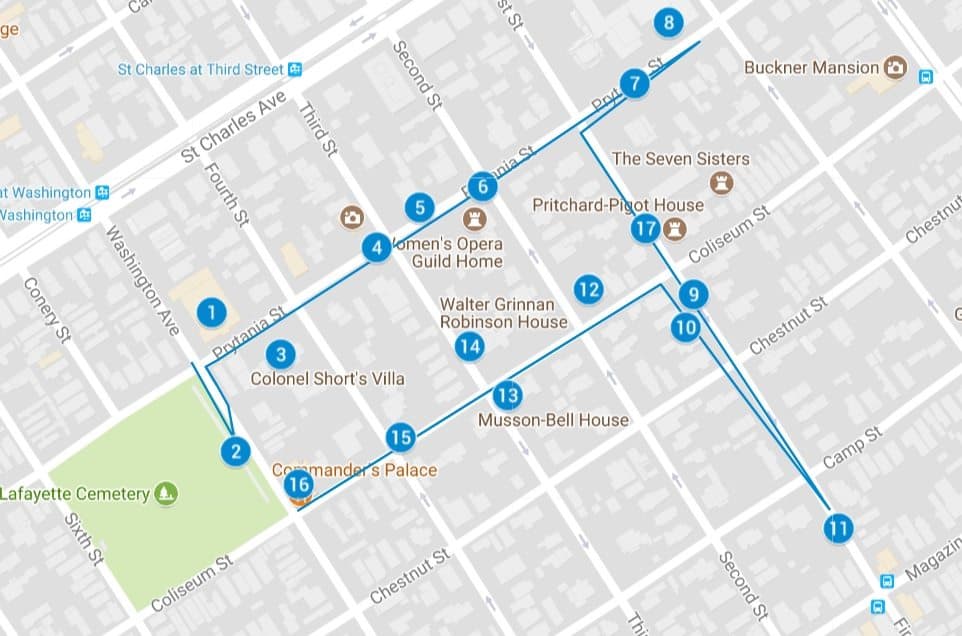
Start the self-guided walking tour here.
The tour begins on St. Charles Avenue near Washington Avenue, a short walk from the Washington Avenue streetcar stop.
You can also open the Garden District walking tour route in Google Maps on your smartphone and use it offline.
The walk takes approximately 60–90 minutes. Allow additional time if you plan to visit Lafayette Cemetery No. 1.
Stop 1: The Rink / Still Perkin

The mustard-brown building at 2727 Prytania Street was once known as the Crescent City Skating Rink, which locals now simply call The Rink.
It was built in 1884, the same year New Orleans hosted the World Cotton Centennial Exposition, the city's version of a World's Fair. The exposition attracted visitors from around the country, and the Rink was built as part of the city's preparations to entertain them.
Today, the building is home to Still Perkin' Café, where you can stop for a pastry, sandwich, café au lait, or chicory coffee before continuing your walk. Upstairs is the Garden District Book Shop, which has hosted book signings and events connected with famous local authors, including Anne Rice.
If you look in the bookstore's windows, you may see photographs from one of Anne Rice's theatrical book promotions, including a mock funeral. Inside, a barrister bookcase contains signed copies of her books.
When you're ready to continue, cross the intersection toward the white-painted brick wall of Lafayette Cemetery No. 1. The cemetery entrance is along Washington Avenue.
Stop 2: Lafayette Cemetery No. 1
Lafayette Cemetery No. 1 was established in 1833 and was named for Lafayette, the autonomous city where the cemetery was located at the time. That area would eventually become part of New Orleans.
It is a municipal cemetery, owned and operated by the city rather than by the Catholic Church, and is the third-oldest cemetery still standing in New Orleans today.
More than two dozen nationalities are represented among its interments, and the cemetery historically continued to have burials.
Lafayette Cemetery No. 1 occupies an entire city block and contains approximately 1,000 tombs, with an estimated 7,000 people buried there.
Note: Lafayette Cemetery No. 1 is currently closed to the general public for ongoing repairs, restoration, and tomb stabilization. Even while the cemetery is closed, you can still see many of its historic tombs from Washington Avenue.
For a more thorough exploration, see our self-guided guide to Lafayette Cemetery No. 1. We also offer a GPS-enabled audio tour of the cemetery.
Continue along Washington Avenue toward Prytania Street. Turn right on Prytania and walk one block. On your right, look for a fence with a distinctive cornstalk design. This marks Colonel Short's Villa.
Stop 3: Colonel Short's Villa
At 1448 Fourth Street, you'll find Colonel Short's Villa, a distinctive Garden District home built in 1859 by architect Henry Howard for Kentucky-born Colonel Robert Short.
The house is especially famous for its unusual cast-iron cornstalk fence. According to local lore, Colonel Short's wife missed the cornfields of her native Iowa, so he bought the fence as a gift for her. The current owners offer a different version of the story: they say she chose it after seeing that it was the most expensive fence available in the building catalog.
Look closely at the fence and you'll notice that the corn plants are intertwined with bean vines. This reflects a traditional method of growing crops together that was practiced by Native peoples of the region.
Colonel Short's Villa also has a connection to the American Civil War. New Orleans was captured and occupied by Union forces early in the war because of its strategic importance and its role in Confederate supply lines. In September 1862, the house was commandeered, and Governor Nathaniel Banks lived here with Major General Benjamin Butler.
Continue in the same direction along Prytania Street to the next intersection. The Briggs-Staub House will be on your left.
Stop 4: Briggs-Staub House
At 2605 Prytania Street, you'll find the Briggs-Staub House, built in 1854. It is considered the only true example of Gothic Revival architecture in the Garden District.
The style was not particularly popular among the Protestant Americans who settled in the Garden District. Its Gothic appearance was associated with the Catholic traditions of the city's Creole population, contributing to its relative rarity in the neighborhood.
The original owner, Charles Briggs, did not enslave African Americans, but he did employ Irish indentured servants. The large servants' quarters can still be seen to the left of the house.
Continue along Prytania Street to the next house on the same side of the street.
Stop 5: Our Mother of Perpetual Help Chapel – 2523 Prytania Street
At 2523 Prytania Street, look for the beautiful Madonna and canopy in the yard. They mark the site of a small Catholic chapel that once stood here.
The property was later purchased by Anne Rice, the author of Interview with the Vampire, and became the setting for another of her novels, Violin.
The house itself was designed by architect Henry Howard in 1857 and is an example of the Italianate style, which was particularly popular in the Garden District. Many Italianate homes in the neighborhood feature exceptionally high ceilings.
Take a close look at the home's elaborate ironwork along the galleries. At the tops of some of the metal columns are pointed ornaments sometimes called "Romeo spikes." Local lore claims they were installed to keep young men from climbing up to young women's bedrooms. A more practical explanation is that similar features were intended to discourage burglars.
You'll also notice gas lights on the porch, which burn day and night. Gas lighting became an important part of New Orleans' history following the arrival of J. H. Caldwell, a theater manager and gasworks entrepreneur, in 1833.
Continue along Prytania Street to the last building on the right on this block.
Stop 6: The Women's Opera Guild House – 2504 Prytania Street
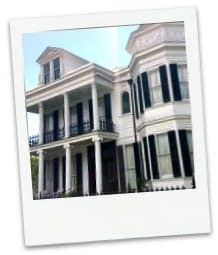
The standout homes in the Garden District often combine several architectural styles, and the Women's Opera Guild House is a good example.
Designed by architect William Freret in 1859, the house combines a Greek Revival structure with elaborate Italianate ironwork and a later Queen Anne extension.
The house is now owned by the Women's Opera Guild. If you'd like to visit the interior, check the current tour schedule before planning your visit.
The house has also appeared on screen, including in Django Unchained and Elsa & Fred.
Continue down Prytania Street for another block. Cross First Street and look for the first house on the right.
Stop 7: Toby's Corner – 2340 Prytania Street
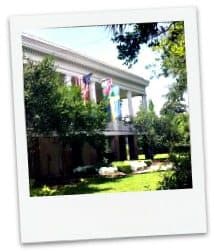
Toby's Corner, at 2340 Prytania Street, is the oldest surviving residence in the Garden District, dating to 1838.
Its simple Doric columns are a reminder of the home's early date. Although the house was built for an American owner, its design incorporates Creole building techniques suited to New Orleans' climate and environment.
The house sits above a raised basement, which helped protect the living space from flooding while also providing ventilation. Its 15-foot ceilings and tall windows also helped residents take advantage of cross-ventilation.
From the front gate, look for the sugar kettle used as a fountain in the front yard. It pays tribute to sugar cane, historically one of southeast Louisiana's most important crops.
Next, look across Prytania Street.
Stop 8: Bradish Johnson House and Louise S. McGehee School – 2343 Prytania Street
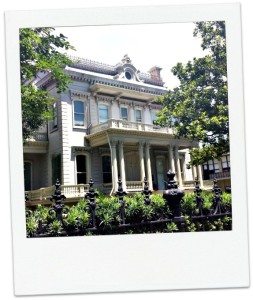
The Bradish Johnson House, at 2343 Prytania Street, was designed by architect James Freret in 1872 for sugar baron Bradish Johnson.
The mansion is an excellent example of the Second Empire style, an architectural style that became popular during the Reconstruction era.
You can see other examples of Second Empire architecture farther uptown along St. Charles Avenue.
Today, the property is home to the private Louise S. McGehee School.
From here, turn back along Prytania Street to First Street. Turn left onto First Street and continue until you see a tan house on the right.
Stop 9: Buckner Mansion – 1410 Jackson Avenue
At the corner of Coliseum Street and Jackson Avenue, you'll find Buckner Mansion, one of the most imposing houses in the Garden District.
Built in 1856, the mansion is often described as the largest home in the neighborhood. As you approach Coliseum Street, you'll see the rear of the property, including its long, three-story extension.
Continue around to the front of the house on Jackson Avenue, where you'll get a better sense of its enormous scale. The mansion encompasses more than 20,000 square feet.
The house was commissioned by Henry Sullivan Buckner, a wealthy cotton businessman and the property's namesake. His family remained in the mansion until 1923, when the building became a business school.
Today, Buckner Mansion is once again a private residence. It may look familiar to television viewers, however, as it served as the fictional Miss Robichaux's Academy in American Horror Story: Coven.
Stop 10: Archie Manning House – 1420 First Street
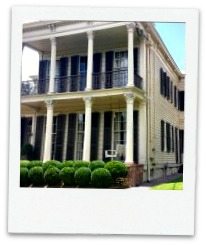
At 1420 First Street is the former home of Archie Manning, the New Orleans Saints quarterback and father of NFL quarterbacks Peyton and Eli Manning.
Archie Manning and his wife, Olivia, raised their three sons—Peyton, Eli, and Cooper—in this Garden District home.
Much of the 2013 documentary The Book of Manning, which chronicles the family's football history, was filmed at the home.
Continue along First Street to the next stop.
Stop 11: Morris-Israel House – 1331 First Street
By the 1860s, the Italianate style had become the most popular architectural style in the Garden District.
The Morris-Israel House also illustrates an unusual feature of many New Orleans homes: they are often narrow along the street but extend deep into the lot.
When large square lots failed to sell, they were sometimes divided lengthwise to create additional lots. The resulting narrow lots left homeowners with little choice but to build long, rectangular houses.
If you've visited Disneyland in Anaheim, the house may look familiar. It reportedly served as inspiration for the design of the original Haunted Mansion attraction. And fittingly, this historic house is said to have ghost stories of its own.
Continue along First Street until you cross Chestnut Street. Then look for the first house on the left.
Stop 12: Brevard-Mahat/Anne Rice House – 1239 First Street
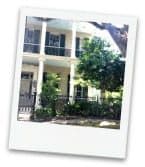
Originally designed in 1857 as a Greek Revival home, this house has been modified over the years with additions that reflect other architectural styles, including an Italianate bay and a skylight.
Take a close look at the Rosegate fence surrounding the property. Its distinctive design is associated with early chain-link fencing.
Anne Rice, best known for her novels about vampires and the supernatural set in New Orleans, lived in the house for many years and used it as her primary residence.
She also set her Mayfair Witches novels in New Orleans.
Rice sold the property in 2003, following the death of her husband, poet Stan Rice.
Continue along First Street and stop at the first house after the intersection with Camp Street.
Stop 13: Payne-Strachan House – 1134 First Street
At 1134 First Street, you'll find the Payne-Strachan House, where Jefferson Davis, the first and only president of the Confederate States of America, died on December 6, 1889.
Davis had traveled to New Orleans to give a lecture but became ill during the trip. He was brought to the home of Judge Charles Fenner, where he received care and spent his final hours.
A small monument in front of the house marks the date of his death.
Before leaving, look up at the ceiling of the front porch. Its sky-blue color, traditionally known as "haint blue," is part of a long-standing Southern tradition. Folklore holds that the color helps keep insects from nesting and protects the home from evil spirits.
From here, turn back along First Street and continue to the intersection with Coliseum Street. Turn left onto Coliseum Street.
Stop 14: Joseph Merrick Jones House – 2425 Coliseum Street

At 2425 Coliseum Street is the Joseph Merrick Jones House, a Garden District home associated with actor John Goodman.
Goodman is particularly beloved in New Orleans for his role as Creighton Bernette in the HBO series Treme. He is also widely known for his film career and for playing Dan Conner on Roseanne.
Goodman developed his connection to New Orleans while filming The Big Easy, the 1986 crime drama starring Dennis Quaid and Ellen Barkin.
Before Goodman owned the house, it belonged to Trent Reznor, founder and frontman of Nine Inch Nails. Reznor reportedly maintained a recording studio in the home during his time there.
Continue along Coliseum Street and pause at the last house on the left at the next block.
Stop 15: Musson-Bell House – 1331 Third Street
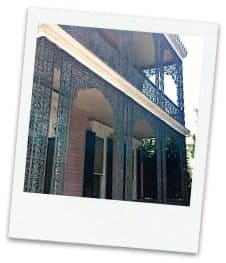
Built in 1853, the Musson-Bell House was originally the home of Michel Musson, one of the relatively few Creole residents living in the Garden District before the Civil War.
Musson was also the uncle of French Impressionist painter Edgar Degas. During Degas' visit to New Orleans, he briefly stayed with Musson at another family home on Esplanade Avenue. That house, now known as the Degas House, can still be visited today.
As you walk along Coliseum Street, you can see into the backyard of the Musson-Bell House, where several detached buildings survive from the 19th century. These include a kitchen, stable and carriage house, cistern, and quarters associated with enslaved people.
Continue along Third Street to the next stop.
Stop 16: Robinson House – 1415 Third Street
Construction on the Robinson House, at 1415 Third Street, began in 1859 and continued through 1865. Architect Henry Howard designed the house for wealthy tobacco merchant Walter Robinson.
The property is one of the larger residences in the Garden District, occupying approximately 12,000 square feet.
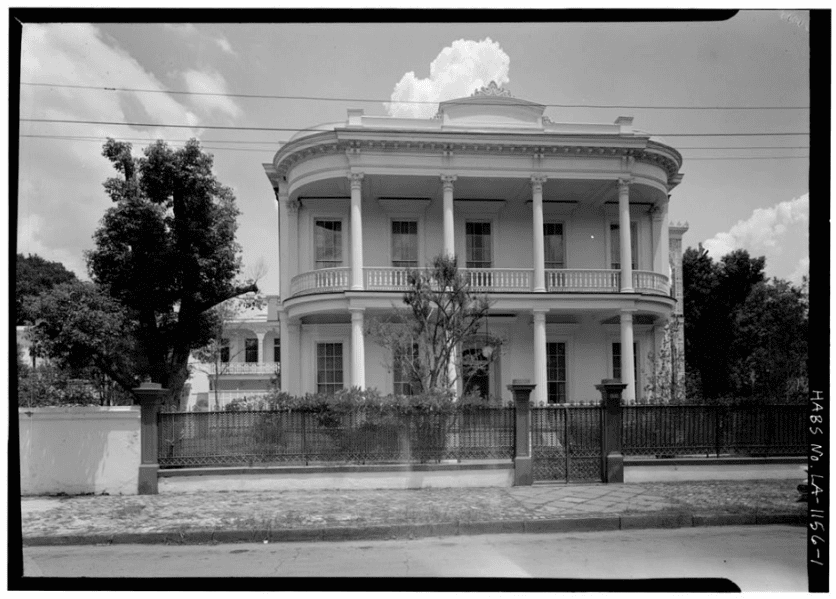
Its flat roof was designed to collect rainwater, which was stored in a cistern and used for the household's water needs. Rainwater collection was an important practical feature of historic New Orleans architecture.
Continue along Coliseum Street until you reach the last building on the right on the next block.
Stop 17: Koch-Mays House – 2627 Coliseum Street
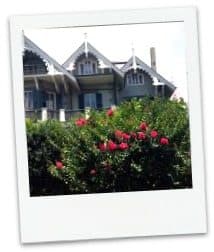
At 2627 Coliseum Street is the Koch-Mays House, an unusual example of Swiss Germanic Chalet architecture.
Built in 1867, it is one of only a few surviving examples of this style in New Orleans. The style is particularly distinctive because its architecture was developed for a much cooler climate and is unusual in New Orleans' hot, humid environment.
Architect William Freret designed the house for James Eustis, who later served as a United States Senator.
The property is also known for its connection to actress Sandra Bullock, who purchased the house in 2009.
Continue along Coliseum Street to the next stop.
Stop 18: Benjamin Button House – 2707 Coliseum Street
At 2707 Coliseum Street, you'll find the Nolan House, one of the central filming locations for The Curious Case of Benjamin Button, starring Brad Pitt.
The house was used as the retirement home where Benjamin Button spends many years of his life.
The filmmakers reportedly had a difficult time securing the property. The owner had evacuated to Houston following Hurricane Katrina and initially turned down the production.
Director David Fincher eventually spoke with her personally and convinced her that the film would portray New Orleans in a positive and hopeful way at a time when the city was still recovering from Katrina.
The house also illustrates the eclectic architectural influences found throughout the Garden District. Look for Ionic columns on the ground floor, Queen Anne detailing on the second floor, and Gothic arches incorporated into the Greek Revival dormers.
Continue along Coliseum Street to the corner of Washington Avenue.
Stop 19: Commander's Palace Restaurant – 1403 Washington Avenue
At the corner of Washington Avenue and Coliseum Street, you'll find the unmistakable Commander's Palace, with its bright turquoise-and-white exterior.
The building was constructed in 1883 for Emil Commander, who opened the restaurant here.
Today, Commander's Palace is one of New Orleans' best-known restaurants. The Brennan family has owned the restaurant since 1974.
The restaurant is known for its Creole cuisine, elegant dining room, and jazz brunch. If you plan to eat here, check the current reservation and dress-code requirements before visiting.
End of the Self-Guided Garden District Walking Tour
This concludes our self-guided walking tour of the Garden District in New Orleans.
Along the way, you've seen historic mansions, distinctive architectural styles, famous former residents, filming locations, and some of the neighborhood's fascinating history.
If you'd like to explore the Garden District with a local guide, consider joining our Garden District walking tour with Tours by Foot.