
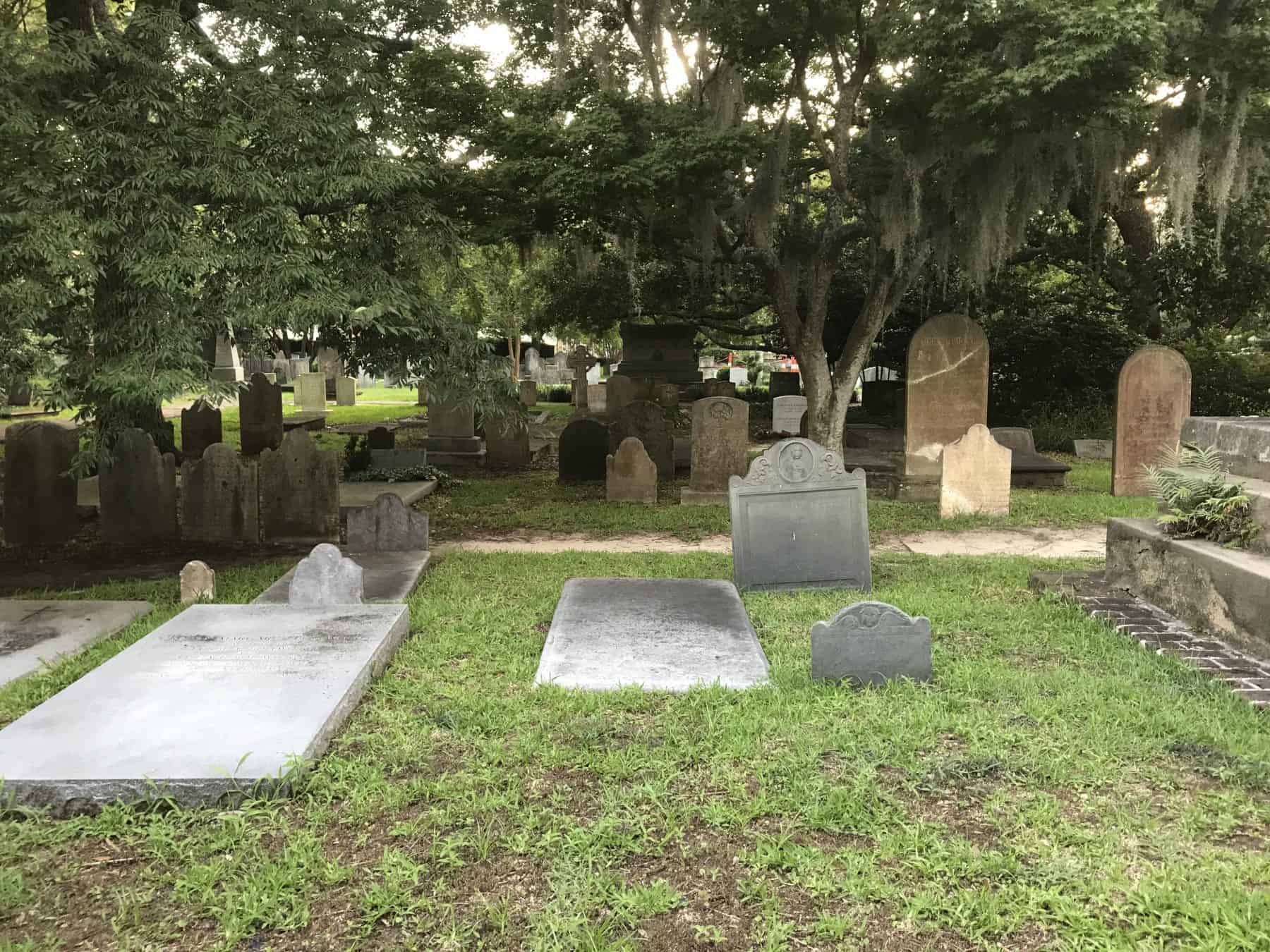
They call Charleston the Holy City because of the number of churches... and where there are churches, there are graveyards and where there are graveyards, there are ghosts.
Founded in 1670, there has been nearly three centuries worth of death, murder, and tragedy.
- Time: About 1-1.5 Hour
- Distance: About 1 miles (2 km)
- Start: Old City Jail
- End: Old Exchange and Provost Dungeon
Be sure to check out our other self guided walking tours of Charleston...
Founded in 1670, there has been nearly three centuries worth of death, murder, and tragedy. This self guided walkig tour tour of Charleston's darker side will take you about 1.5 hour, more if you linger, less if you have to run away from something.
This tour can be taken during the day or night, depending on how brave you are - but keep in mind some cemeteries might not be accessible at certain times. Please respect the closing times and if you’re taking this tour late at night, only view the cemeteries from the street.
Stick your hands through the bars to take a photo if you’re willing.
CHARLESTON OLD CITY JAIL
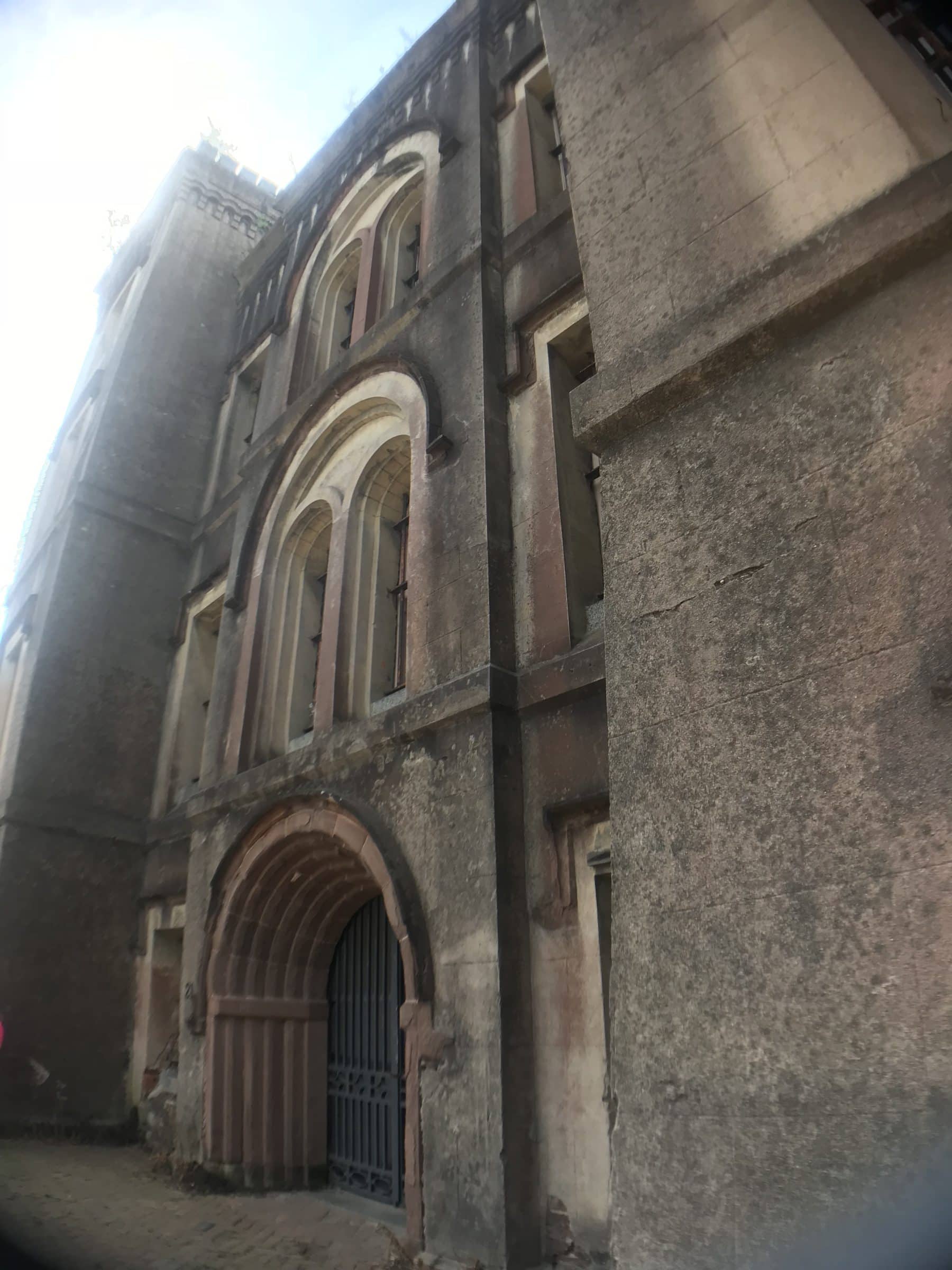
We start outside the Charleston Old City Jail. Now we can’t go inside but if you’re reading this in the evening, trust me, you don’t want to. From 1802 to 1939, this building housed pirates, murderers, and Civil War prisoners. Much of the building remains intact and original - including the cells and the warders office.
This land had been set aside since the founding of Charleston for public use. This has been a hospital, a poorhouse, and a workhouse for enslaved persons. It was built in 1802 as a four story building with an octagonal tower, and while it was expanded and the architecture improved upon, an earthquake in the 1880s destroyed many of the additions.
It was meant to hold no more than 130 prisoners but at times it held over 300, locked in cages no larger than a person's body. Over 10,000 people died within the walls from disease, torture and violence.
The jail closed in 1939 and remained empty for 61 years. What is left is an eerie gothic and somewhat abandoned building.
I say somewhat - even where you are standing (assuming you were brave enough to stand near the jail) people have reported being shoved, hair tugged, and scratched.
The lost souls lingering on the grounds where they were chained, imprisoned and died. While the jail housed some of Charleston’s most notorious criminals, there were also those who were wrongly convicted, enslaved persons and prisoners of war.
Tragic were the stories of anyone held in the Old City Jail and as you know tragedy leads to
hauntings.
I’d like to tell you the story of probably the most infamous criminal held here, who can still sometimes be seen today if you’re lucky, or unlucky as it were. Lavinia Fisher is considered America’s first female serial killer - though this distinction may be just her legacy and not actually her life. She is charged with the murders, but may have only been an accessory.
But she would be hanged regardless.
Lavinia and her husband John Fisher owned the Six Mile Wayfarer House, an inn north of Charleston, on the site where the Old Navy Hospital is today. The inn was frequented by traders coming into the port city with goods and leaving with pockets full of money.
The couple were respected and highly regarded in the community, despite persistent reports of guests disappearing from their establishment. In the early 1800s, people would check in but would … never leave.
Rumors abound of Lavinia, who was beautiful and flirtatious, inviting business travellers in for dinner and upon ascertaining how much money they may have made, offer them a cup of tea, poisoned to induce a deep sleep. Her husband John would then complete the murder by stabbing them in their sleep, robbing them of their wealth and disposing of the body.
Some tales even say that the Fishers had installed a trap door under the bed that would open up and drop the weakened by poison guest onto a bed of spikes. Whether this is truth or tall tell is hard to tell as the centuries have gone by allowing the stories to get more elaborate.
But what we do know comes from the stories of two would-be victims. David Ross and John Peeples, who both escaped death at the hands of the Fishers. Peeples was lucky that he didn’t like tea so he never drank the poison and while he accepted the offer of a room, he was not lying in the bed when the Fisher’s came in, but was rather in a chair by the window - when he awoke to the bed collapsing, he jumped out of the window and immediately told the authorities.
They had already hear the stories of disappearing guests and the accusation of David Ross that they tried to kill him and the Fisher’s would be arrested in 1819.
Found in the cellar of the inn where either the dismembered remains of hundreds of travellers or just their possessions, the accounts differ.
Imprisoned in the jail, the callous Lavinia Fisher had no interest in atoning for her sins. They were tried for murder but only charged with highway robbery, which makes it likely that no bodies were actually found.
Lavinia did not go quietly to the gallows. She shouted, pleaded, and struggled, while wearing her wedding dress which she insisted on being buried in. She blamed socialites, she cursed, she fought making it hard for the executioner to tighten the noose around her neck.
As she leapt from the executioner's grasp, she yelled ““If you have a message you want to send to hell, give it to me, and I’ll carry it!”” and then jumped from the platform where the noose tightened and she fell limp.
She went to the grave claiming her innocence and that she and her husband were victims of the criminal justice system and high society that did not like her inn and her associates.
She is buried not far from where you are standing… but she is still said to roam the halls of the Old City Jail, restless by the injustice of her verdict and the wrong done upon her by the people of Charleston.
Head east down Magazine Street - watch your back as you go, keeping an eye on the Old City Jail behind you. When the road dead ends at Archdale Street, turn right. The Unitarian Grave yard is just across the street.
UNITARIAN CHURCH
This is the oldest Unitarian church in the south. Construction began in 1722. In the overgrown brush and bramble of the cemetery, keep an eye out for a lady in white, said to roam the cemetery, looking for her lost love.
In the 1820s, a young man named Edward Allen was stationed at Fort Moultrie. He fell in love with a local girl named Anna Ravenel. Anna’s father strongly disapproved of this relationship and after he found out that Anna had been sneaking out to meet Edward, the father had Edward transferred to Baltimore.
Anna was heartbroken. She got sick and though Edward tried to get back in time, he was too late and she had died. Anna’s family blamed him - shut the door in his face when he tried to attend the funeral. When they buried Anna, they dug up six plots and filled them in so they all looked like recently dug graves. They didn’t even put up a headstone, so Edward wouldn’t be able to mourn at her graveside.
He left Charleston but failed in the army. He drank too much, did drugs, and led a morose life, often dressed all in black. He had a moderately successful career as a writer, but would gain more fame after his death.
His final poem is thought to be written by Anna Ravenel. It was entitled Annabel Lee. You may have heard of it? Edward Allen published it under his real name, Edgar Allen Poe.
Here is the poem…
It was many and many a year ago,
In a kingdom by the sea,
That a maiden there lived whom you may know
By the name of Annabel Lee;
So that her highborn kinsmen came
And bore her away from me,
To shut her up in a sepulchre
In this kingdom by the sea.
The angels, not half so happy in Heaven,
Went envying her and me—
Yes!—that was the reason (as all men know,
In this kingdom by the sea)
That the wind came out of the cloud by night,
Chilling and killing my Annabel Lee.
Keep walking down Archdale Street with the church on your left to where it dead ends at Queen Street, and turn left. Walk a block and half to Poogan’s Porch, a great restaurant that will be on your left.
POOGAN’S PORCH
If you have the chance to eat here now (or later) take it, this is one of our favorite restaurants in Charleston - hauntingly good.
The home was built in the late 1880s as a single family home on a block that remained residential throughout most of the 1900s.
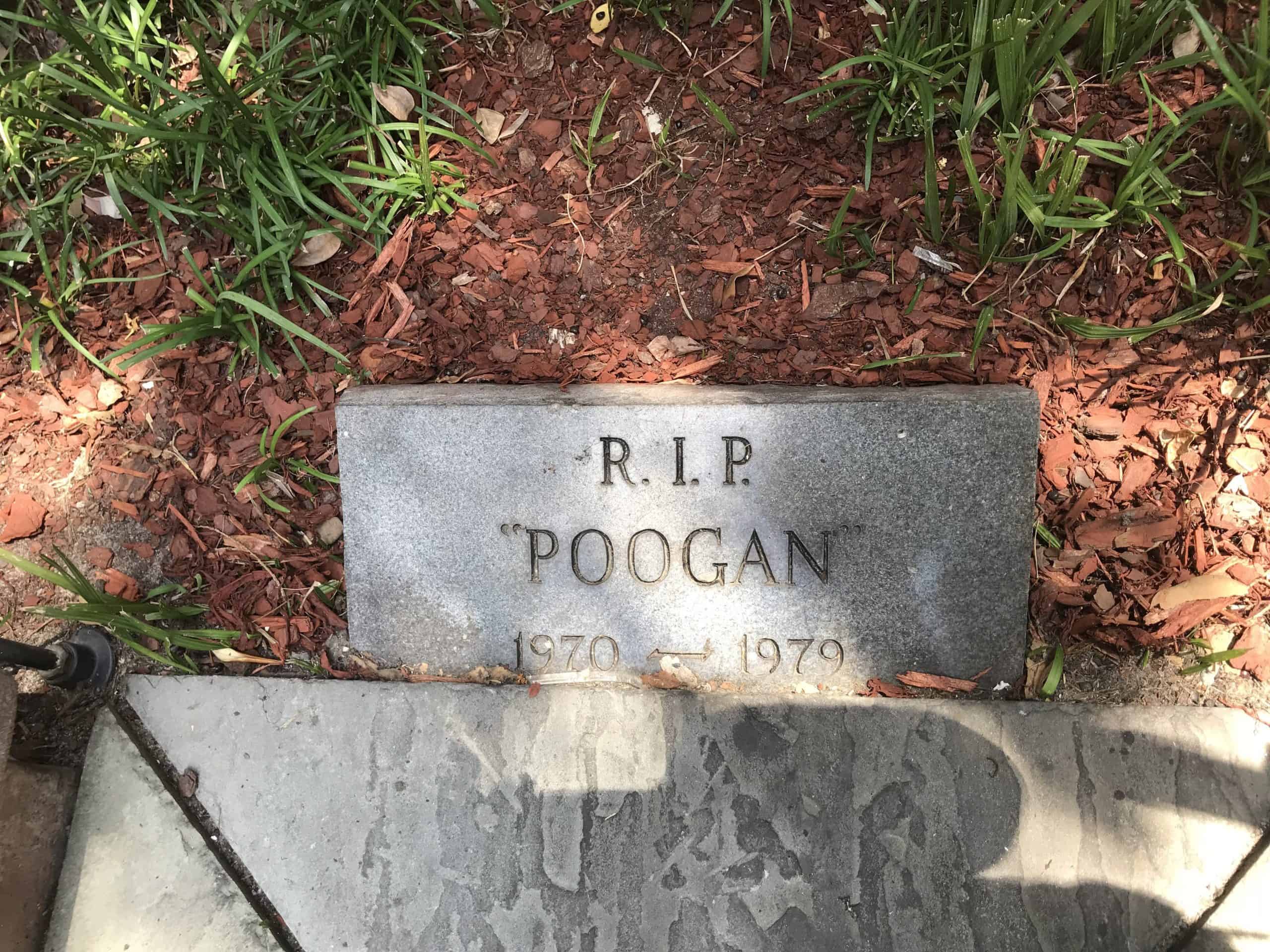
In the 1970s, this building was converted into a restaurant. While work was being done on the conversation, Poogan showed up - whether he was a neighborhood stray looking to sneak some lunch from the workmen or whether he was left by a previous owner is debated, but he was a real, white fluffy dog that greeted restaurant goers for the first few years of business.
He died in 1979 but can sometimes be see greeting guests on the porch or more often, diners feel the quick brush of a dog walking underneath the table.
But he isn’t the spirit I want to tell you about tonight.
Instead, I want to tell you the story of a woman named Zoe St. Amand. In the early 1900s, Zoe and her sister, Elizabeth, lived here. They were considered spinster - often seen wearing black dresses and glasses, reclusive and avoiding the outside world.
In 1945, Elizabeth passed away and Zoe had lost her only friend and closest confidant. Even more withdrawn after her sister's death, she was rarely seen outside until one night she was found roaming the street here yelling out her sisters name.
She would spend the rest of her life in the hospital but the rest of eternity still here … looking for Elizabeth.
Reports of seeing her started just after her death, but when this building was disturbed and converted into a restaurant, the sightings grew.
Stories of staff and guests alike abound - doors banging open and shut, stolls being knocked over on their own, the sounds of a second voice singing along with the radio when the pastry chef was cooking all alone.
If you do enjoy a meal here, be observant while dining, especially when you look in the mirror - guests often look up from washing their hands in the bathroom to see an old woman with wire frame glasses standing behind them.
More often than not, people see Zoe wandering the restaurant but don’t realise she is a spirit until they see the photograph of her by the front door and hear her story.
There is a hotel across the street and on numerous occasions guests at the hotel - unaware of the restaurant's haunted past - report seeing a woman dressed in black on the top floors, even calling the police believing that an elderly restaurant patron has been locked in the restaurant overnight. The police get these calls so often, they don’t even respond - they know its only the ghost of Zoe St. Amand still looking for her sister Elizabeth.
Keep walking along Queen Street until the next intersection, cross Meeting Street and turn left to get to the Circular Church.
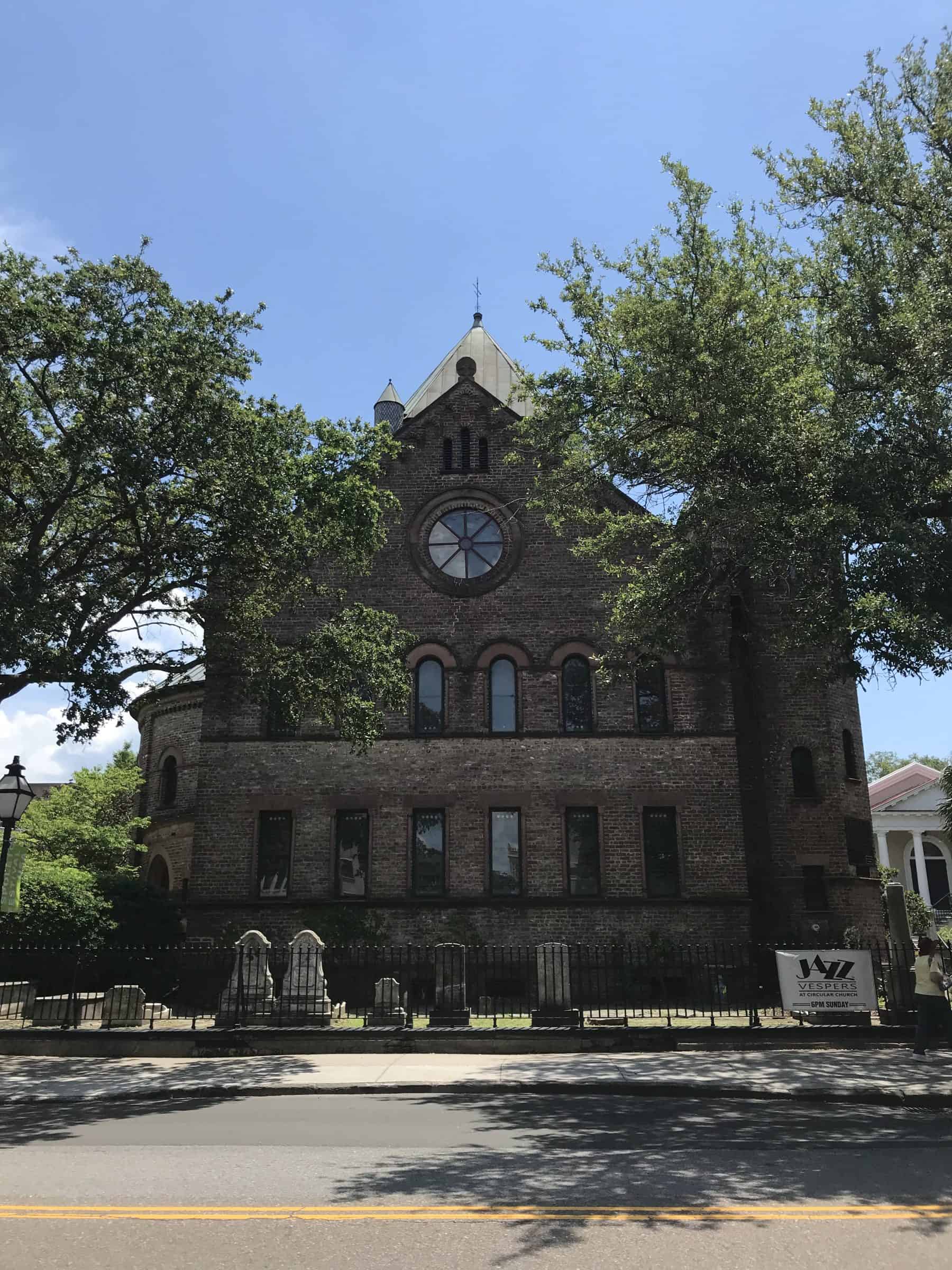
CIRCULAR CHURCH
Underneath the church grounds on Meeting Street may lay dozens of unmarked graves, the original residents of Charles Towne lost forever.
The current structure of the Circular Congregational Church has grown in size from the original church and may be covering the remains of the original churchgoers from the seventeenth century, whose cemetery dates back to 1681 but the oldest grave remaining is from fourteen years after.
The oldest grave in the cemetery and in Historic Charleston dates from 1695 and is that of the Simonds family. They donated the land to establish the church and their unmarked vault is thought to hold the remains of Henry, Frances and an unnamed son.
The original meeting house, which led to the name of the adjacent "Meeting Street", was burned down in a fire, only to have that fate repeated for the next two structures. The current church built in 1891 stands strong today.
The historic cemetery has more than 150 graves from before the Revolutionary War. These historic markers made of slate still today feature the morbid carvings of ancient symbols of death. Some with the skull and crossbones and others "death's head" but more continued to evolve into "soul effigies" to represent the departing spirit complete with wings.
The monuments and cenotaphs of this historic graveyard, covering the past three centuries, evoke a sense of eeriness.
The most common sighting here at the Circular Church is the figure of a tall man with long strides wearing a Revolutionary Soldier’s uniform. He has been seen by tour guides and guests alike.
In the Spring of 1780, the British forces descended on the port city, vastly outnumbered them and laid siege. Charleston burned. 89 men were killed in the two months of the siege.
Continue up Meeting Street and turn right onto Cumberland to reach the Powder Magazine.
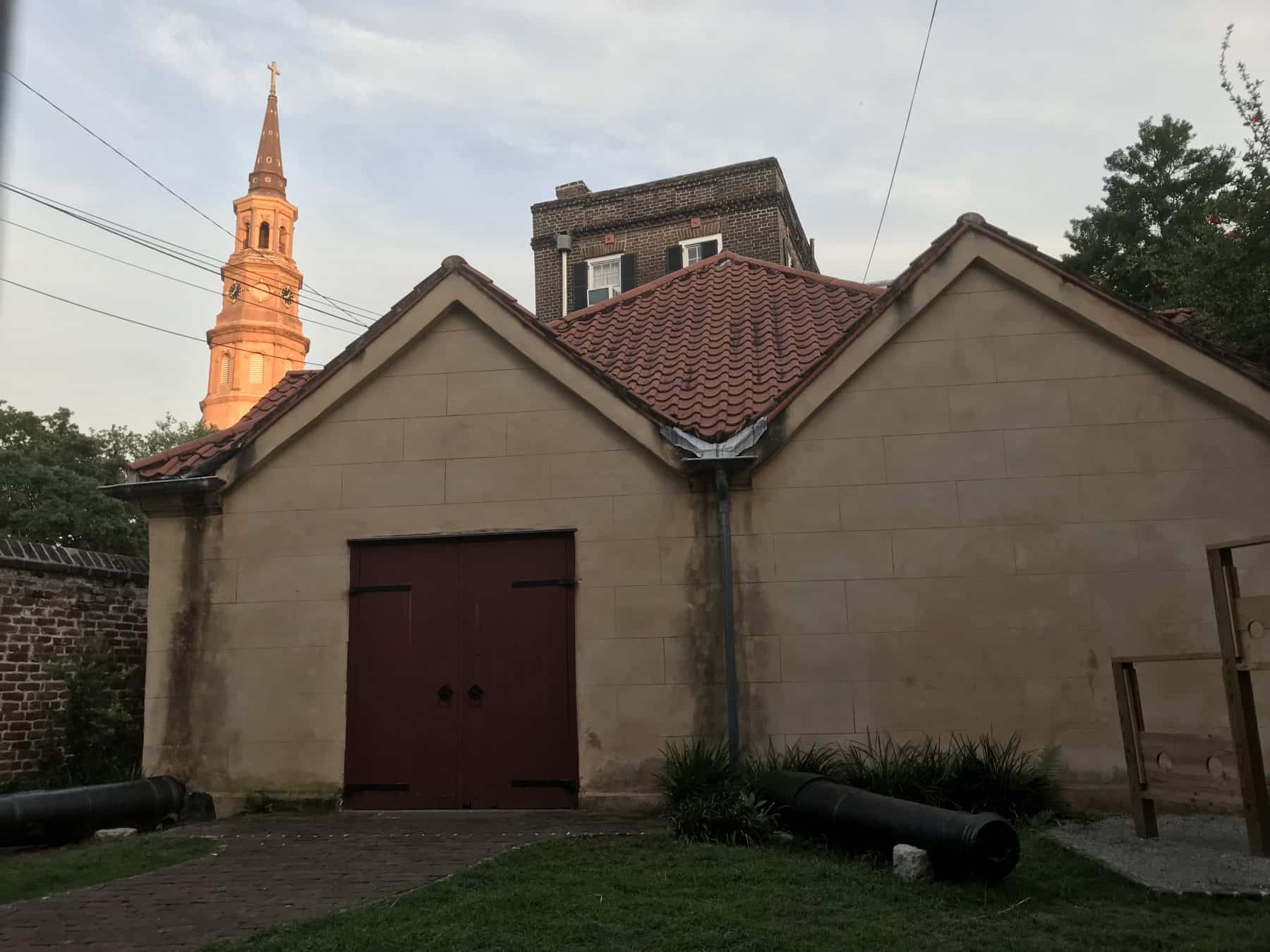
POWDER MAGAZINE
This strong walled structure was built when Charleston was part of the British colony. It held the ammunition and weapons through Charleston’s involvement in the Revolutionary War, Indian, Spanish, French threats and pirates.
There is some connection between tragedy and war and ghosts and a building that held instruments of death for centuries brings those ties together.
While the Powder Magazine was decommissioned long ago, many still see soldiers standing at their post on a continual watch.
Continue along Cumberland Street and cross Church Street, there will be a small alley on your right before you get to State Street, turn down this dark, haunted alley.
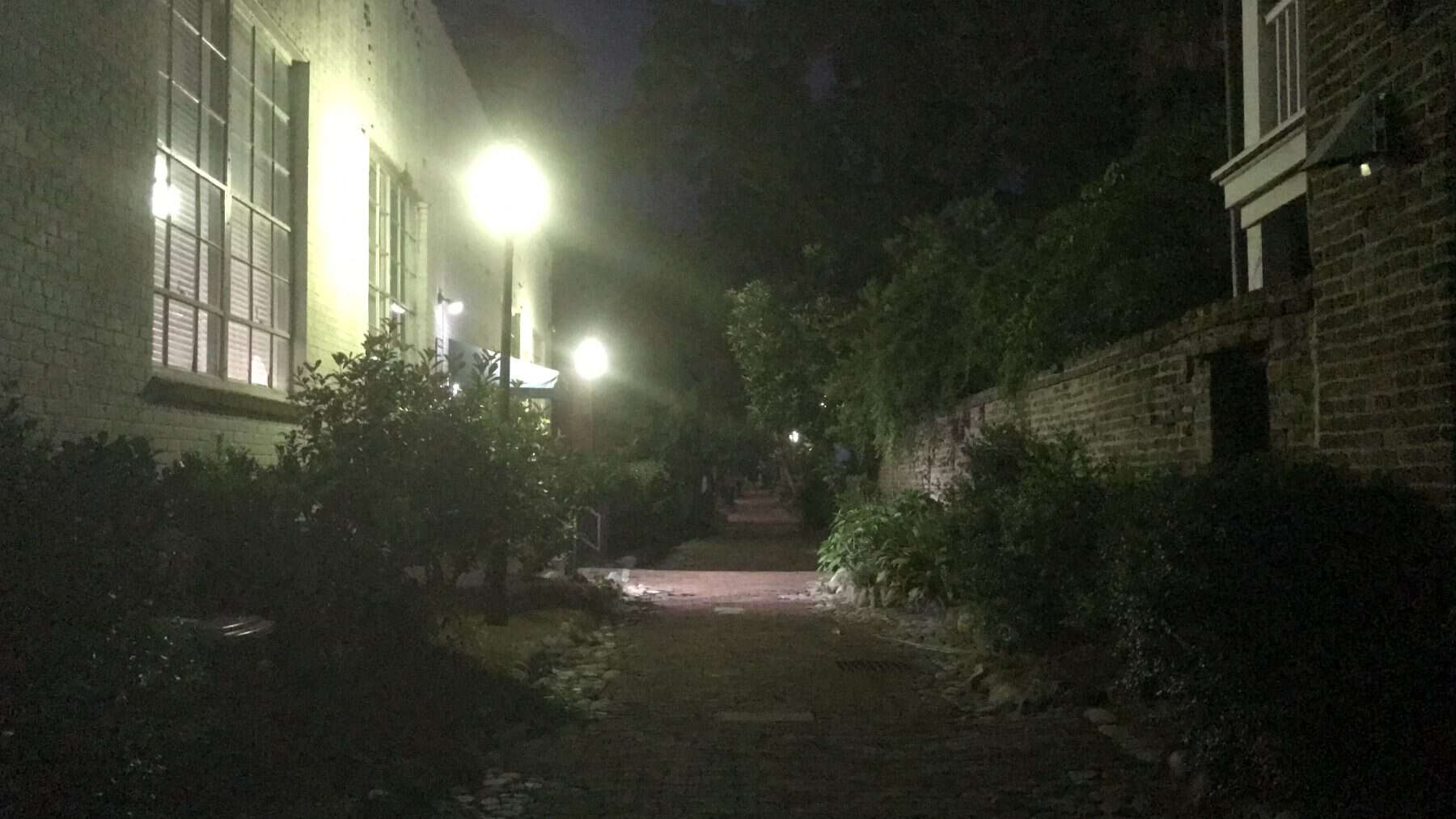
PHILADELPHIA ALLEY
No place in Charleston feels more as if you've been transported back to the nineteenth century than Philadelphia Alley with it's narrow cobblestone walkway lined with historic homes and the wall of St. Peter's Church.
In its original incarnation, the alley was built in 1766 by landowner Francis Kinloch to access the tenements behind his house. It was called Kinloch Court until most of it was destroyed in a fire thirty years later. Left derelict and abandoned, the remaining structures succumbed to another fire in 1810 that destroyed much of the city.
To honor the city of Philadelphia, who sent aid to help rebuild, the area was rebuilt once again and renamed Philadelphia Street in 1811. Not much has changed since then. There is even an old stone with the outlines of a metal carriage wheel etched in it.
But the eerie haze and smoky glow around the now electric lamp posts are not remnants of the long ago fires. Ask any local the direction to Philadelphia Street and you may be met with a few moments of silence as they try to recall. For a quicker answer, ask how to get to Dueler's Alley.
Charleston was (and in many ways still is) an Old World city of honor. Following the Irish Code Duello from the end of the eighteenth century, a man who accepted a duel was willing to risk death to defend his honor. One who was not was considered a coward.
The tragic story of Dr. Joseph Ladd, a well-regarded newcomer to the town hoping to establish himself in order to marry his love, takes place here … a carefree young man of 22 who whistled while he walked, and may still whistle down this street.
Visitors often feel a cool air as they enter the alley, ducking out of the way of imaginary gunshots they hear ringing out as they turn the corner. The long lost souls of men defending their reputation have not far to go - a small cutout of the alley leads directly to St. Philip's Church graveyard.
When you reach the end of the alley, turn right on Queen Street. When you get to the corner of Meeting Street, turn right to get to the front of St. Phillips.
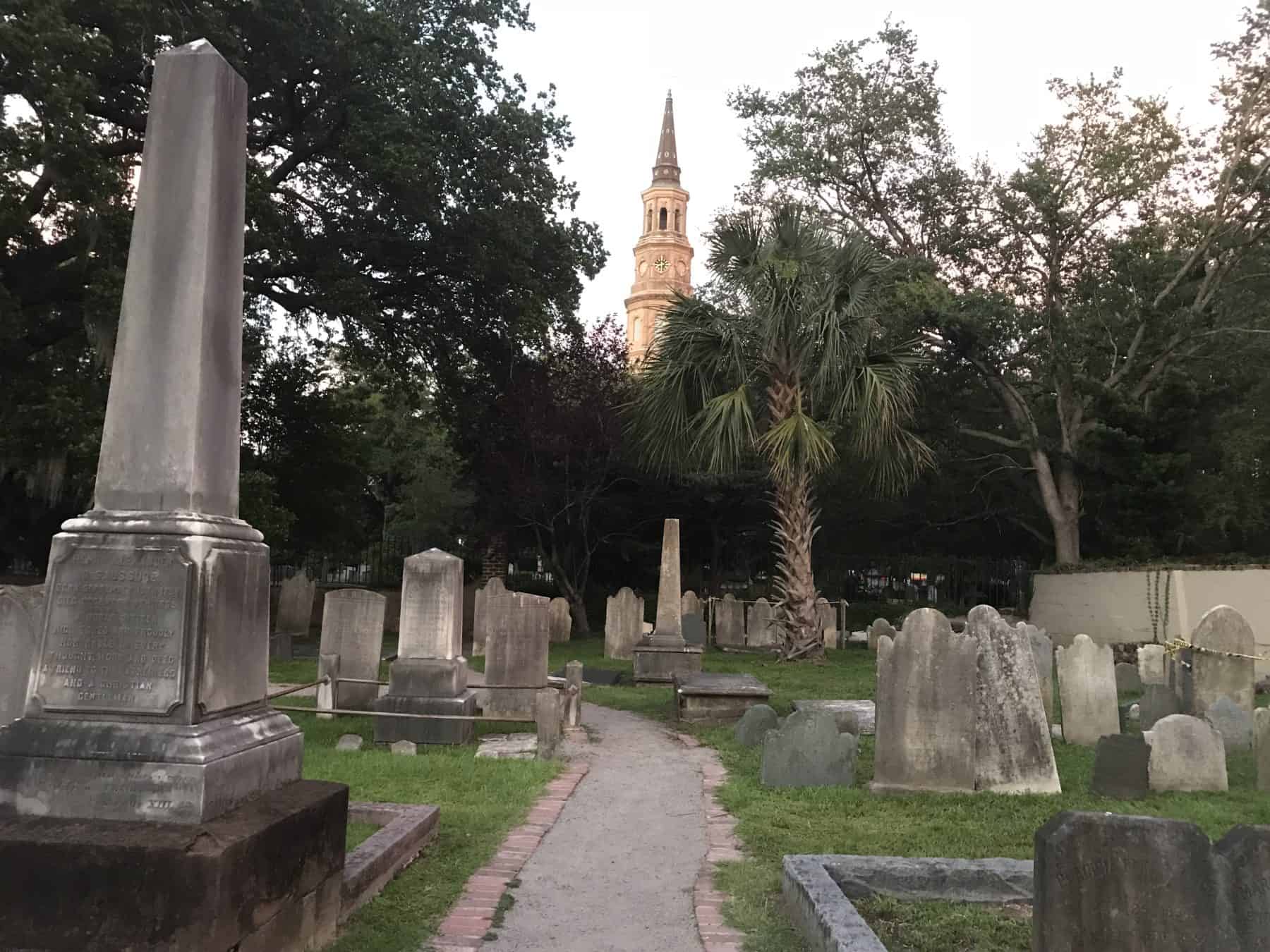
ST PHILLIPS CHURCH
You’ve actually walked right past the cemetery already, the brick wall along Philadelphia Alley runs the back of the cemetery.
You’ll find a sign here at the church entrance that the only ghost here is the holy ghost… but…..That’s definitely not true.
They say that a picture is worth a thousand words. But be warned, if you’re pregnant you may want to look.
On June 10, 1888 the child of two parishioners here at St Phillips was stillborn. Sue Howard Hardy would tragically die shortly after and both are buried here in the cemetery.
June 10, 1987, 99 years later to the day - a local photographer was taking photos of the cemetery and there, leaning over the infant grave is the shadowy image of a shawled figure.
Stories from ghost tours past of pregnant women holding the photograph include the feeling of being sick to their stomach or the sensation of choking.
Turn around and walk back down Meeting Street to cross Queen Street. The Dock Street Theatre will be on your right.
DOCK STREET THEATRE
The original theater from the 1700s was destroyed in a fire. It is now located in an early 1800s building that was once a luxury hotel, Planter's Hotel. While it was a high class place at first it later became the go to for gamblers and drinkers, and with them, working girls. As with most historic theaters, there are a few people from the building that seem to have never left.
One of them is reported to be a famous actor, or rather the father of an actor who is not famous for acting, Junius Booth. Booth name ring a bell? John Wilkes Booth's father is said to watch shows from the balcony. We have no idea if it's Booth.
In reality, it's probably not since he died elsewhere but it makes the story better.
But more frequently seen is the image of a zombie-like woman with ragged hair, wide eyes and a burned red dress. A working woman named Nettie used the Planter's Hotel as her "office" until the clients stopped coming.
Nettie had come from the country to find love, but she was old for the time in her mid 20s and from a lower class. She got a job at St. Phillips, used her earnings to buy a bright red dress and came here to Planter’s Hotel to find a man a different way.
But Nettie was not discrete and as the wives of her clients found out, she was soon penniless.
Distraught, angry at the society that would not welcome her, she began to rant and rave standing outside on the balcony wildly yelling at passersby in the middle of a brewing thunderstorm. She was ready to fling herself from the railing when a bolt of lightning struck her down where she stands.
She can still be seen, wild hair and red dress yelling at people as they walk past.
The Dock Street Theater is open and free to wander around … if you dare. Even better, catch a show while you're at it!
Continue down Church Street and turn left on Chalmers Street, there is a old Pink house on the right.
PINK HOUSE
This house was built in 1712 and the terracotta roof is original to the building. That roof and this house has seen a lot through the years. Though its painted pink, the stone is actually also a blush colored stone. It is three stories with a single room on each floor.
Charleston was and still is a port city, and this street was nicknamed Mulatto Alley and was frequented by sailors and was full of taverns and bordellos. It is likely that the Pink House was a house of ill repute for decades, full of drunken sailors, bar brawls and illicit behavior.
In buildings like this the third floor was where the worst of the activity happened. Here on Mulatto Alley, the sex workers were more often enslaved woman forced into this. And while the neighborhood hsa changed and the Pink House has been an art studio and gallery for decades now, some still see a woman on the third floor pacing back and forth in front of the window, as if she is waiting and dreading for someone to come in that door…
Continue down Chalmers Street until it dead ends at State Street, turn right until it dead ends on Broad Street and turn left. At the end of Broad Street is our final stop, Old Exchange and Provost Dungeon.
OLD EXCHANGE AND PROVOST DUNGEON
This beautiful Georgian museum has long been a tortured site. Look closely at the smallwindows near the street level, peer in if you dare … you’re looking at a centuries old dungeon.
You may still hear the moans and screams of those souls trapped here for eternity.
Today the upstairs houses a museum and during opening hours you can still tour the basement a chilly respite in the heat of Charleston summer days. But underneath the basement is … well what locals call, troubled.
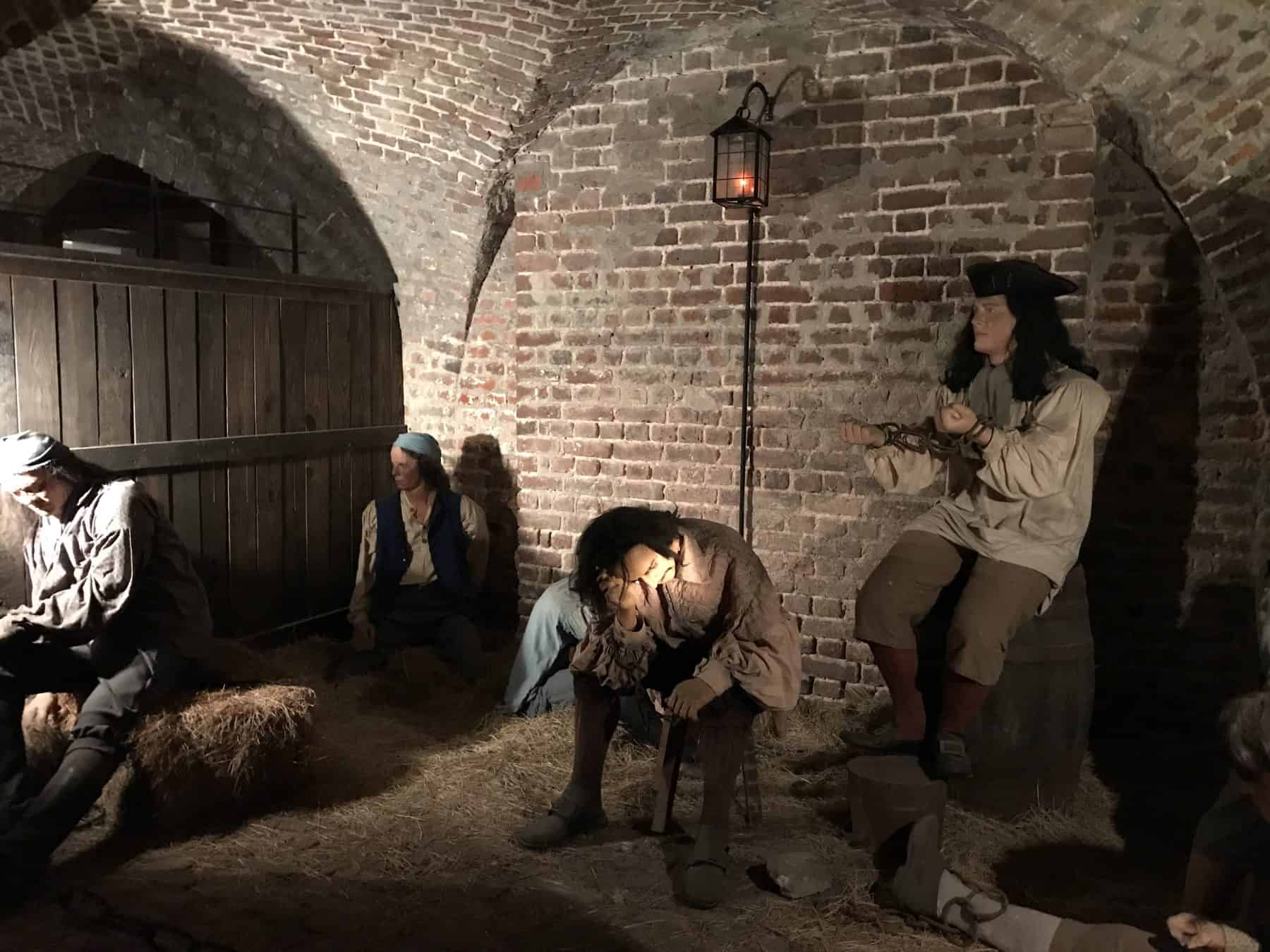
In 1718, this was Half Moon Battery - before this building was built, the basement prison existed. It held within its dark damp walls, pirates who threatened the safety of Charleston harbor.
The crew and gentleman pirate, Stede Bonnet, who was in league with legendary Blackbeard, was kept here until they would be hanged by the neck until dead further down the road at White Point.
Bonnet, like many of the pirates who arrived in Charleston only to never leave, may still be lurking around.
He was one of the worst pirates Charleston had ever seen - worst as in, not good at it. He was actually a well brought up, educated, wealthy man who made a fortune taking over his father’s sugarcane plantation. At some point, some sources say to get away from a demanding wife, he left the life of a gentleman and became a pirate.
He used his personal funds to buy a ship, named the Revenge. He hired a crew but he forgot one thing … he did not know how to sail. When he arrived in Charleston, his crew was planning a mutiny but instead he met legendary and actually good (I mean good at it, not in any way a good person) pirate, Blackbird. Blackbird boarded the ship and took it over - which was fine with Bonnet. He got to live the life of a pirate but not do any of the work. The two blockaded Charleston and robbed any ship they could find but true to his nature, Blackbeard double crossed Bonnet and left him in Charleston where Bonnet was captured.
Within these walls men and women were tortured, kept in darkness day and night - not that they were all innocent of wrongdoing, this was a prison after all.
Reports of screams, painful moans, chains swinging clinking against the stone walls having never been touched, visitors who feel whispers in the ears and hands around their necks.
See for yourself sometime, a visit to the Old Exchange and Provost Building is a must, especially if you’re interested in colonial and Revolutionary Charleston.
We end our tour here … because its a well lit, well travelled area and nearby to a number of bars and restaurants. We hope you enjoyed the walk through the darker side of Charleston.