
Many people who visit Charleston love to stroll along the famous Charleston Battery, where they can enjoy beautiful harbor views while admiring some of the city’s most impressive historic homes.
The Battery is one of Charleston’s most iconic landmarks. This waterfront promenade was once home to a defensive battery of cannons built to protect the city and the mansions beyond the seawall. Today, it is a peaceful walkway lined with grand homes, historic architecture, and views of Charleston Harbor.
The Charleston Battery homes are mostly private residences, meaning visitors cannot simply walk inside. However, their architecture, history, and stories make them one of the most fascinating parts of exploring Charleston.
History of the Charleston Battery
The Battery was built between 1820 and 1825 along the southern tip of the Charleston peninsula. Like much of historic Charleston, the land was created through landfill.
While the homes along the Battery are not the oldest buildings in Charleston, many date back to the early 1800s and have survived nearly two centuries of history.
During the Civil War, Charleston’s harbor became the center of the conflict. Residents living along the Battery could watch the early battles from their piazzas and rooftop terraces.
As Charleston endured more than 18 months of continuous shelling, many families fled the city. The damage of the war could be seen throughout Charleston, but many of the historic homes along the Battery survived.
Today, visitors walking along the Battery can look across the harbor toward Fort Sumter and Fort Moultrie, two important sites in Charleston’s Civil War history.
How to Get to the Charleston Battery
The main section of the Charleston Battery that visitors want to see stretches along East Battery Street from the Historic Charleston Foundation to White Point Garden.
The addresses along this famous stretch range from 40 East Bay Street to 1 East Battery Street near White Point Garden.
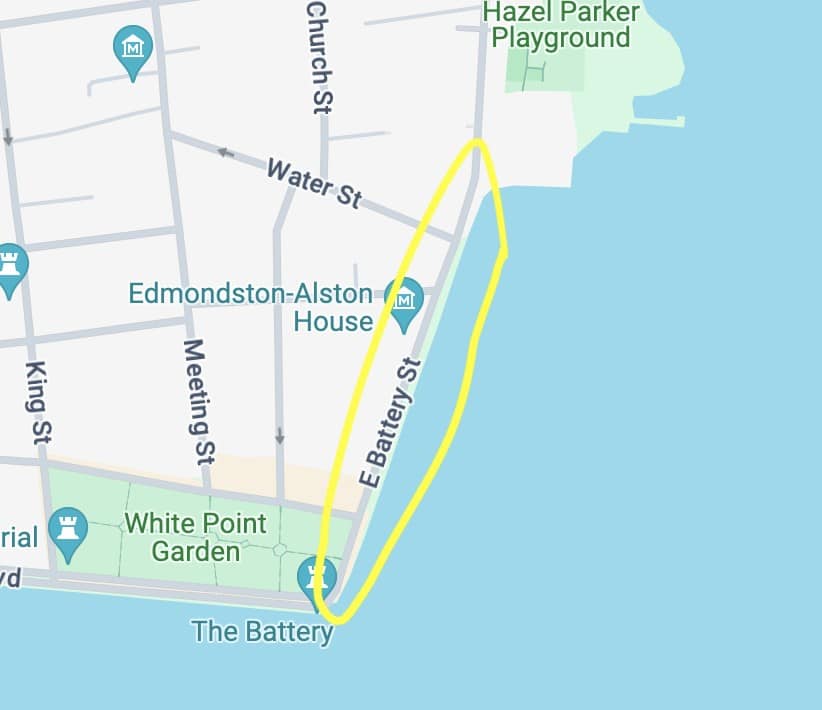
The easiest way to visit the Charleston Battery is on foot. The area is within walking distance of many of Charleston’s historic sites, including Rainbow Row, Waterfront Park, and the French Quarter.
The best way to experience the Battery is with one of our Historic Charleston tours, where you can learn the stories behind the city’s architecture, historic homes, and famous residents.
If you choose to explore on your own, there is limited free street parking nearby. Keep in mind that parking restrictions are common throughout downtown Charleston, and many residential areas require permits.
Famous Charleston Battery Historic Homes
The historic mansions along the Charleston Battery are some of the most photographed homes in the city.
Many are enormous by modern standards. The largest home along the Battery is approximately 20,000 square feet — more than 10 times the size of the average American home.
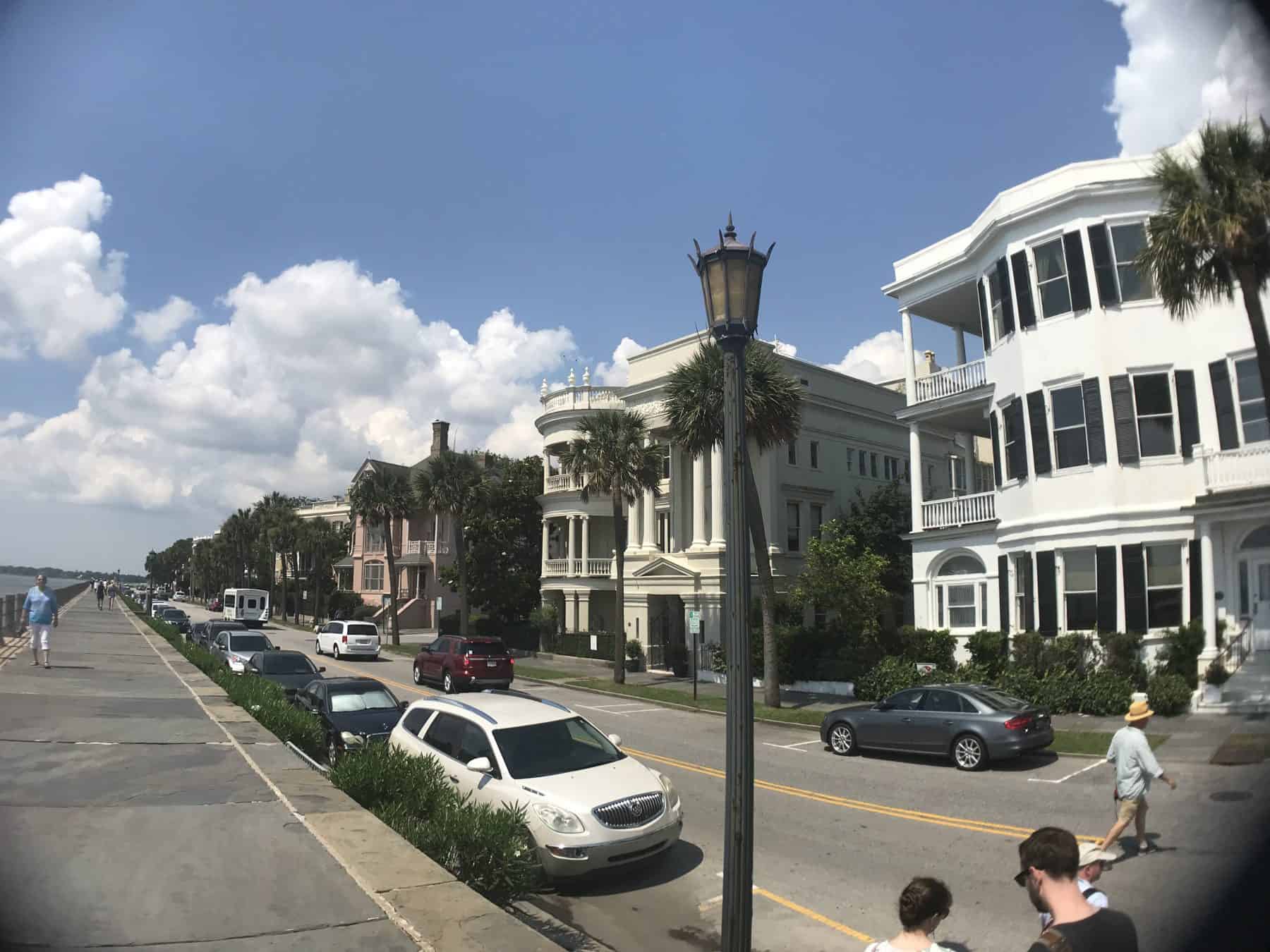
Perhaps even more fascinating than their size is the fact that many of these grand homes were originally built as summer residences.
During the 18th and 19th centuries, many wealthy Charleston families maintained large plantation homes outside the city and used their Charleston houses during the summer season or for special occasions.
Today, most Battery homes and historic district residences are full-time homes.
The historic mansions on the Battery are:
Edmondston-Alston House (circa 1825)
21 East Battery

The Edmondston-Alston House is one of the most famous historic homes on Charleston Battery and is open to the public as a historic house museum.
Visitors can tour the home and see original furniture, silver collections, decorative arts, and family belongings that tell the story of Charleston’s past.
The house offers visitors a glimpse into the lives of the Edmondston and Alston families and their role in Charleston history.
Julius M. Visanska House (circa 1920)
19 East Battery

The Julius M. Visanska House is one of the more unusual homes along the Battery.
The house was built for Jewish clothing merchant Julius M. Visanska and his wife, Sarah, a civic leader in Charleston during the 1920s.
An earlier home stood on this property but was destroyed during the 1911 hurricane. The replacement home’s yellow brick Palladian design was very different from the traditional Charleston architecture surrounding it.
At one time, the house was even described by some locals as “the ugliest house in Charleston.”
Robert William Roper House (circa 1838)
9 East Battery

The Robert William Roper House was built for grand entertaining and continued that tradition throughout its history.
The home has welcomed many notable visitors, including Prince Charles, Archbishop Desmond Tutu, Prime Minister Margaret Thatcher, and Presidents Gerald Ford and George H. W. Bush.
The house also has a fascinating Civil War connection. A piece of a 500-pound cannon is preserved inside the attic after becoming lodged in the structure when Confederate forces destroyed a large gun near the Battery in 1865.
This historic home is no longer private, but it is temporarily closed.
Find out more about the house...
Palmer House (circa 1847)
5 East Battery

The Palmer House is one of the most photographed buildings along Charleston Battery.
The home was built for a wealthy railroad magnate and remained in the same family for more than 100 years.
Although it operated as a bed and breakfast for many years, the Palmer House has since returned to being a private residence.
Can You Tour the Historic Homes on Charleston Battery?
Most Charleston Battery homes are private residences and cannot be toured. The exception is the Edmondston-Alston House, which is open to visitors as a historic house museum.
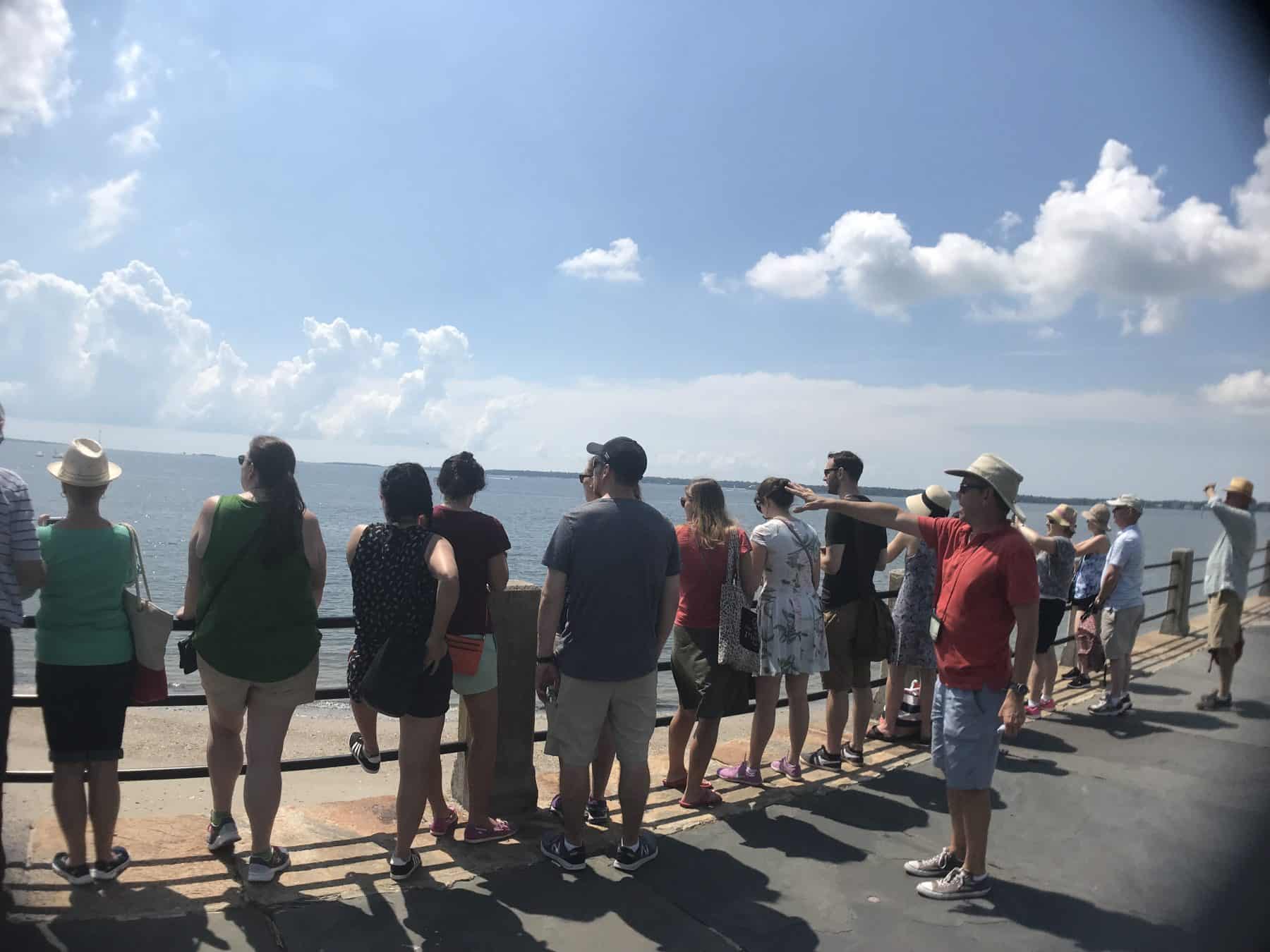
However, you can still explore the Battery and learn the stories behind these incredible homes on a Charleston walking tour or self-guided audio tour.
Tours of Charleston Battery Historic Homes
The Charleston Battery is included on many of our Charleston tours. Explore the city’s historic streets, architecture, and stories with one of our guided walking tours or self-guided audio tours:
- Historic Charleston
- Charleston Architecture
- Free Self-Guided Tour of Historic Charleston
- Historic Charleston Audio Tour
Discover Charleston’s history while walking through one of the most beautiful historic neighborhoods in America.