

As a budget traveler, I really appreciate that Rome has tons of free things to do and see.
I'm talking about ancient ruins, masterpieces of art, and dozens of basilicas that are so stunning you could gaze at them forever.
Having been to Rome a few times, I've learned that one could spend days here and not spend a thing on sightseeing!
In this post, I tell you about the best free things to do in Rome, in the day, at night, with kids or not! These are all free as of 2025.
I threw in a few things that cost a small amount of money, as low as €2 but not more than €11.
These affordable attractions made it into this post because I think most visitors to the Eternal City would enjoy seeing them.
Read on and see which activities interest you and will keep your wallet happy at the same time!
- Top Free Things
- Almost Free
- Free Family-Friendly Activities
- Free Things to Do at Night
- Other Things to Do in Rome
TOP FREE THINGS TO DO IN ROME
These are listed in no particular order. Just because something is at the top of the list, doesn't mean it is more worthy of your time.
It's all about your interests. We each have our own so don't feel that you have to see an activity or attraction on this list simply because it's free.
Pick those that intrigue you, that will inspire you, that you'll enjoy. That's how I choose things to see. But I like most things!
I hope this list allows you to discover some free things that no one has mentioned to you before and if you have heard of them, you'll find information about these places.
Now start exploring Rome!
1. Take a Free Walking Tour
Rome is a big city with lots of neighborhoods and many major attractions.
I combine my time in Rome (or in any new city) between walking through new neighborhoods and seeing famous attractions.
If you'd like some guidance for both of these activities, check out our free self-guided tours. They have maps, descriptions, and other useful tips.
Some of these free self-guided tours are of Rome's city centre, Vatican City, the Jewish Ghetto, the Appian Way, and several others. Some of these tours have audio versions.
To see these places and learn a lot about them, including anecdotes and humourous stories, consider our pay-what-you-wish walking tours with friendly, knowledgeable and entertaining guides.
This model of tour allows you to join for free and at the end of the tour, you can pay whatever you wish or can afford.
These usually focus on the city centre and visit some of the more popular and notable locations like the Pantheon, the Colosseum, the Trevi Fountain, and the Spanish Steps.
2. Take Advantage of Domenica al Museo
In a city of endless museums and historic sites with entrance fees, Domenica al Museo (Sunday of the Museums) is a real treat.
On the first Sunday of every month, several of the most popular historic sites and museums open their doors to the public for free.
This is an excellent opportunity to visit locations that, on any other day, would cost at least €10 to €15 per ticket.
One downside is that there will be more visitors than usual, given this amazing free deal.
Still, I love saving money so I deal with any crowds. It's worth it to me. Here are a few included on Free Sundays.
I love all of these, some so much I have been twice on different trips!
- The Colosseum
- The Roman Forum
- Palatine Hill
- Castel Sant’Angelo
- Baths of Caracalla
- Borghese Gallery
- Capitoline Museums
- Mausoleum of Cecilia Metella
- Palazzo Venezia
- And more
TIP: If you aren't here on a Sunday, many of these above sites are included for free with at some of the Rome tourist attraction passes.
Read more about tourist attraction passes and decide if it's worth it or not for you to get one. Even if you can't afford a traditional discount pass, there is actually a free service you might want to consider.
The Rome Discount Card includes the following discounts:
- 10% off at the following locations
- Vatican Museum
- Castel Sant'Angelo
- Borghese Gallery
- Pantheon
- Bike Tours
- Airport transfers
- Hop-on Hop-off Tours
- 50% off at some restaurants
- Download and use the Rome Discount Card for free
3. Last Sundays at the Vatican Museums
If you love artistic masterpieces and want to see them up close, including Michaelangelo's Sistine Chapel, the Vatican Museums are a must-see.
Tickets are required - but on the last Sunday of every month, you can go for free!
Again, you will find the museums filled with many more people than you otherwise would.
So you need to decide what's better for you: saving money and dealing with crowds or paying to see these incredible museums.
TIP: If you want to skip the Vatican Museums on any day, you must see St. Peter’s Basilica which you can always enter for free.

4. Stroll Down one of Rome's Oldest Roads
If you love ancient sites like I do, visiting the Via Appia Antica (Appian Way) should be on your list of things to do in Rome.
This is one of Rome's oldest roads dating back to 312 BC. Today it's much more than a road.
It's lined with ancient ruins, villas, churches, mausoleums, cemeteries, catacombs and more.
Some of these sites are free to see, while others charge a very reasonable entrance fee.
To be sure, the time travel is free!
The Appian Way is also a park where locals enjoy bike riding, running, and relaxing. There's no reason you can't do the same.
Read more about the Appian Way to decide if you'd like to visit.
5. Witness Artistic Genius
It is simply mind-boggling that you can see so many extraordinary works of art for free in Rome!
Paintings and sculptures by Michelangelo, Raphael, Bernini, and Caravaggio are in public squares and basilicas.
Check the following locations for some of the most beautiful and historic artwork in the city.
Piazza Navona
- Fontana dei Quattro Fiumi by Bernini
- Fontana del Moro with work from Bernini
Ponte Sant'Angelo
- Angel With the Crown of Thorns by Bernini
- Angel With the Superscription by Bernini
St. Peter’s Basilica
- Pieta by Michelangelo
- The Dome by Michelangelo
- Saint Longinus by Bernini
Church of San Luigi dei Francesi
- The Martyrdom of St. Matthew by Caravaggio
Church of Santa Maria del Popolo
- The Crucifixion of St. Peter by Caravaggio
- Creation of the World by Raphael
- Feoli and Cicada Chapels by Bernini
Church of Sant’Agostino
- Madonna di Loreto by Caravaggio
- The Prophet Isaiah by Raphael
Church of Santa Maria sopra Minerva
- Cristo della Minerva by Michelangelo
- Pulcino della Minerva by Bernini
6. See the Pope
Believe it or not, you can see the Pope speak for free. Whether or not you are religious, it's a pretty moving experience.
Twice a week, on Wednesdays and Sundays, the Pope speaks to the crowds who gather for the occasion.
I saw him at his weekly Sunday Angelus when he comes to his window for about 20 minutes.
On Wednesdays, the Pope holds a Papal Audience which you need tickets for, but they are free.
On special holidays the Pope will hold mass which also requires tickets.
Read our guide on how to see the Pope for all the details to make this amazing occasion happen for you!
7. Throw a Coin into Trevi Fountain
This is one of the largest and splendiferous Baroque fountains in Rome.
It's free to visit -- all it costs is the coins you throw into the fountain!
Myth has it that good things will happen when you throw coins in. One coin means you'll return to Rome.
Throw in two coins and you'll fall in love with an attractive Italian and three coins mean that a wedding will follow!
I threw in just one coin and the myth proved true!
Trevi Fountain looks magnificent both day and night. This is a good thing since it is one of the city's main attractions and it is crowded most of the day.
The best times to visit for a photo with as few people as possible are very early in the morning or later in the evening.
Find all the tips for a great experience at the Trevi Fountain.
8. Visit The Pantheon
The Pantheon is one of the oldest buildings in Rome. This former Roman temple was commissioned in 27 BC under orders from Roman Consul Marcus Agrippa.
When the original burnt down, the emperor Hadrian commissioned a new one in 126 AD.
Since 609 AD it has been a Catholic church and is still in use as such today.
Besides being old, the Pantheon is a remarkable structure with impressive architectural features, even to this day.
As of Feb 2025, the Pantheon began charging €5 per person to go inside, but that's a pretty reasonable price for this glorious attraction.
Worshippers are still allowed to attend mass for free.
The Pantheon is especially beautiful when it's raining or snowing as the rain and snow come into the structure through the Oculus (an open circle in the roof) specifically created for runoff from rainwater.
Read our post about the Pantheon to learn its history, what you'll see there, the best times to go and how to get tickets.
TIP: The Pantheon is a short walk from Piazza Navona. Read just below.
9. Sit by the Fountains in Piazza Navona
Piazza Navona is a historic plaza, with origins dating back more than 2,000 years ago.
Unlike other piazzas, it is an oval shape, which is quite atypical for piazzas.
Why oval? Well, it was a racecourse in the Stadium of Domitian, Rome’s first permanent stadium for athletic competitions in the 1st century AD.
Over time, the piazza went through several transformations and is now a popular place for locals and tourists to hang out in cafes or next to the three marvelous fountains.
Let our guide Matteo lead you through the piazza in this video.
10. Drink from Rome's Free Water Fountains
Speaking of fountains, have you heard about the free water fountains all over Rome that are safe to drink from?
In ancient times, the Romans constructed aqueducts that delivered clean water to the city. People could drink water from fountains.
These water fountains, known as nasoni, are one of my absolute favorite free things in Rome. There are more than 2,000 around the city and the water is cool and fresh.
I drink a lot of water when sightseeing and walking around so I bring a water bottle and fill it up at these water fountains when I pass one.
Here's one in the neighborhood of Trastevere that, while not the prettiest, had amazing water.
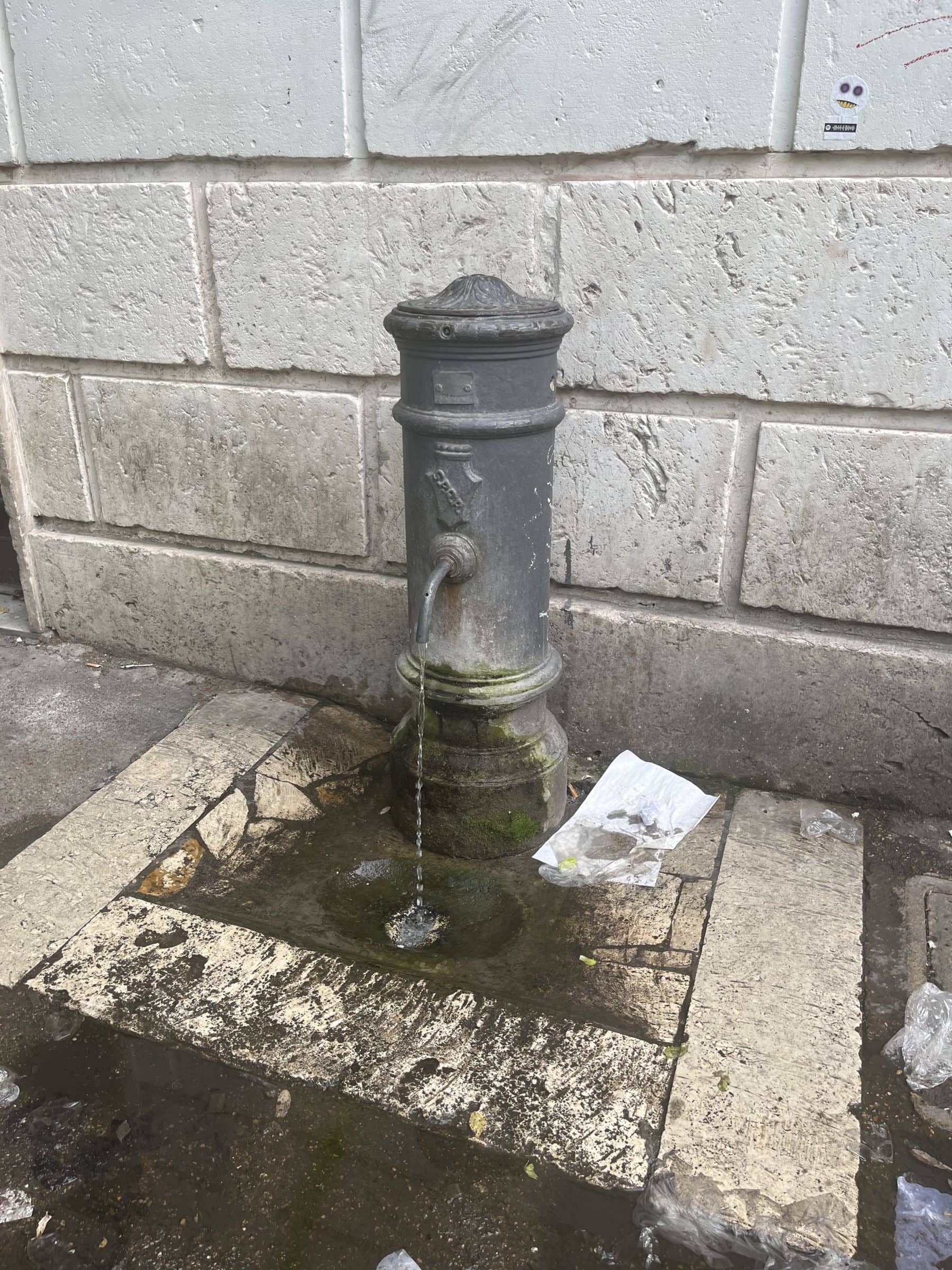
Now, please don't drink from Rome's decorative fountains, though if the weather is hot, you can certainly splash some of that water on your face to cool off.
But if you see a spigot spouting water, even if it's not attractive, fill up your bottle and save your money for other things!
Warning: if a fountain has a sign or plaque saying acqua non potabile, keep walking.
11. Take a Break From City Life at the Villa Borghese Gardens
It’s free to walk through the park and enjoy the beautiful scenery.
I spent about 45 minutes here and found that was sufficient to see some of the more intact and beautiful monuments and statues.
It is quite large with a lot to see so you might want to take a look at our free self-guided tour of Villa Borghese which takes you to the many sites inside the gardens.
One activity that only costs a few euros is renting a row boat to get close to the Temple of Aesculapius.

If you have young children, this is a perfect park to let them run wild. There are also a number of activities they can enjoy.
Read below in our section, Free Family-Friendly Activities.
The splendid Borghese Gallery is in the Villa Borghese and though not free, may be on your list of must-see museums.
If you exit the gardens from the southwest corner, you can easily walk to the Spanish Steps.
TIP: Some hop-on-hop-off bus tours stop nearby making it easy to get here.
12. Walk Up or Down the Spanish Steps
Whether you’re looking for poetic inspiration or you just want to see one of the most well-known sites in Rome, a trip to the Spanish Steps above Piazza di Spagna is an absolute must.
Read our in-depth post about the Spanish Steps to learn about the monuments and fountains next to them and what else you can do nearby.
If you visit Rome during the spring, you are in luck as the Spanish Steps are lined with thousands of Azaleas.
On December 8th each year the Pope comes to pray at a nearby statue of the Virgin Mary.
13. Explore the Neighborhood of Trastevere
A trip to Rome should not be all about seeing ancient sites and art museums.
Rome is a living, breathing city with vibrant neighborhoods where locals go about their lives. Trastevere is one such area.
While there is quite a lot of history in this area, there are also bars, restaurants, food markets, and great nightlife.
One stop that you should absolutely make is Basilica di Santa Cecilia in the middle of the neighborhood.
When you walk in, you simply cannot believe your eyes. It was so beautiful that I was nearly moved to tears.
See our free self-guided tour of Trastevere.
14. Gianicolo (Janiculum) Lookout
From this second-tallest of Rome's 7 hills, you can get a fantastic panoramic view of Rome.
My jaw dropped when I saw the view.
The number of basilica domes I could see was a reminder of how much Catholicism is part of Roman history and modern-day life.

It's adjacent to Trastevere, so I went to the top of the hill by bus (here are directions) and then walked down into Trastevere where I grabbed some yummy fritti at Supplì Roma.
Fritti are small fried appetizers like fried zucchini and suppli (rice balls filled oozing with mozzarella).
Here's our post on some of the best food in Rome.
TIP: There is a huge park there which is great for kids to play in. Read more below.
15. Visit Isola Tiberina
The small Isola Tiberina (Tiber Island) sits in the middle of the Tiber River, between Trastevere and the Jewish Ghetto.
It's believed to have been created back in the 6th century BCE, becoming home to a temple of the god of healing, Aesculapius.
The ruins of the temple can still be found there.
There are the ruins of the Ponte Rotto, a medieval tower, an ancient Roman house, the Colonna infame, a church, and a hospital.
Not everything is ancient! There are also a few restaurants to sit and enjoy the river.
In summer there is the Estate Romana, an annual cultural festival that runs from June through September and includes music, art, dance, and film screenings.
From here I suggest you walk to the Jewish Ghetto, less than 10 minutes away.
16. Walk Through the Former Jewish Ghetto
This neighborhood is one of Rome's most interesting because of its unique history and cuisine.
Rome's former Jewish Ghetto was created in 1555 by the Catholic Church during a dark time of widespread anti-semitism.
Today the neighborhood today is picturesque and colorful, and there are plenty of places to try traditional Roman Jewish dishes.
Read about the Jewish Ghetto and the many things to see there.
17. Campo de’ Fiori
Campo de' Fiori is one of Rome's many outdoor markets, glowing with radiant colors from the stalls of flowers, fresh fruits and vegetables.
It's a lively place to stroll through or sit in one of its cafes or restaurants and people-watch.
In this video, watch tour guide Sarah lead you through Campo de’ Fiori.
Campo de’ Fiori is the last stop of our 15-stop, self-guided walking tour of the city centre.
The tour takes you to some of Rome’s main attractions like the Spanish Steps, the Trevi Fountain, the Pantheon, Piazza Navona and more.
18. Stand (Almost) Beneath the Arch of Constantine
Between the Colosseum and the Palatine Hill, stands the Arch of Constantine, a triumphal arch.
The Arch of Constantine is a major historical and cultural landmark because it is a well-preserved example of Roman monumental architecture.
To honor Emperor Constantine I's victory at the Battle of Milvian Bridge, it was erected in AD 315.
The arch is famous for its considerable use of "spolia" (recycled elements from earlier structures), including sculptures and reliefs from the eras of Trajan, Hadrian, and Marcus Aurelius.
19. Take a Gaze At Trajan's Column
Trajan's Column is a triumphal column that may be found at Trajan's Forum, an ancient public square built by Emporer Trajan.
It was constructed in the second century AD to honor Emperor Trajan's triumph in the Dacian Wars.
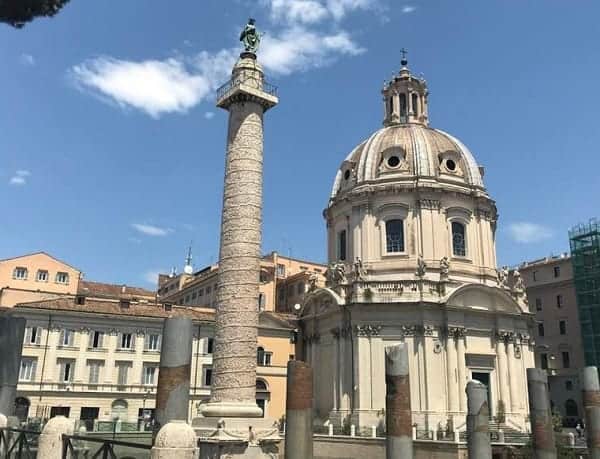
The column is carved with a spiral relief that depicts Trajan's military campaigns in Dacia and is 30 meters tall.
As one of the best-preserved specimens of Roman monumental sculpture today, Trajan's Column is a well-liked tourist destination in Rome.
20. Visit An Ancient Shopping Mall
Near Trajan's Column is the old market complex Mercati di Traiano (Trajan's Market).
The emperor Trajan constructed it as a multi-level "shopping mall" and an administrative hub around the beginning of the second century AD.
The market has been renovated into a museum detailing daily life and trade in ancient Rome.
The market's numerous levels can be explored by visitors, who can also view exhibits on the history of the structure, the commodities sold there, and the individuals who worked and patronized the market.
Read about the many ways to get special tickets that allow you to enter for free including visiting on the first Sunday of each month.
21. Stand Atop Capitoline Hill
One of Rome's seven hills is Capitoline Hill, commonly known as Campidoglio in Italian.
It is regarded as one of Rome's most significant sites and is situated in the centre of the city.
The hill has a long and colorful past; in the fourth century BC, it was the site of temples honoring various Roman gods and goddesses.
The great Renaissance architect Michelangelo was hired to rebuild Piazza del Campidoglio and create a new grand stairway.
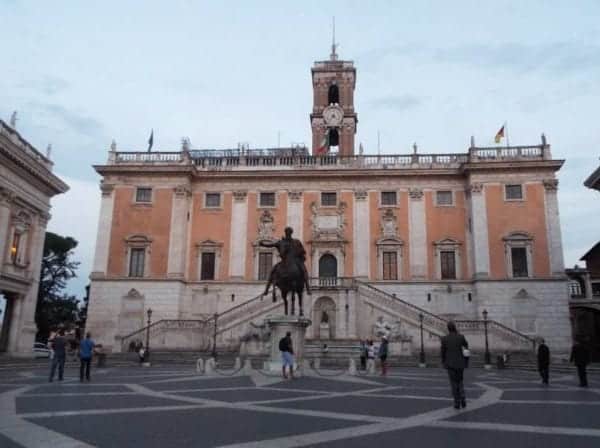
The piazza is bordered by several remarkable buildings, such as the Palazzo Senatorio which is currently home to the Rome mayor's office.
Several noteworthy structures and museums are there including the Capitoline Museums which are home to a collection of antiquity Roman art and antiquities.
At the foot of Capitoline Hill is the Tabularium, a historic building that served as a record office in ancient Rome.
Today it is home to a museum devoted to the history of the Roman Forum.
22. Stroll Through Testaccio
On the western bank of the Tiber River is the medieval district known as Testaccio.
Testaccio has a special charm and character, even though it may not be as aesthetically attractive as some of Rome's old and picturesque neighborhoods.
The neighborhood bears the imprint of its industrial past, and many structures and streetscapes speak to its working-class origins.
The area was well known for its marketplaces, butcheries, and meatpacking facilities.
Today, Testaccio is a vibrant and ethnically diverse area with a booming restaurant and food scene, busy street markets, and a variety of bars.
Additionally, it is the location of museums such as the MACRO (Modern and Contemporary Art Museum). It has which has a sculpture garden that can be viewed for free.
There's also the Centrale Montemartini Museum of Industrial Archaeology.
The Città dell'Altra Economia, a cultural center and exhibition space that holds events, also hosts a farmer's market.
You can find a great view of Rome from atop Monte Testaccio, a hill made of broken terracotta amphorae.
And if you're a lover of literature or the arts, you can find the final resting place of poets Keats and Shelley, and painter Joesph Severn, at Protestant Cemetary.
23. Relax at the Gardens of Villa Torlonia
Originally constructed in the 18th century, Villa Torlonia was built by the affluent Torlonia family, who owned the land for more than a century, and originally resided in the villa.
The villa served as Mussolini and his family's home during World War II, and it now houses a museum that can be toured for a price.
However, the estate's gardens are renowned for their elegance and variety and can be toured for free.
The estate's more than 14 hectares are divided into various garden areas, each with a special charm.
In addition to a wide range of flowers, fountains, and other beautiful features, this park is home to numerous rare and exotic trees.
In general, Villa Torlonia's gardens are a lovely place to unwind and appreciate the wonders of nature.
They offer a tranquil respite from the bustle of the city and a window into Rome's rich history and culture.
24. Stand on Pincio Terrace
At the edge of Borghese Gardens is the Pincio Terrace, atop one of Rome's 7 hills that provides panoramic views of the city.
From here you can see such sites as the Spanish Steps and St. Peter's Basilica. It is a great place from which to watch the sunset in Rome.
This is a popular location for picnics, strolls, and other leisure activities. It is surrounded by rich vegetation and sports 229 monuments, sculptures, and fountains.
The terrace, designed in the early 19th century, can be reached by stairs leading from Piazza del Popolo or a path leading up from the Spanish Steps.
25. See the Hieroglyphs in Piazza del Popolo
One of the largest squares in Rome, the "People's Square", stands near the ancient Porta del Popolo gate through which visitors entered the city.
A striking landmark sits in the middle of Piazza del Popolo. This is the ancient hieroglyph-covered Egyptian obelisk named Obelisco Flaminio or Flaminian Obelisk.
The obelisk was originally erected in Eqypt in the 13th century BCE, then later brought to Rome in the 10th century CE, eventually finding its way to the center of Piazza del Popolo in the 16th century.
The base and the cross on top add up to a height of 36 meters (118 feet), making it one of the tallest landmarks in the city, and it is composed of red granite.
Also on the square are the "twin" churches Santa Maria dei Mirsoli and Santa Maria Monsanto.
26. Check Out an Open-Air Art Museum
Muro, the Rome Ubran Art Museum, is an open-air art museum containing more than 200 pieces of art dispersed across the city.
A group of artists and curators founded the museum in 2010 to provide a venue where street art and graffiti might be valued as genuine art forms.
Works created by local and international artists include contemporary street art and graffiti and are being added to or replaced in the collection regularly.
Stencils, murals, installations, and sculptures, among other styles and methods, are all represented in the collection.
Many of the pieces address social and political themes, and some have come to represent the city in indelible ways.
27. Stroll Along the Tevere (Tiber River)
If you're trying to get somewhere quickly, this isn't the best route.
But if you have time for a wandering walk or a bike ride, it doesn't get any better than along the Tevere.
You'll come across landmarks like Tiber Island, Teatro Marcello, S. Maria in Cosmedin, and Palazzo Spada.
Then there's Palazzo Farnese, Vatican City, Cast' Sant Angelo, the Palace of Justice, and several historic bridges.
TIP: I don't recommend doing this walk at night, even if accompanied.
28. Shop at a Free Flea Market
If you want to feel like a citizen of Rome, you might want to visit one of the city's bustling and vibrant street markets.
They cost nothing to visit, although you might be tempted to purchase a souvenir or two.
Porta Portese Market in Trastevere on Sundays is Rome's most famous flea market with antiques, furniture, and vintage clothing
Two other fun markets are:
Mercato Monti in Monti on Sat-Sun. It's a favorite featuring jewelry, vintage clothes, and handmade goods.
Borghetto Flaminio in Flaminio is open on Sundays. You can shop for used designer clothes, antiques, and goods from the wealthy of Rome.
Tip: If you do decide that you want to purchase something, it's rumored that vendors expect to get half of the starting price; be sure to haggle down to at least that figure.
29. Attend a Free Concert
The Accademia Nazionale di Santa Cecilia is a renowned music school and performing arts institution.
It is one of the oldest musical institutions in the world, having been founded in 1585, and has a long tradition of supporting the growth of musical talent and promoting classical music.
It offers several concerts throughout the year for free and some feature some of the finest classical artists in the world.
Visit their website for more information.
30. Marvel at Colorful Byzantine Mosaics
At the 8th-century Basicalla Santa Prassede, located in the Esquiline Hill neighborhood, you'll find stunning mosaics.
The church is where Saint Praxedes and her sister Saint Pudentiana lived in the 2nd century.
Legend has it that the women gathered the blood of Christian martyrs in the church's underground chambers.
Byzantine artists were commissioned by the Pope to decorate the church, and the mosaics created provided insight into the religious beliefs of the era.
The apse mosaic, which portrays Christ's Second Coming, is the most well-known mosaic in the church.
Christ is depicted enthroned in the mosaic among several angels and saints, including Saints Praxedes and Pudentiana.
The archangels Michael and Gabriel stand on either side of the image of Christ, encircled by a mandorla, a representation of divine splendor.
The church is also home to the relic known as the Column of Flagellation.
It was believed this was part of the pillar where Jesus was flogged before his crucifixion.
31. See where Italian Filmmaker Fellini Lived
Located near the Spanish Steps is Via Margutta, a picturesque street known for its quaint ambiance, beautiful buildings and courtyards, and creative heritage.
Via Margutta has a long history of being connected to the arts and has housed numerous musicians, writers, and artists.
Well-known directors, actors, and producers have lived or worked on the street, including Federico Fellini whose house is now a museum dedicated to him.
Stop by 110 Via Margutta to see this plaque dedicated to Felinni and his wife, famed actress Giulietta Masina.
Today, Via Margutta is a well-liked destination for art lovers and shoppers because of its array of galleries, antique stores, and artisan studios.
32. See the Foro Italico
The Foro Italico, originally called Foro Mussolini, is a sports complex that opened in 1932, built with the intention that Rome would possibly host the 1940 Olympics.
At the time, Rome was ruled by dictator Mussolini and his Fascist Regime.
Given the world’s political situation at the time, with the brink of World War II around the corner, Rome was not chosen to host the games.
The complex's design and architecture were meant to highlight Italy's sporting accomplishments.
The grounds have 60 marble sculptures of idealized male figures, in a style sometimes called "heroic realism," which showed power, strength, and superiority.
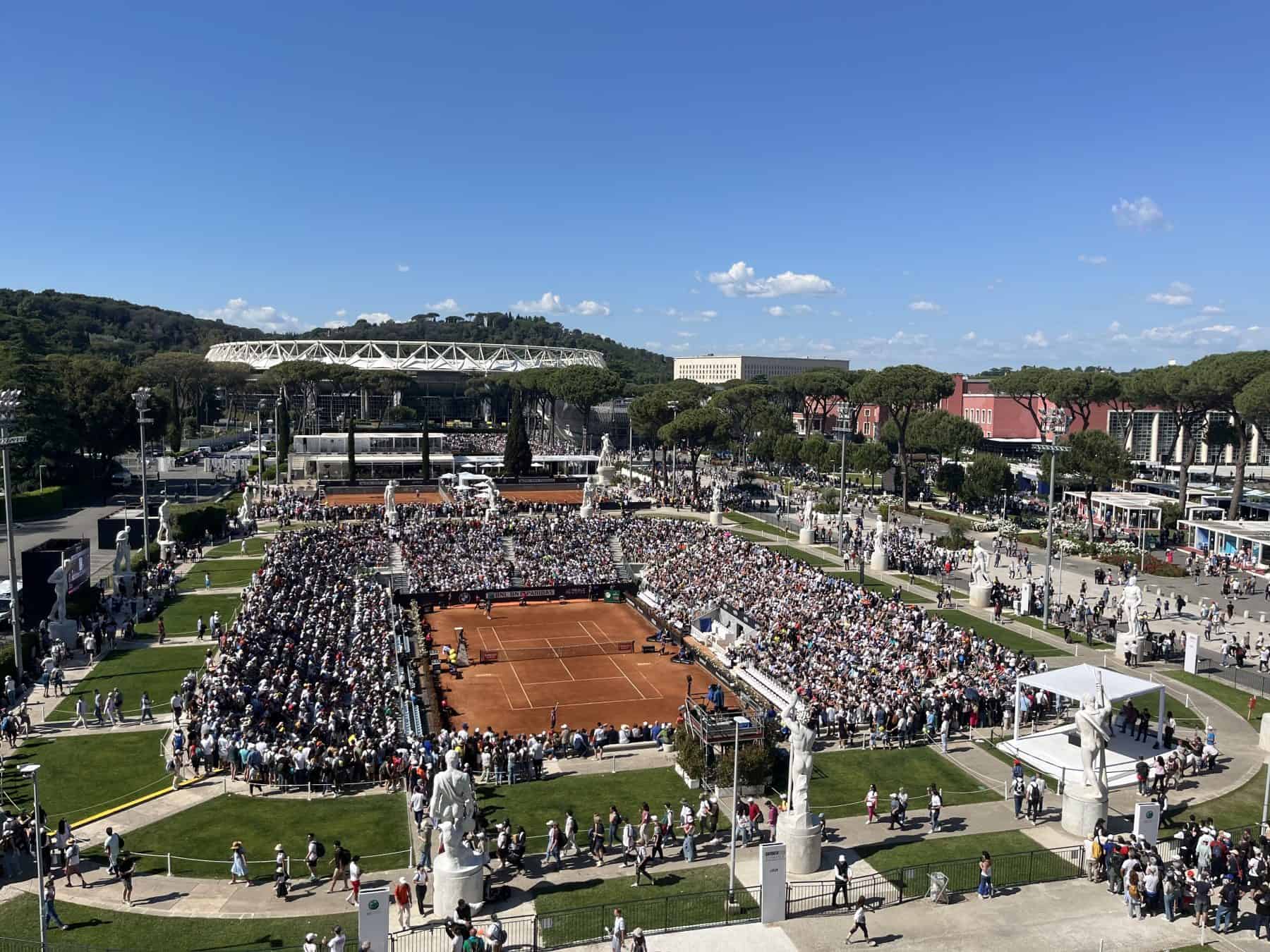
Each May, one of professional tennis's most prestigious tournaments, the Italian Open, is held on the grounds.
As a big tennis fan, I attended the tournament and it is the most impressive tennis campus I have been to.
While the statues that dot the grounds come from a dark time in Italy's history, they now are a thing of beauty that lends an air of extra importance to the tournament.
33. Cross Some Historic Bridges
As the Tiber River runs through Rome, there are 28 bridges connecting neighborhoods on each side.
Many of these bridges have become iconic landmarks, with some dating back thousands of years.
A few of the most popular bridges include:
- Ponte Vittorio Emanuele II: this 20th-century bridge (pictured above) links the historic center of Rome to Vatican City and has four bronze-winged victory statues
- Ponte Fabricio: dating back to 62 BCE. This is the oldest bridge in the world, in a picturesque location leading to Isola Tiberina
- Ponte Sant'Angelo: dating back to 136 CE and known for its 10 16th-century Bernin-designed angels
- Ponte Sisto: dating back to the 15th century, the cobblestoned bridge has a view of St. Peter's Basilica
- Ponte Milvio: dating back to 106 CE, known for the Battle of the Milvian Bridge between Emperors Constantine I and Maxentius.
Ponte Milvio is my favorite for a few reasons. One is that I'm very interested in the history of the Roman Empire, especially the time of Constantine.
But I also like this bridge because it is in the neighborhood of Milvio, an authentic Roman neighborhood off the tourist track with great nightlife.
Best of all, the famous Pasticerria Mondi at Via Flaminia 468 is just a 5-minute walk when you leave the bridge on the north side of the river.
34. Wander Quartiere Coppedè
The Quartiere Coppedè is one of Rome's smallest and most unique neighborhoods.
You won't find anything quite like it anywhere else in the city.
The architecture is a blend of many styles and influences, including Art Deco, Baroque, Art Nouveau, and medieval, and the words "fairytale-like" are often used to describe it.
There you'll find decorative balconies, ornate fountains, and detailed mosaics and frescoes.
There are many restaurants and cafes to stop in at as you walk its whimsical streets.
35. Stroll Through the Park of the Aqueducts
Parco degli Acquedotti is a public park in the Appio-Latino neighborhood.
It has ancient ruins, including the aqueducts that brought water to Rome until the 6th century CE.
You can also find part of Via Latina, an ancient Roman road, along with a mausoleum, and a bathhouse.
It's the perfect place to walk, run, or bike scenic paths and catch sight of various flora and fauna.
Tip: bring water during the summer months.
36. Step Into Galleria Sciarra
This little multi-storied shopping arcade, completed in 1888 and near Trevi Fountain, is a feast for the eyes.
It has walls covered in frescoes of ancient mythological scenes painted on the walls.
They are said to be some of the finest examples of Art Nouveau in Rome.
Part of the ceiling is made of glass, which floods the gallery with light and shows off its intricate stucco work.
It still functions as a shopping arcade today, so folks can indulge in a bit of spending if they wish.
37. Stroll Along the Tevere (Tiber River)
If you have time for a wandering walk or a bike ride, it doesn't get any better than along the Tevere.
You'll come across landmarks like Tiber Island, Teatro Marcello, S. Maria in Cosmedin, and Palazzo Spada.
Then there's Palazzo Farnese, Vatican City, Cast' Sant Angelo, the Palace of Justice, and several historic bridges.
TIP: I don't recommend doing this walk at night, even if accompanied.
38. Visit a Hidden Gem
In the church courtyard of San Pietro in Montorio, one will find the circular Bramante's Tempietto.
One of the finest examples of Renaissance architecture in Rome, this small temple was created by famed architect Donato Bramante who also created St. Peter's Basilica.
The structure was meant to commemorate the spot where Saint Peter was said to have been crucified.
It was commissioned by King Ferdinand and Queen Isabella of Spain and erected in 1502.
For several reasons, the Tempietto is a significant piece of Renaissance architecture.
Many other Renaissance architects would later be influenced by this style of architecture, which came to be associated with the era.
Inside are frescoes and sculptures, and a copy of Raphael's Transfiguration (the original was moved to the Vatican Museum).
39. Find a Magic Door
The Porta Alchemica (Alchemy Gate) or Porta Magica (Magic Portal) sits in Piazza Vittorio Emanuele II, a park that used to be the gardens of a villa that now lies in ruins.
This small stone door is embellished with complex symbols and inscriptions that some think are connected to alchemy and the hunt for the philosopher's stone, a fictitious substance thought to have the ability to turn base metals into gold and to bestow perpetual life.
The Marquis Massimiliano Palombara, who supported alchemy and aimed to establish a secret laboratory for alchemical experiments, constructed the door in the 17th century.
Giuseppe Francesco Borri, an Italian alchemist who some believed had discovered the philosopher's stone, was said to have used the door.
Rumor has it there are more doors in the area yet to be found.
40. Visit Aula Ottagona
The Aula Ottogona (Octagonal Hall) was first constructed in the 3rd century CE, likely as a meeting place for Roman dignitaries.
It was possibly even a place for ritual cleansing as it sat near the Baths of Diocletian.
After gradually falling into disrepair, the architect Pirro Ligorio was engaged to study and restore it in the 16th century.
He studied the octagonal shapes and columns and discovered colorful geometric mosaics on the floor and frescoes on the walls.
Four marble and bronze statues from as early as the 2nd century grace the hall and several sarcophagi have been discovered over the years.
The site is today part of the National Roman Museum.
41. Go to a Free Museum
Aside from all the museums you can visit for free on Domenica al Museo, some museums in Rome are always free for all guests.
Here are each of the city-run attractions you can enjoy without paying even one euro!
- Museo delle Mura
- Villa di Massenzio
- Museo Carlo Bilotti
- Museo Napoleonico
- Museo Pietro Canonica
- Museo di Casal de' Pazzi
- Museo di Scultura Antica Giovanni Barracco
- Museo della Repubblica Romana e della memoria garibaldina
42. Walk or Drive Via dei Fori Imperiali
This avenue is between the Colosseum and Piazza Venezia and is one of the best ways to see ancient Rome in a short time.
You'll pass landmarks at the Forum of Augustus, the Forum of Neva, and the Forum of Trajan in just about 15 minutes.
CHEAP THINGS TO DO IN ROME
In this section are low-cost but worthwhile activities and attractions to enjoy in Rome.
If you’re looking for additional ideas, don’t forget that you can always take a pay-what-you-wish walking tour.
43. See Where Julius Caesar Was Assassinated
In the center of Rome, lies a sunken square called Largo di Torre Argentina. It's best known as the site where Caesar was murdered by his Senate colleagues and friends in 44 BC.
The square dates back to the 3rd century BC and was the site of four ancient Roman temples and was uncovered in the 1920s when demolition work was occurring in the area.
Before 2019, one could only look down at the ruins which lay meters below street level. It was fenced off, but still visible.
In 2023, after years of excavation, Largo di Torre Argentina opened to the public. Now there is a ramp leading down into the square and walkways that offer close-up views of this ancient site.
Sadly this is not free. But visits are 45 minutes and tickets cost €5
I've long been fascinated by this event, having read the Shakespeare play so for me, it was really cool to see the place of the event that I had imagined dozens of times.
I didn't mind paying the small fee to see this immensely historic location.
See the official website for hours, directions, ticket information, etc.
44. Visit the Catacombs of Rome
There are several different locations where you can enter some of the catacombs of Rome.
While some of these sites offer free admission, others require a very reasonably priced ticket.
Most cost €10 per person, with reductions for children aged 7 to 16 and students up to 25 years old so it’s an affordable activity.
Once a year, many catacombs are open to the public for free. You can find out the date each year on the official website for the Day of the Catacombs,
Here are a few of the more popular locations you may want to visit:
- Capuchin Crypt
- Catacombs of St. Callixtus
- Catacombs of St. Sebastian
- Mausoleum of Cecilia Metella
- Catacombe Domitilla
- Catacomb Priscilla
- And More
Tip: The Catacombs of St. Callixtus and St. Sebastian are along the Appian Way, written about above.
45. The Baths of Caracalla
This is one of the most underrated ancient Roman sites, but I can't understand why!
Tickets cost €11 or less per person, and just €5 for European Union citizens between 18 and 25.
I didn't qualify for the reduced rate, but I didn't mind paying to see this nearly 2,000-year-old bath house.
If you read our full post on the Baths of Caracalla, you might be persuaded to visit, despite ticket costs.
In addition to seeing the ruins of the baths, you can purchase tickets for a new VR experience which gives you an idea of what the structure looked like when it was still in use.
TIP: Admission to this attraction is included for free with the Rome Turbo Pass and the Roma Pass. You can also save 20% on tickets with the Rome City Pass.
46. Step Inside the Pyramid of Cestius
The Pyramid of Cestius is an ancient pyramid-shaped tomb in the lovely Aventine area of Rome.
It was built around 18-12 BC as a final resting place for Gaius Cestius, a magistrate and member of one of Rome's religious orders.
On the third and fourth Saturdays and Sundays of every month at 11:00, people can tour the inside of the pyramid which has frescoes on its walls.
Tickets cost €5.50 and are conducted in Italian. Read more here.
47. See the Villa Farnesina
Agostino Chigi, a wealthy banker, had Villa Farnesina designed for himself in the early 16th century.
Raphael, Sebastiano del Piombo, and Il Sodoma, among other prominent artists of the era, were commissioned to paint murals portraying scenes from ancient mythology, history, and the Bible on the walls of the villa.
These frescoes are regarded as some of the best examples of Italian Renaissance painting in all of Italy.
A particularly interesting painting is the trompe l'oeil masterpiece called Sala delle Prospettive (Room of Perspectives), painted to seem like an open-air terrace with views over Rome.
This museum, which costs €5-10 per person to enter, is located in the Trastevere district.
48. Visit Basilica di San Clemente
This fascinating and richly decorated church is made up of three levels. It is described as a "lasagna" of history, with each layer representing a different era in Rome
The first level was originally a Roman house owned by a wealthy nobleman.
The house was converted into a Mithraic Temple, and there is still a shrine to the god Mithras. One can find the ruins of ancient walls, mosaics, and frescoes there.
The second level was originally a 4th-century church with marble decorations, frescoes, and more.
The third level is a 12th-century church, which includes the tomb of St. Cyril, a bell tower, and a fresco showing the crucifixion.
The church can be found near the Colosseum. Tickets run €5-10 per person.
FAMILY-FRIENDLY ACTIVITIES AND ATTRACTIONS
This section will provide a few ideas for fun things you can do for free with your family in Rome.
Don’t forget that many popular sites are included for free with Roman tourist passes. This is a great opportunity to save money while sightseeing with your family.
49. Villa Borghese Gardens
It's free, it's big and there are lots of things to do with kids here. There's a small playground with swings, slides
Playing on the big lawns and small garden areas is great fun for the littles. I saw lots of families having picnics.
The zoo is here (there is an entrance fee) and a puppet theatre. Also, the Cinema dei Piccolo, a theatre in Villa Borghese, offers free admission for kids.
50. Circus Maximus
This is one of the most historic sites in Rome, and it’s free to visit.
Circus Maximus was once a famous chariot racing stadium, but over time it has fallen into such disrepair that it is now used as something of a public square.
During certain holidays, Circus Maximus will often be the site of special events such as fireworks displays and live performances.
The former stadium is also often used as one of the sites included in triathlons or races.
51. Visit the Pinocchio Store
Bartolucci is one of the most unique shops in all of Rome as it produces all their products by hand with wood.
They sell a variety of sizes of toys, and they even have a few incredible display pieces such as a wooden motorcycle.
The most popular item they sell is traditional wooden Pinocchio dolls.
They even have a section of the store called “Geppetto’s Workshop” where your kids can see how these toys are made.
52. Visit the Cavalieri di Malta Keyhole
This might not be the first place that people visit when they come to Rome, but it is a great opportunity for one of the most unique views in the ancient city.
At the top of Aventine Hill, you'll find the Piazza dei Cavalieri di Malta.
On the gated entrance to the nearby churches, there is an old keyhole that has gained some notoriety over the years for a very special reason.
It just so happens to line up perfectly with the dome of St. Peter's Basilica across the river.
Over the years, the Cavalieri di Malta Keyhole has become a fairly popular tourist destination.
Many people come to see if they can spy on the famous church through this small keyhole, and it's a great activity for both young and old visitors.
53. Stick Your Hand in La Bocca della Verità
The enormous stone mask known as La Bocca della Verità, or "the Mouth of Truth" in English, has a fascinating history.
The mask, which was initially utilized as a drain cover at the Temple of Hercules, is believed to have been made in the first century AD.
Later, in the 17th century, it was relocated to the front of Santa Maria in Cosmedin church, where it still is today.
The Bocca della Verità is said to have the ability to identify whether someone is telling the truth or lying.
Their hand would stay intact if they were telling the truth, but if they were lying, the mask would allegedly bite off their hand.
People put their hands into the mask's mouth throughout the Middle Ages, something folks can do today for just €2 for anyone over 10 years
54. See the Elephant in Piazza della Minerva
In Piazza della Minerva, in front of Santa Maria Sopra Minerva church, there is a sizable marble statue of an elephant.
This whimsical elephant statue was created in the 17th century by Gian Lorenzo Bernini.
His original creation was deemed too plain by the Dominican friars who commissioned him, so he then inserted an ancient Egyptian obelisk into the elephant's back.
The church on the square is of the rare-in-Rome Gothic Style and dates back to the 13th century. Inside is a sculpture by Michelangelo and a fresco by Lippi.
FREE THINGS TO DO AT NIGHT
The following section will cover a variety of activities you can enjoy for free after the sun goes down in Rome.
Some of our other sections include ideas that would also be fun after dark, such as visiting the Catacombs or going to Trevi Fountain.
55. Testaccio Market
During the summer and fall, Testaccio Market extends its hours well into the night for an event they call “Open Days.”
These days, there will usually be live musical performances and some of the business owners in the area will offer additional services.
One of the things you can do is purchase fresh meat from the butcher and have it cooked on-site!
56. See Historic Fountains
There are a lot of famous fountains to be seen in Rome, and many of them include lighting to make it easier for visitors to enjoy after dark.
According to some travelers, these magnificent and often artistic pieces are even more beautiful at night.
We’ve already mentioned a few locations that you can see for free whenever you want, but we’ll include some additional fountains to check out below.
- Trevi Fountain (Piazza di Trevi)
- Fontana dei Quattro Fiumi (Piazza Navona)
- Fontana del Moro (Piazza Navona)
- The Fountain of Neptune (Piazza Navona)
- Triton Fountain (Piazza Barberini)
- Fountain of the Naiads (Piazza della Repubblica)
57. Vittoriano Monument
This is one of the most historic sites in all of Rome, and it's a great place to visit at any time of the day.
That being said, many visitors feel that the experience is even better at night, as they light up the Vittoriano Monument after the sun goes down.
While you can't go inside at this time, it's still quite nice to visit just to experience the beauty of this landmark after dark.
Also known as the Altar of the Fatherland, this structure is located right next to sites such as Piazza Venezia, the Capitoline Museums, and Complesso del Vittoriano.
NOTE: The Capitoline Museums are included with both the Omnia Vatican & Rome Card and the Roma Pass.
RELATED POSTS
