

Washington, D.C., the nation's capital, is a beacon of history, culture, and power.
It's home to iconic landmarks like the White House, the Lincoln Memorial, and the Smithsonian Museums, drawing millions of visitors each year.
But for those planning a trip to the capital, a common question arises—how safe is Washington D.C. for tourists?
Before living in D.C., I lived in London, Seoul, and small town North Carolina.
I have never felt D.C. was any less safe than these cities and in many times, I have felt more comfortable walking around downtown at night than I did in London!
One example I often use to put tourists at ease is - would I take my kids there.
My kids are 5 and 7 and have been in every part of the city with an important caveat - during the day.
I have never felt unease going to any neighborhoods during the day but there are a few that I would not venture to at night.
Short Answer for How Safe is DC?
What you consider or perceive as “safe” will vary from others.
Of course, I encourage all travelers (and locals) to use situational awareness and take common-sense safety precautions, regardless of city or neighborhood.
However, as a company made up of guides who live and work locally (and many native to D.C.) I feel that it is perfectly safe to run tours, day and night, through most areas of DC.
I feel safe traveling alone to and from my home to tours (by foot and public transit) and in over 15 years of running tours, I have never encountered a serious safety concern or situation.
I do not anticipate that visitors will experience difficulties in most parts of the city, which is why DC is one of the most popular tourist destinations in the country.
- Navigating Protests in DC
- Safe Areas for Tourists
- Areas that Require Caution
- General Safety Tips for Tourists
If you’re traveling with a group (church, scout, families traveling together), kids, pets (no pets allowed on public tours)), visit our FAQ page.
- Youth tickets are available for select tours (ages 4-16). Under 4 are free on most tours (not all tours are stroller friendly)
- A portion of all ticketed tours sponsors our DCPS Field Trips.
Tickets and Reservation Fees are refundable with at least 24 hours' notice before the start of the tour. All tours can be rescheduled with no penalty if space allows, even after the tour starts.
Navigating Protests in DC
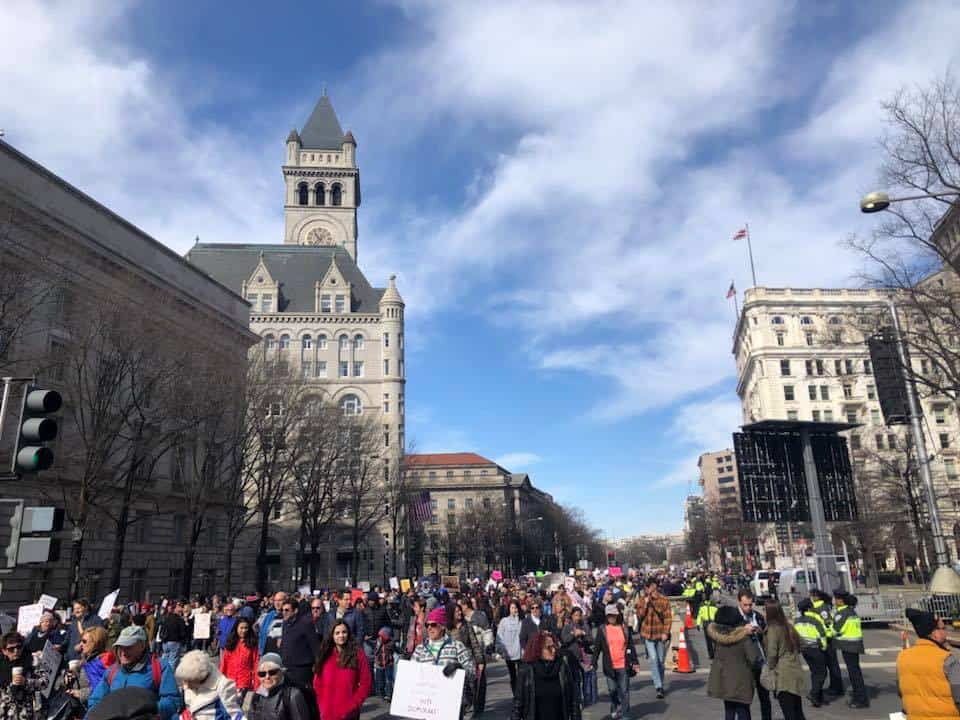
Given its political significance, DC is a hotspot for protests and demonstrations.
For tourists, understanding how to enjoy their visit amidst these events safely is crucial.
Protests in Washington, D.C., are common due to its role as the national capital.
Various groups gather here to express their views on civil rights to environmental policies. These events are often peaceful.
However, like any large gathering, some protests can escalate, leading to tense situations.
The majority of protests in D.C. remain nonviolent.
Law enforcement agencies are well-prepared to manage these events, ensuring participants and bystanders remain safe.
Despite occasional media portrayals, violent incidents are not the norm.
Tourists should be aware of ongoing demonstrations but not be deterred from enjoying the city's offerings.
Protests happen literally every day in DC, and you can easily have an entire stay in the city without realizing it.
Staying Informed About Current Events
Before heading to Washington, D.C., take some time to research any large-scale planned protests or demonstrations during your visit.
Websites like the D.C. Metropolitan Police Department or local news outlets provide up-to-date information on scheduled events.
By staying informed, you can plan your itinerary to avoid potential disruptions.
Many protests happen near the White House or the US Capitol Building.
Despite the history of protests on the National Mall, they are not as common.
They also require extensive planning and permits, so we know about protests and rallies on the National Mall well in advance.
In my more than a decade of guiding, I can think of only a handful of times that a visit to the memorials or museums was disrupted due to a protest.
Social media platforms are also valuable resources for real-time updates.
Follow local news stations or community groups to receive notifications about any changes in protest schedules.
I love the Instagram account @washingtonianprobs for this!
You can always ask your tour guide for insights into the day's activities.
Locals often know the city's pulse firsthand and can advise on routes to avoid or areas of interest.
Navigating Crowded Areas Safely
Be mindful of your surroundings when visiting popular tourist spots like the White House or Capitol Hill.
These areas can become crowded during protests, making it essential to maintain awareness of your personal space and belongings.
Keep valuable items secure and avoid displaying expensive electronics in congested settings.
Opt for public transportation when moving around the city.
The D.C. Metro system is efficient and can help you bypass traffic congestion or roadblocks caused by demonstrations.
If you need to familiarize yourself with the routes, apps like Google Maps can assist in seamlessly planning your journeys.
Google Maps does a good job of being up to date with road closures due to planned demonstrations!
In case you find yourself near a protest, it's wise to maintain a respectful distance.
Avoid getting caught up in the crowd, especially if you have no intention of participating.
Observing from a safe distance ensures you remain out of harm's way while still appreciating the democratic spirit of the capital.
Experiencing the City Beyond Politics
While Washington D.C. is synonymous with political activity, the city boasts many attractions beyond its governmental significance.
Take time to explore neighborhoods like Georgetown or Adams Morgan, which are known for their vibrant culture, eclectic shops, and diverse cuisine.
The city's parks and green spaces offer a tranquil escape from urban hustle.
Rock Creek Park, for instance, provides scenic trails perfect for hiking or picnicking.
These natural retreats offer a peaceful counterbalance to the city's bustling political energy.
Engage with D.C.'s culinary scene by dining at local restaurants.
The city's diverse population is reflected in its international cuisines, offering something to satisfy every palate.
From Ethiopian to Italian, the food scene is a testament to the city's rich cultural tapestry.
Safe Areas for Tourists
I always tell tourists that the only neighborhoods I’d recommend avoiding are ones they don’t have a reason to visit anyway.
The parts of the city with museums, great restaurants, and major attractions are all relatively safe as far as cities go!
Like any major city, Washington D.C. has its safe neighborhoods and areas requiring more caution.
It’s important to remember that D.C. is a bustling metro with diverse neighborhoods, each offering a unique experience.
A lot of the advice about safety ends up unintentionally being based on racist stereotypes.
A common (and misinformed) statement is to avoid SE DC.
Like any city, there are neighborhoods you probably don't want to stay in.
They don't have hotels or Airbnb, so it won't be an issue.
The city has changed immensely in the last 10-20 years, and there are SAFE & FUN lodging options in all four quadrants (even south of the river!).
Separating NW DC from the rest of the city has its basis in segregation, racial covenants, and redlining and I discourage that mentality when visiting this incredibly diverse and culture-rich city.
NW is the largest quadrant in DC and has many tourist attractions, so by default, you'll find a lot of great places to stay.
However, please don't assume anywhere outside of NW isn't also great.
If you're looking for local flavor, you'll find it all over the city, not just NW.
Please don't only look in NW DC - you'll miss out on great places on Capitol Hill, the Wharf, NOMA, and SE DC.
The National Mall and Surrounding Areas
This area is home to many of the city’s top attractions.
By day, it's bustling with tourists snapping photos, jogging locals, and vendors selling snacks and souvenirs.
At night, while the monuments are beautifully lit, it's advisable to stick to well-trodden paths and avoid secluded areas.
I have been on the National Mall alone as a female in the middle of the night (to get some pristine night photos!) and felt no real concerns.
The memorials generally have at least a few other people until about midnight and you’ll start to see photographers and joggers again around sunrise.

Downtown and Penn Quarter
These areas are less residential, though people do live here.
However, since most of this area is geared to office workers you will find it is quiet at night.
Specific corridors such as 7th St NW, H St NW and E St NW have theatres and restaurants, so they will be more lively.
You will also see more people facing housing issues in this part of town.
In our experience as tour guides walking downtown at night, sometimes alone and sometimes while on tour, I have never had any issues.
But, for guests coming from small towns or suburban areas, this may unnerve you.
Georgetown
Georgetown is a visitor's favorite because of its charming streets and upscale shopping.
It’s generally considered very safe, day and night, and offers a wide range of dining and entertainment options.
Since this is a residential area that has a lot of high end retail, plus the homes of diplomats and journalists, you’ll find it is regarded as mostly safe at any time of night.
The rogue drunk college students has been my only concern here.
You will find a number of people facing housing issues along the commercial corridors of M St NW and Wisconsin NW.
The neighborhood does have its own team as a security presence but also to assist with any persons dealing with mental health issues to ensure everyone’s safety.

Dupont Circle
This area is lively, with cafes, bars, and shops that attract both tourists and locals.
It's a safe neighborhood, though, like anywhere, it's best to remain vigilant, especially late at night.
Areas Requiring Caution
While most tourist-heavy areas are safe, there are parts of the city where extra precautions should be taken:
Though efforts are being made to rejuvenate some of these historic areas, tourists should still be aware of their surroundings, especially after dark.
These neighborhoods are up-and-coming with a lot of new development. While generally safe, crime rates can fluctuate, so it’s best to stay cautious.
Neighborhoods like Anacostia, U Street NW, and H Street NE have fascinating history and unique local restaurants.
DC by Foot offer walking tours in these neighborhoods! However, I advise caution if visiting at night.
U Street NW and H Street NE have a more vibrant local nightlife, so you’re more likely to end up in one of those neighborhoods than Anacostia.
However, I would not consider either U St NW or H St NE to be neighborhoods I would bring my kids to in the evening.
Though, I have taken my kids to all three of the neighborhoods during the day and have had wonderful experiences!
General Safety Tips for Tourists
Understanding the Layout of the City
D.C., is organized into four quadrants—Northwest, Northeast, Southwest, and Southeast—centered around the U.S. Capitol.
Familiarize yourself with the basic layout, as it will help you plan your itinerary and understand where you are at all times.
Many popular attractions, such as the National Mall, the White House, and the Smithsonian museums, are located in the Northwest quadrant.
The city's public transportation system, including the Metro and bus system, is an efficient way to get around.
Download a map or use a navigation app to help you understand the routes.
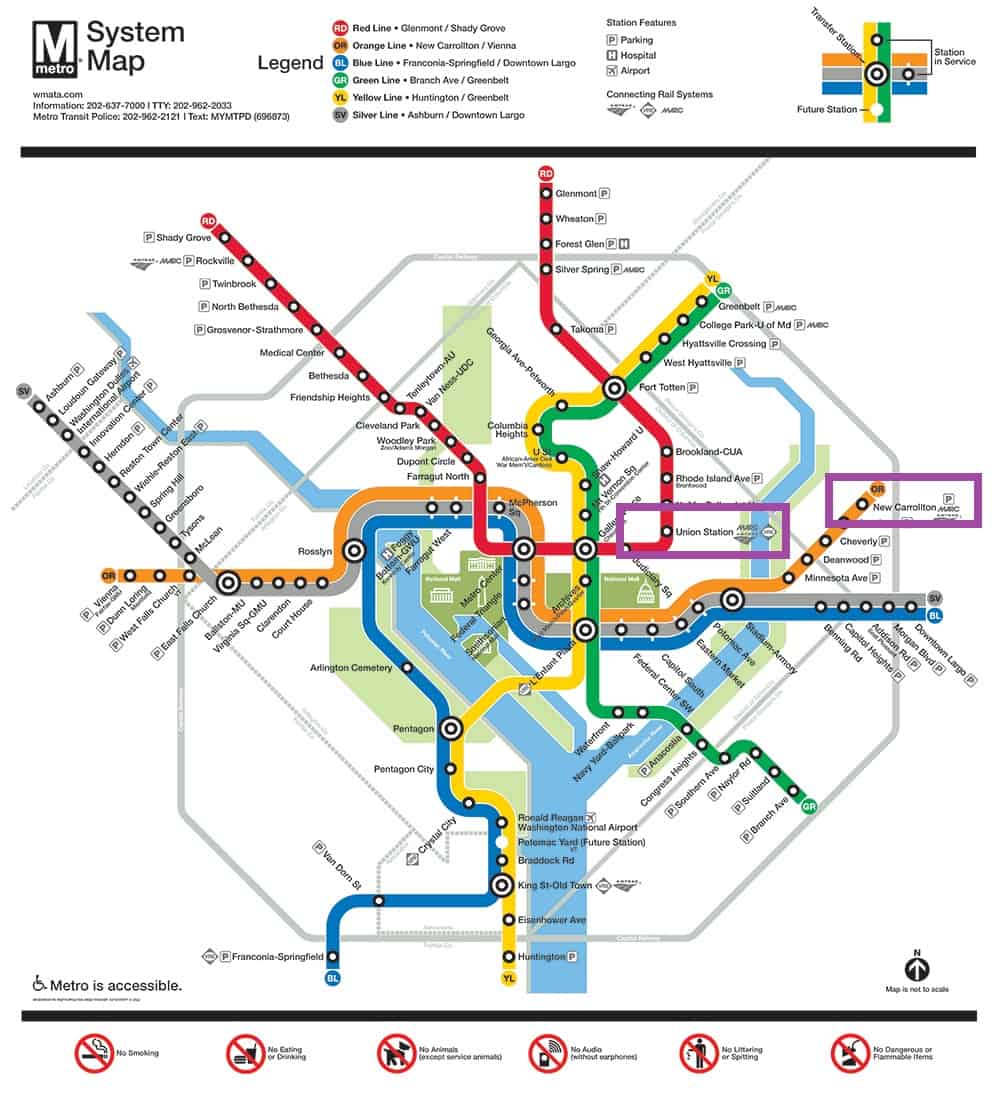
Keeping a map handy will not only guide you to your desired destinations but also help you avoid less safe areas.
In addition to public transport, D.C. is a walkable city, offering plenty of opportunities to explore on foot.
Be mindful of crosswalks and traffic signals, and stay vigilant, especially when crossing busy streets.
Crosswalk timing in DC can be pretty short, so watch for that.
When the red hand appears with the countdown, that is a signal for those already in the crosswalk to hurry up and get to the other side.
PRO TIP: Many crosswalks in DC act like “zebra crossings” from the UK.
There are no lights, but cars are legally supposed to stop if a pedestrian is in the crosswalk. The key point there is“IN” the crosswalk.
If you stand on the sidewalk and wait for cars to stop, that might never happen. You have to step out to get the vehicles to stop for you.
Staying Alert and Aware
One of the most important aspects of staying safe in any city is maintaining a high awareness of your surroundings.
Always be conscious of the people around you and notice any unusual behavior.
When exploring D.C., avoid distractions such as excessive phone use or wearing headphones, as these can make you an easy target for pickpockets or other petty crimes.
DC does not have a substantial pickpocketing issue like some European cities.
In my 15 years of living here, I have never even heard of anyone being pickpocketed, but it is still a city after all, and there is some level of petty crime.
During your travels, trust your instincts. If a situation or area feels unsafe, it's best to avoid it.
Many friendly locals can offer advice or directions if you need clarification on a particular neighborhood or street.
Choosing Safe Lodging Options
Selecting the right accommodation is crucial for a safe stay in Washington, D.C.
Research hotels, hostels, or vacation rentals in advance and read reviews from previous guests.
Opt for places in well-lit, populated areas, close to the attractions you plan to visit.
If you're traveling alone, consider staying at reputable hotel chains or accommodations with shared facilities, where there are other travelers to interact with.
Solo travelers often find comfort in connecting with others in communal spaces.
Navigating Public Transportation Safely
Washington, D.C.'s public transportation system is generally safe, but it's important to exercise caution, especially during off-peak hours.
When using the Metro, keep your belongings close and be aware of your surroundings. Avoid empty train cars and choose carriages with other passengers.
Some bus lines are known for eccentric riders. The X2 line has a documentary about the strange happenings on that route.
Most bus routes tourists will use will be filled with other tourists unless you travel to or from a neighborhood you may be staying in.
Exploring Neighborhoods with Care
Washington, D.C., has a wealth of diverse neighborhoods, each with its own charm and appeal.
While many areas are safe and welcoming, it's wise to research neighborhoods before visiting.
Some areas may experience higher crime rates, especially at night.
Georgetown, Dupont Circle, and Capitol Hill are popular, tourist-friendly neighborhoods with many attractions, dining, and shopping options.
Meanwhile, areas that do not have a large tourist presence may require extra caution after dark.
If there are not many restaurants, hotels/Airbnbs or any attractions, there may not be a reason to head there at night anyways.
Travel in groups and stay on well-lit, populated streets when exploring new areas.
Consult your hotel staff or locals for advice if you need clarification on a neighborhood's safety.
Protecting Your Personal Belongings
Keeping your personal belongings secure is fundamental to travel safety.
Use anti-theft bags or wallets with secure closures, and consider wearing them close to your body.
Backpacks can be worn with zippers facing your back, and handbags should have straps that can't be easily cut.
Avoid displaying expensive items such as jewelry, cameras, or electronics, which can attract unwanted attention.
Keep your belongings in sight or securely under the table when dining in restaurants or cafes.
In crowded areas, be especially vigilant against pickpockets.
Consider using a money belt or neck pouch to store important documents such as your passport, ID, and credit cards.
There has been a rise in car theft in Washington, D.C. in the last few years.
Generally, I make sure that I don't leave anything valuable in view.
But as a mom, my car is just a disaster of half eaten snacks, library books, and muddy clothes.
So, I'm never very concerned that someone is going to want to sort through that.
I have had items stolen from my car when I forgot to lock it - a phone charger, sunglasses, and space change.
This happened during the day in a busy neighborhood on Capitol Hill, but again I had not locked my car.
Washington D.C.'s Police Presence
The Metropolitan Police Department is highly visible, particularly in tourist areas.
The Capitol Police and other federal law enforcement agencies provide an additional layer of security in governmental districts.
There are dozens of different law enforcement agencies in DC from the Secret Service to Capitol Police, Park Police, Metro Police, and more.
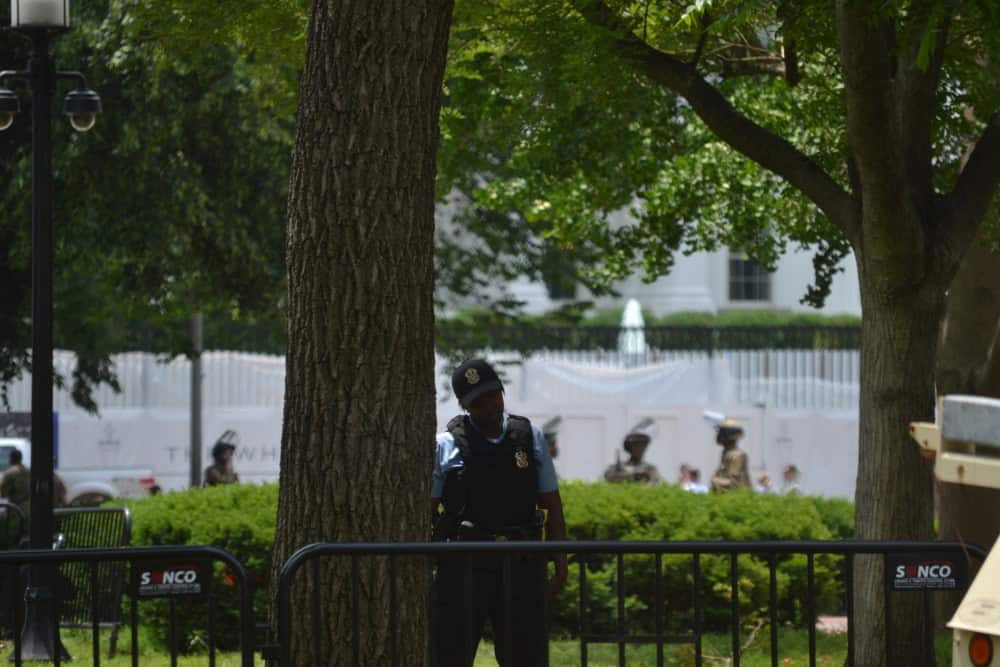
Something to remember in DC is that these officers often deal with an annoyance rather than a real threat, so don’t panic if you see something happening.
I am in Lafayette Square by the White House a few times a week and often see them close the park for “security reasons.”
Almost always, it is a situation where a student on a field trip forgot a backpack rather than something that seriously concerns me.
Listen to instructions and stay cautious, but don’t get too scared if you see that happen.