

September 11, 2001, started as a sunny day in Washington, DC. However, the beauty of that morning would be marred forever when five hijackers took control of American Airlines Flight 77 and directed it toward the capital city.
At precisely 9:37 a.m. the plane crashed into the Pentagon, killing 184 people. There were 59 victims on the aircraft and 125 in the building.
Seven years after the attack, the Pentagon Memorial was opened to commemorate all those who were lost.
When I first became a tour guide in Washington, DC this memorial was only a few years old and I began taking student groups here. Many of them had vague memories of the attacks. As the years progessed, I found that students were particularly touched visting the first bench you come across.
Dana Falkenburg was born in 1998 so her bench is the first you'll see as you enter. My students were born around that same year and were particularly moved hearing the story of someone their own age.
As I have taken different ages and nationalities, one thing that resonated with tourists is to find the age line of their own birth year and read the names of someone lost that day who would be the same age as them.
HOW TO GET TO THE PENTAGON MEMORIAL
Entrance is free and you do not need a ticket to enter the memorial and there is no security check, though officers of the Pentagon Police force are on duty and can do spot checks at any time.
The Pentagon Memorial is, as expected, at the Pentagon itself but is located outside the secure area. You will not need to go through security to visit, nor do you need an appointment like you do to visit the Pentagon building.
One thing to note however is you will not be able to drive up to it at all. It is only accessible by foot using the designated sidewalks.
Regardless of how you arrive, we recommend using this Google Maps link for directions to the memorial.
The Pentagon Memorial is easily accessible by Metro. On the Blue Line, exit at the Pentagon Metro Station and follow the signs around the building directing visitors to the memorial.
If traveling by car, you may park at Pentagon City Mall and then walk over to the memorial.

Visitors need to park at the Pentagon City Mall, about a five minute walk away.
To get there, simply cross Army Navy Drive near the Macy's and walk through the tunnel on the opposite side of the parking lot. Signs will then direct you towards the memorial.
SELF-GUIDED TOUR OF THE PENTAGON 9/11 MEMORIAL
Start at the black granite entry stone that reads "Pentagon Memorial." There is only one entrance into the memorial itself.
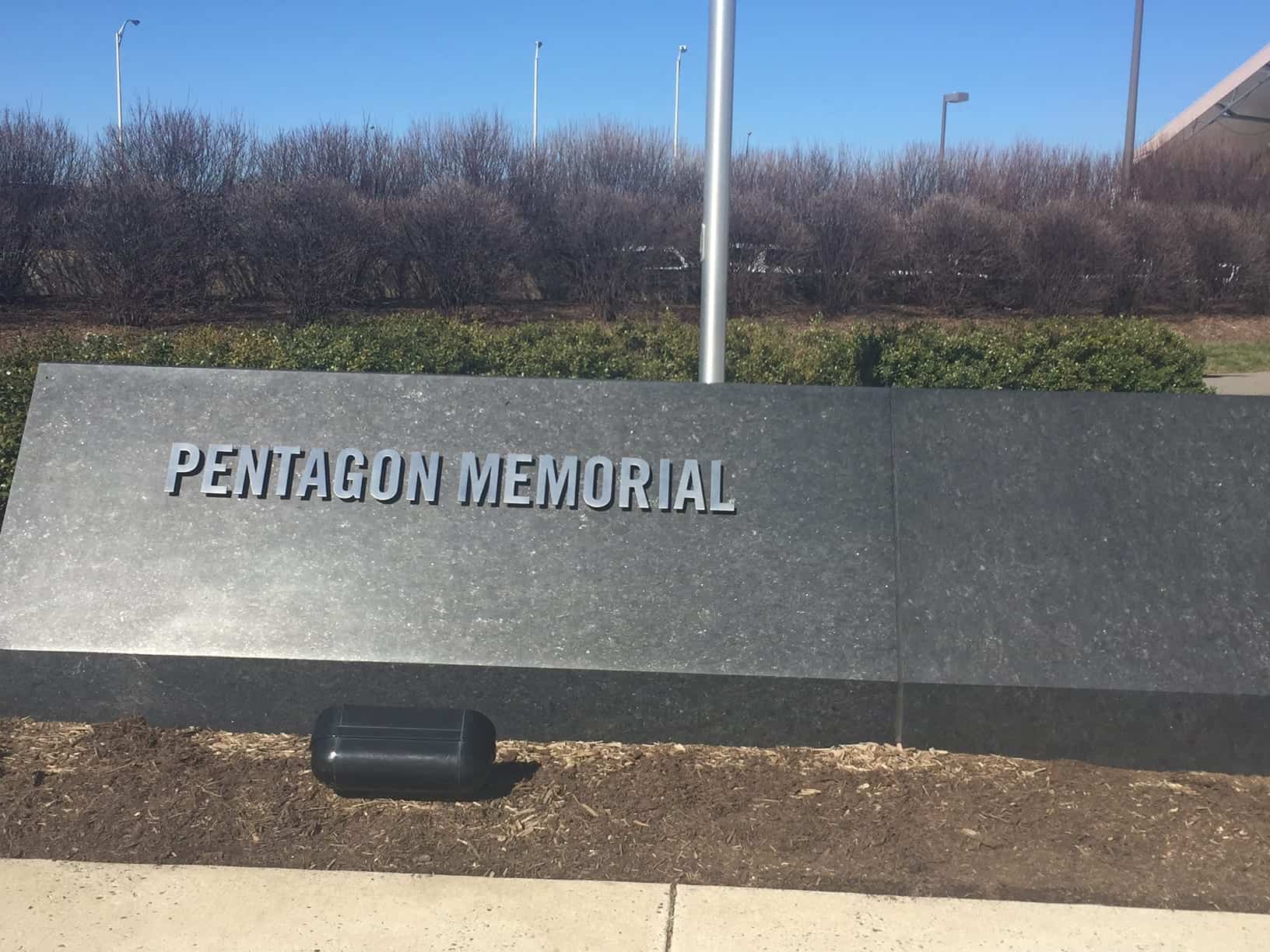
Here we honor the 184 lives lost at 9:37 AM on September 11, 2001, when hijacked American Airlines Flight 77 was crashed into the Pentagon.
On the second black stone, you can see the names of the 184 victims listed in alphabetical order by their last name, as well as their birth year.
The year of their birth will help you locate their memorial unit.
The Memorial was designed by Julie Beckman and Keith Kaseman. They were selected from an applicant pool of over 1100 proposals.
Their proposal was an elegant, yet simple memorial that honors their lives by capturing the span of their ages – from a 3-year old to a 71-year old.
ENTRANCE TO THE MEMORIAL:
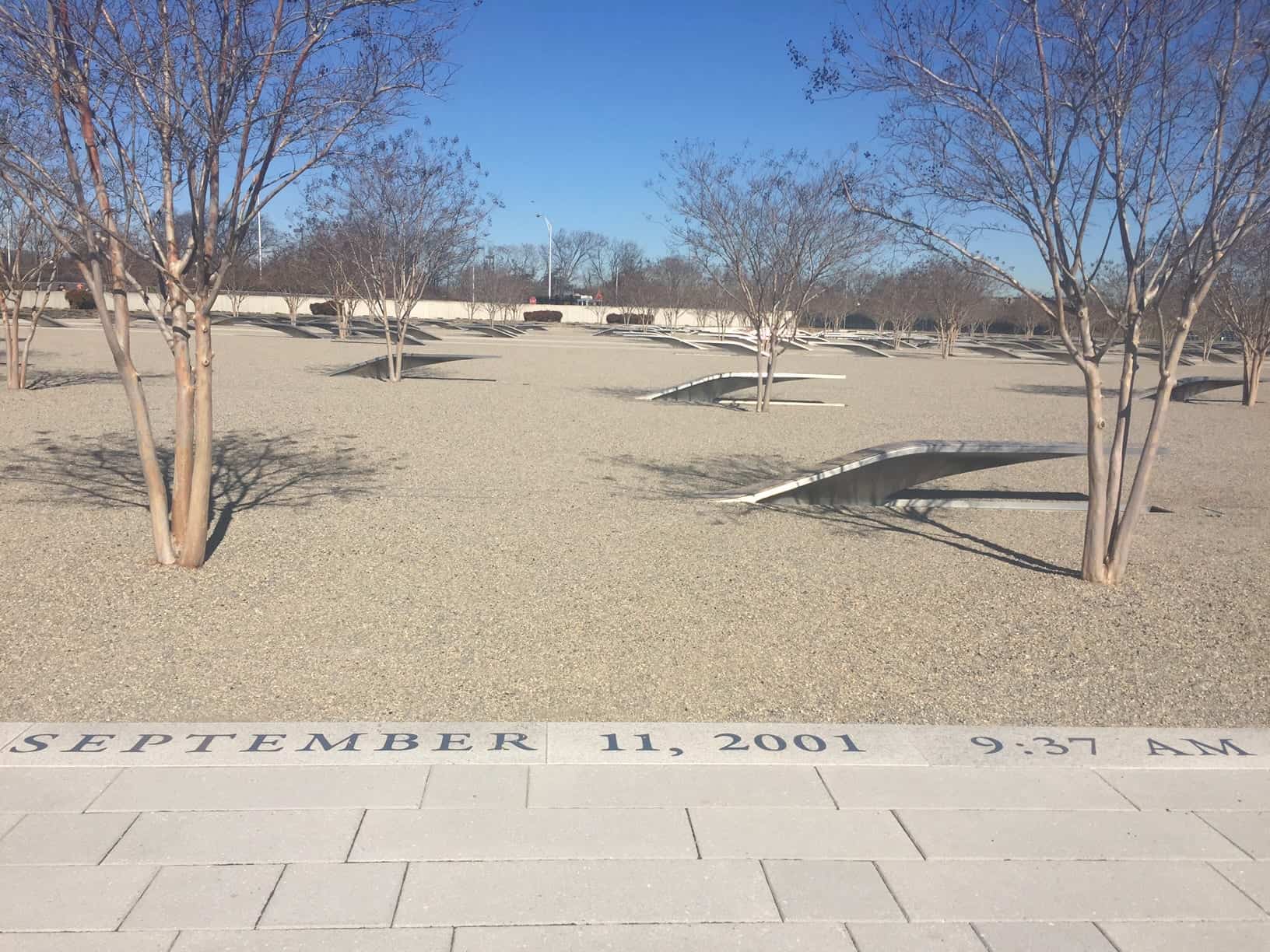
Walk through a corridor of trees to the beginning of the Memorial, where you will see date and time etched on the ground.
This is referred to as the Zero Line, and it represents the precise moment when the attack occurred.
BENCHES:
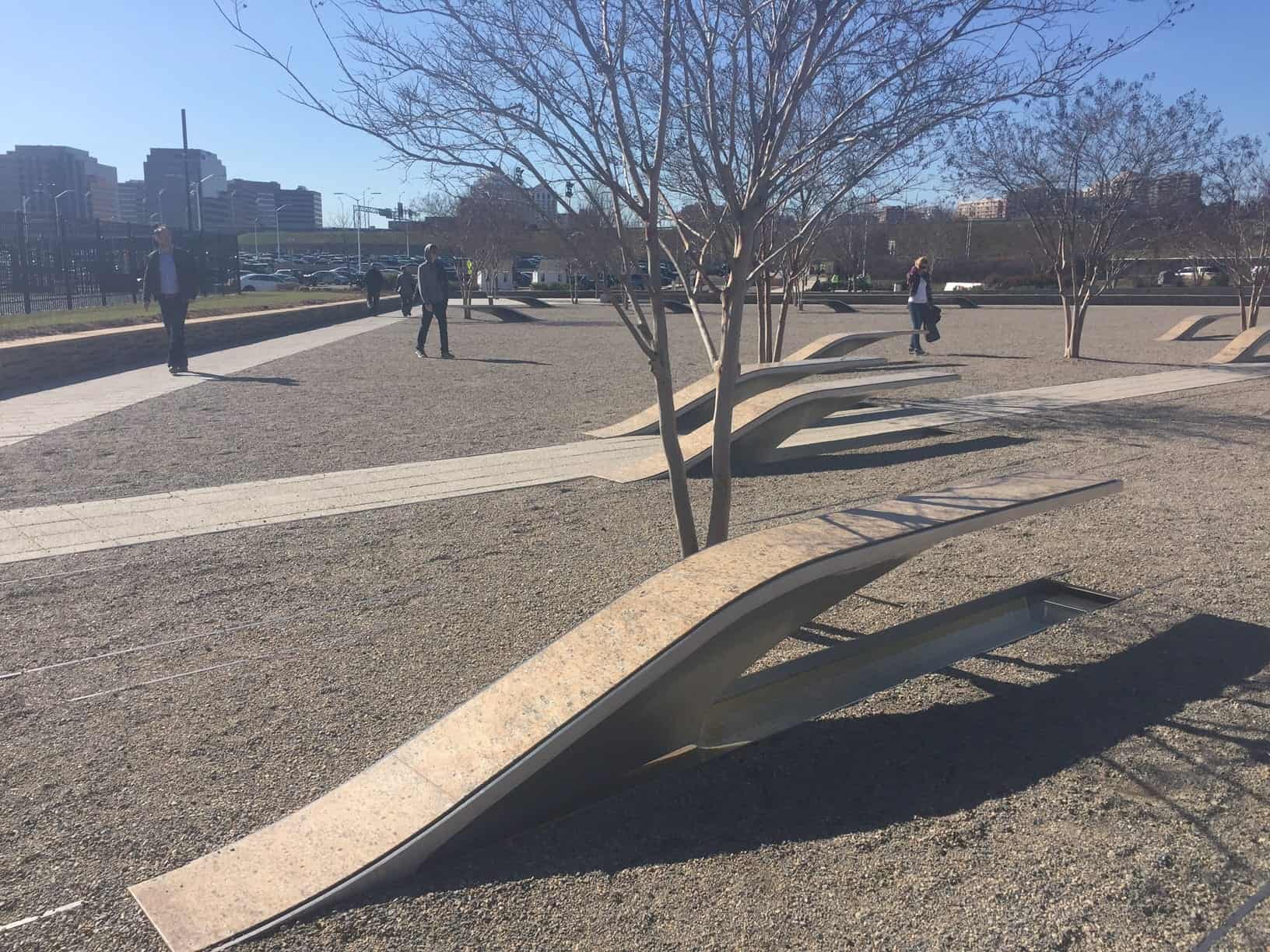
Each of 184 Memorial Units are organized by age, and the stainless steel strips represent each victim’s birth year.
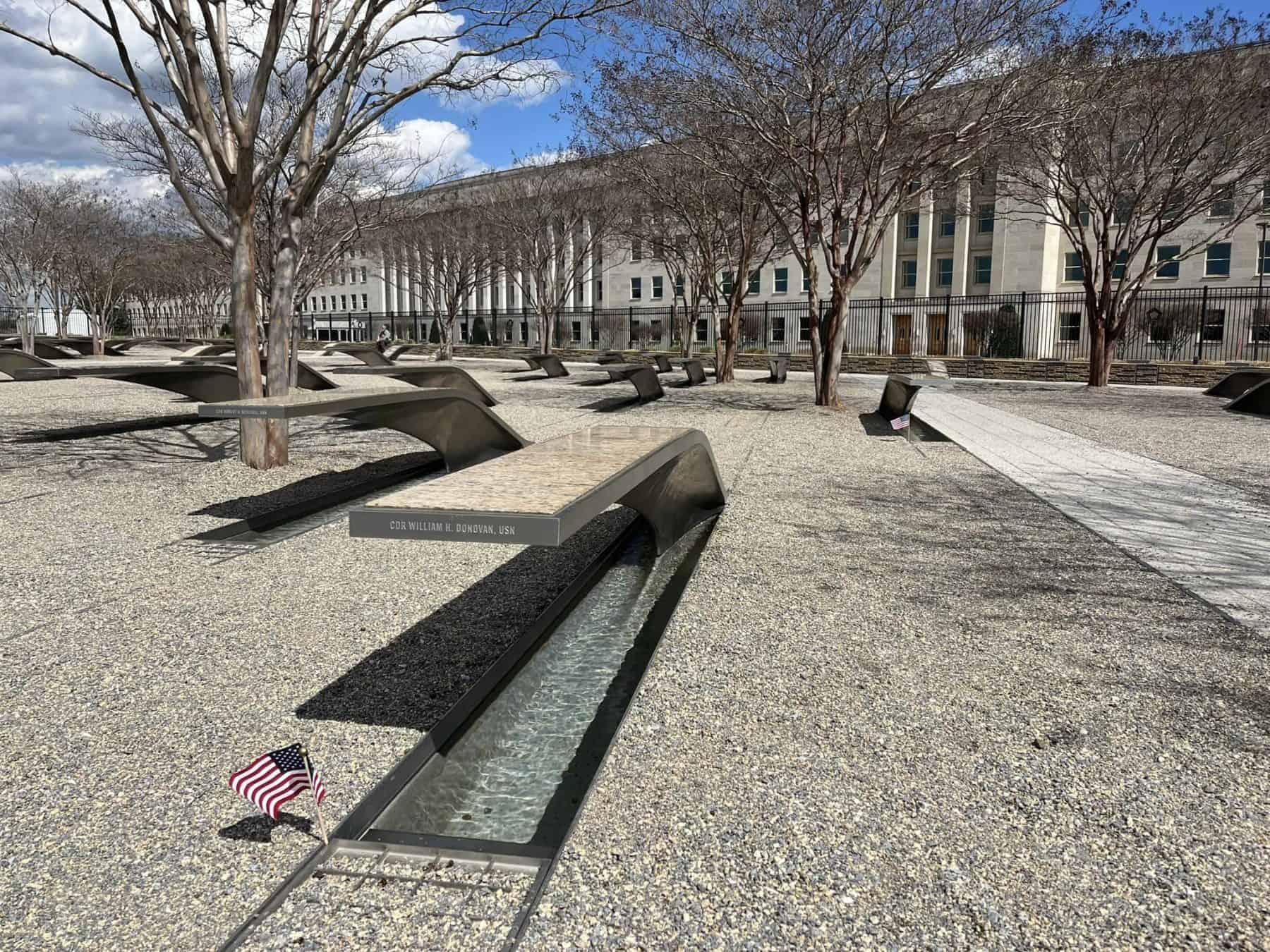
There are 184 cantilevered benches, and each one serves as a permanent tribute to a specific victim. The benches are made of stainless steel and inlaid with smooth granite.
A Memorial Unit also contains a pool of water, reflecting light in the evenings onto the bench and surrounding gravel field.
The benches are also specifically positioned in the memorial to distinguish victims who were in the Pentagon from those who were onboard American Airlines Flight 77.
If you stand at a bench facing the open side where you see the plaque with the victim's name, you can tell if they were aboard the plane or at the Pentagon.
At each of the 125 benches honoring the victims who were in the Pentagon, you'll see the victim’s name and the Pentagon in the same view.
At the Memorial Units honoring the 59 lives lost on Flight 77, you see the victim’s name and the direction of the plane’s approach in the same view.
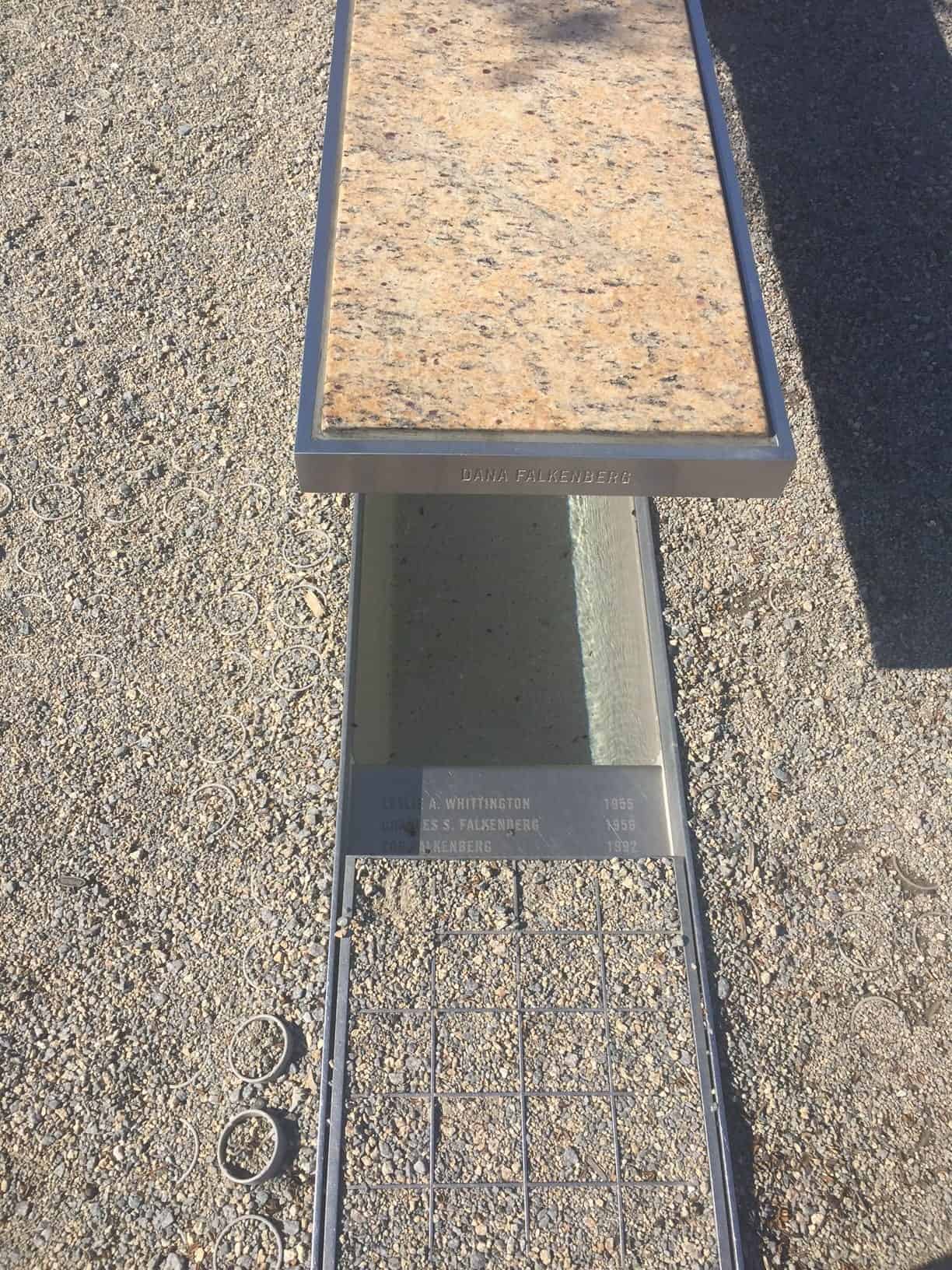
Victims from the same family are linked by a plaque at the end of the pool of water, which lists their family members who also died in the attack, forever keeping the family together.
At the line for the year 1998, you see young Dana Falkenberg’s bench with the names of her parents and her sister under her plaque.
The memorial engages the senses with sounds of flowing water and crunching gravel, as well as the shimmer of lights.
TREES:
You'll notice the 85 Crape Myrtles planted around the memorial. These will eventually grow to be 30 feet tall and provide shade to guests.
They are arranged so that no individual tree is associated with a victim's bench.
POINT OF IMPACT:
One thing I'm often asked to point out is exactly where the point of impact happened. The section has been rebuilt and it is hard to imagine the destruction. You can best see the point of impact of the attack between the 1959 and the 1961 age lines, from the side closest to the Pentagon.
You will notice a charred black stone at the base of the Pentagon. This stone was excavated from the original building, inscribed, and reset into the renovated structure.
AGE WALL:
An Age Wall borders the memorial. It is at its smallest near the entrance and increases in height by one inch as it crosses the age lines.
As you move through the Memorial, the wall gets higher, growing from three inches (the age of the youngest victim Dana Falkenberg) to 71 inches (the age of oldest, John D. Yamnicky).
The memorial is next to a busy road and bike path so the wall does provide a barrier to protect the peace of the memorial. It also gives you a sense of how many large the span of lives lost really was.
When you see the depth of the memorial, you'll take in how many benches there are - one bench for each of the 184 victims. But the age wall reminds you that the loss was not just military members in their 20s-30s but ranges from 3 years old to 71 years old.
BEST TIME TO COME
The Pentagon Memorial is open 24 hours a day. It's something to experience both day and night. I have found it most peaceful in the morning.
At 9:37 am each day, the flow of water underneath each bench is turned off for a 1 minute moment of silence.
Something to note that you cannot really control is that despite our best efforts as tour guides, large student groups do detract from the memorial. In general, we don't come here as much anymore but when we do bring student groups, it is for a short visit.
If you see a large student group, its best to just wait until they depart before you visit if you have the time to do so.
OTHER TIPS
Please remember that there is absolutely no photography allowed of the Pentagon building itself.
Photos of the memorial are fine, but photos of the building are strictly prohibited.
If you'd like to visit inside the Pentagon, it is open for tours upon advance registration. Pentagon Tours: How to Visit the Pentagon.
What else can you explore in the neighborhood?
- A not-to-miss national site near the Pentagon is the Arlington National Cemetery. Explore this national place of interest through our top-rated Arlington Cemetery Tour.
- The Marine Corps Memorial and the Air Force Memorial are also nearby.
- Step away for some lunch and shopping at the expansive Pentagon City Mall.