
When it comes to green spaces, we are spoiled here in London with so many beautiful parks to choose from! The one I get asked about most frequently, however, is Hyde Park - which is why I've made this post.
In this post, I will go over the top things to do in Hyde Park London, one of our city's great public green spaces.
I'll also list nearby attractions and things to do.
- What is Hyde Park?
- Top Things to Do
- Things to Do Near Hyde Park
- Amenities and Hours
- Best London Parks and Gardens
What is Hyde Park?
Once Henry VIII’s private hunting grounds, Hyde Park was first opened to the public during the reign of King Charles I in 1637.
Queen Caroline, the wife of King George II, heavily renovated the area in the 1730s, laying the groundwork for all that still stands here.
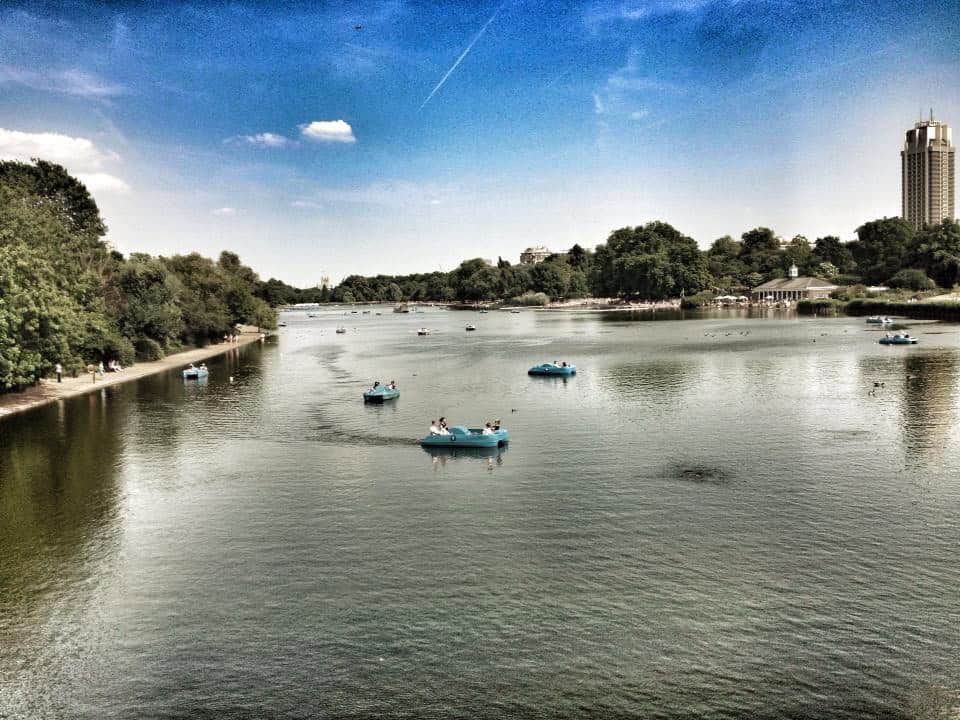
She also created The Serpentine, a body of water that today partially marks the boundaries of Hyde Park and Kensington Gardens to the west.
In addition to its beauty, the park is a place for celebrations (jubilees, the end of the Napoleonic Wars, the Great Exhibition), music concerts in the summer, and the Winter Wonderland in the winter.
Popular with Londoners and visitors alike, Hyde Park is 350 acres of parkland right in the heart of the city, perfect for sporting, swimming, picnicking, boating, or just casually strolling.
Although most people I know visit Hyde Park for a nice stroll or for a picnic, there are actually a number of landmarks to see and interesting things to check out!
This section covers some of the best landmarks and most historic sites to see in Hyde Park.
I'll also include fun ideas for activities, details for museums you might want to visit, and other ways to experience the park.
Take a Self-Guided Audio Tour
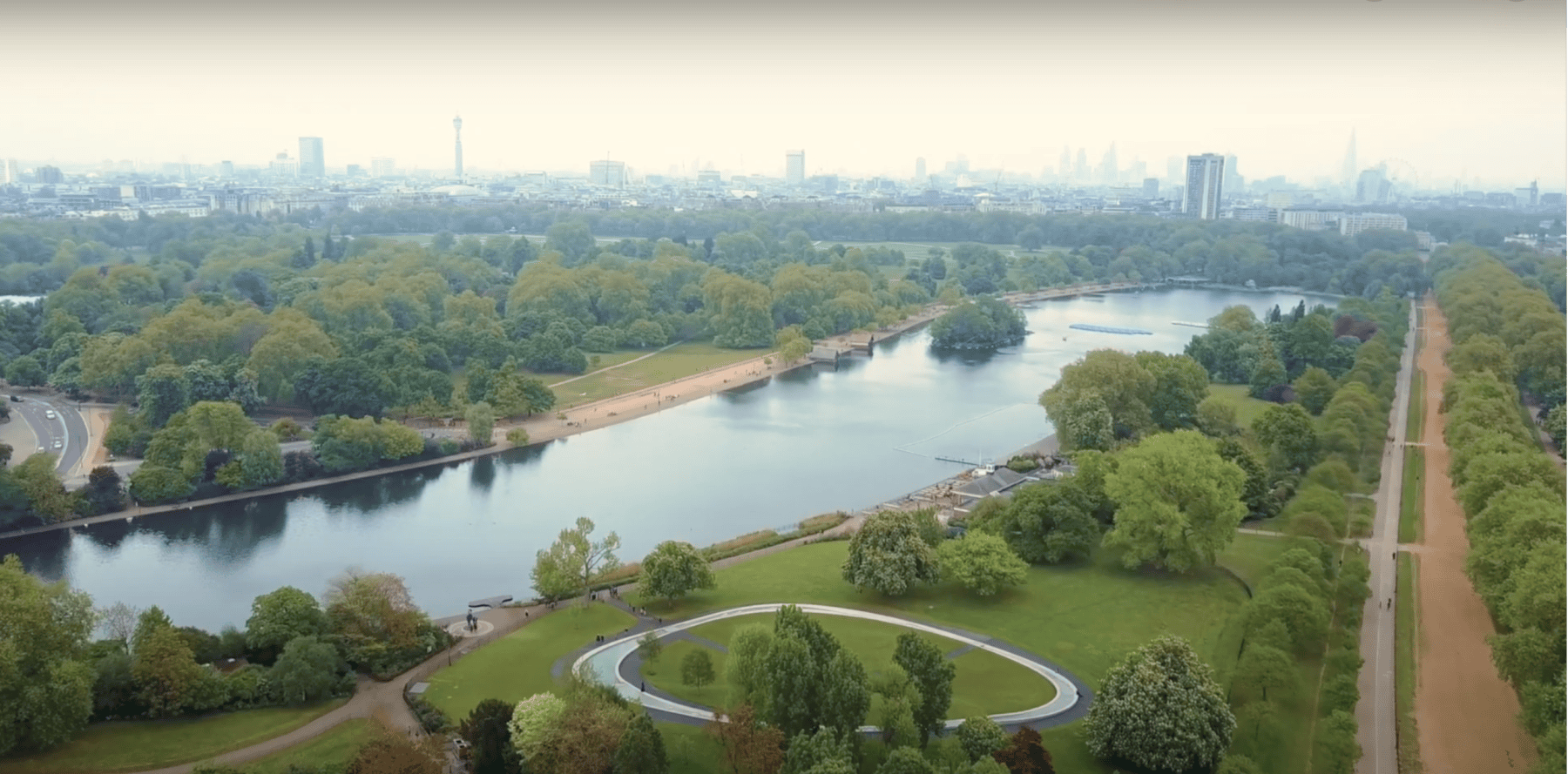
Here is a sample from my audio tour of Hyde Park, written and narrated by one of our expert tour guides (me!).
Listen to a sample of this tour.
Download this audio tour and check out our others here. Just £2.50/download.
Visit Marble Arch
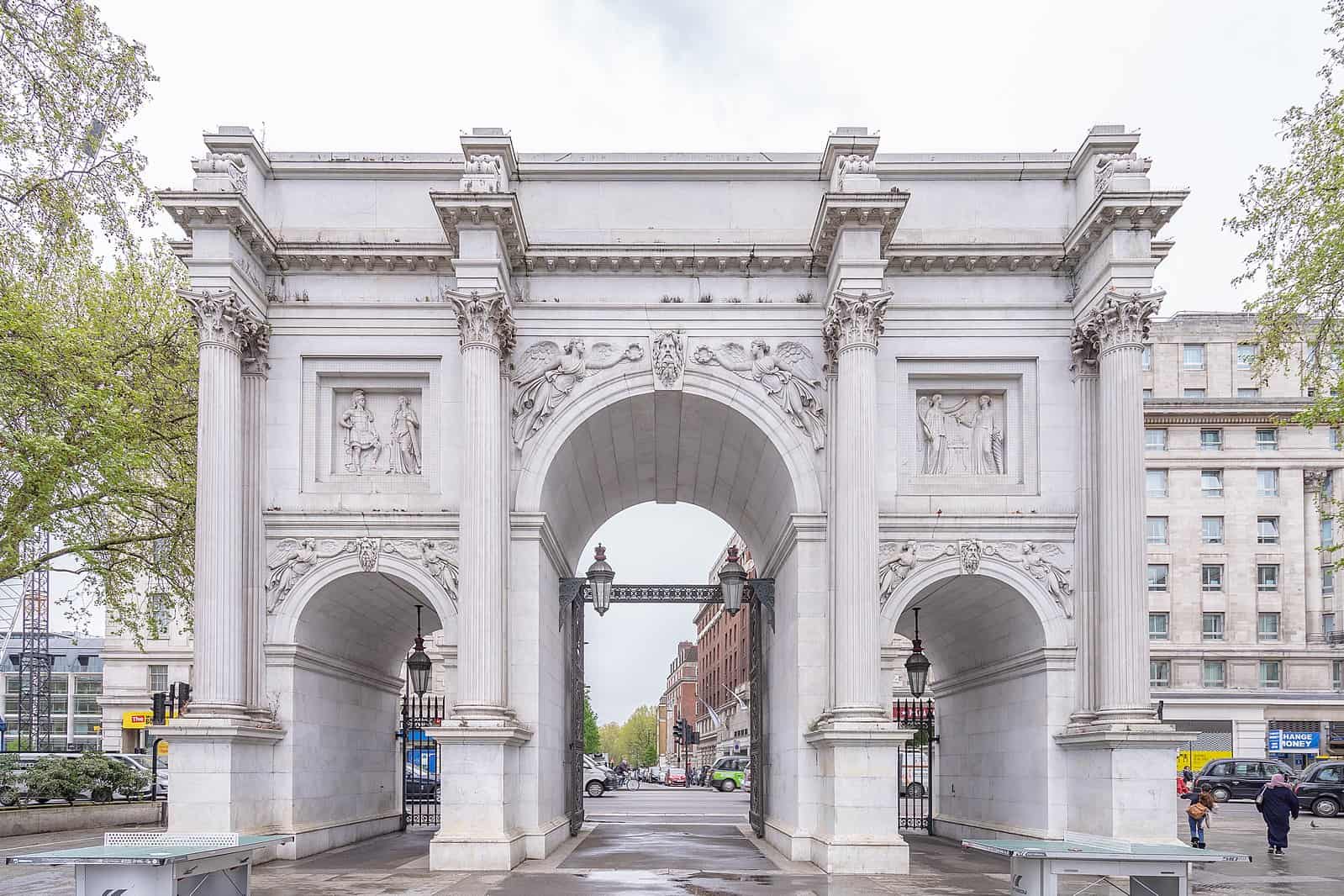
Honestly, these days, Marble Arch isn't much of a destination in its' own right and I tend to only see it in passing if I'm on a bus travelling through the massive roundabout it sits in the centre of. But there is history here for anybody who is interested!
Marble Arch is a 19th-century white marble triumphal arch, originally designed by esteemed architect Sir John Nash (responsible for a lot of my favourite London architecture like Park Crescent and Regent's Canal) in 1827, the arch was originally built to serve as an entrance to Buckingham Palace.
In fact, Marble Arch used to be located in what is now the forecourt of Buckingham Palace, where the famous balcony on the East Front sits today.
The Arch was moved to its current location in 1851 when Buckingham Palace was expanded to accommodate Queen Victoria’s growing family. (Although my favourite 'urban legend' about the arch is that Queen Victoria thought it was so ugly, she had new carriages built that were too large to fit through the arch so they had to move it away from the palace. This isn't actually true but I still think it's funny.).
There are three small rooms inside the Arch which were actually used as a police station from 1851 until 1868!
Following the widening of Park Lane in the early 1960s, the site the Arch now stands on was separated from the main body of the park.
It was turned into a traffic island at the junction of Oxford Street, Park Lane, and Edgware Road.
For more information, read my post on Marble Arch.
Listen Up at Speakers’ Corner
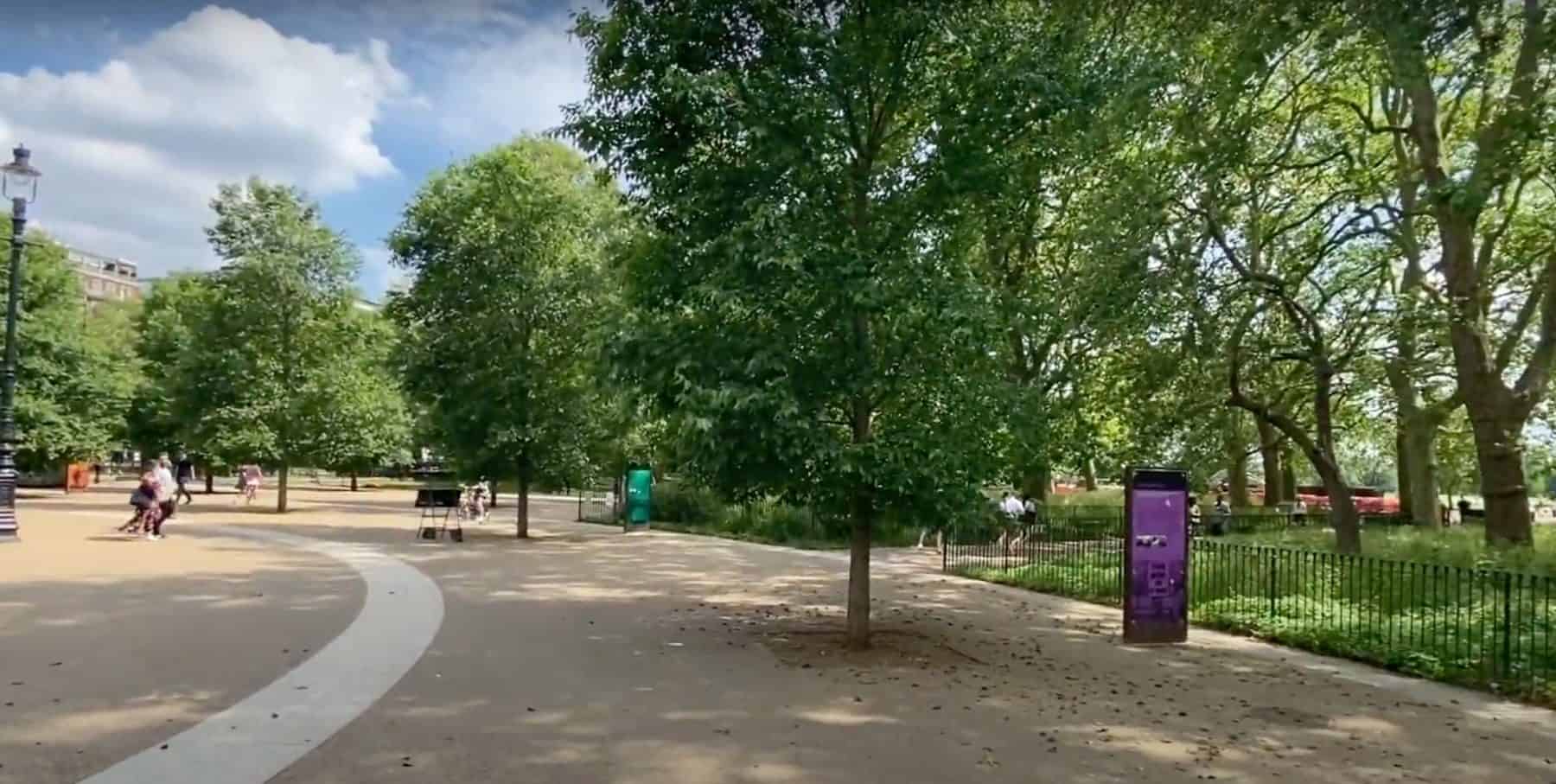
Next to Marble Arch stands Speakers’ Corner, a traditional site for public speeches and debates since the mid-1800s.
After a number of protests and demonstrations in Hyde Park, Parliament set aside this corner of the park for free speech in 1872.
I get asked a lot about Speakers' Corner. People always want to know if it's still a site of protest and free speech and the answer is yes! Any member of the public can speak here, at any time, however, police can intervene if the speech is said to be “unlawful” or “profane.”
Today, most speakers here are preaching on religious and political matters, and both topics have actually caused riots to break out here in decades gone past! Personally, I've only ever seen religious speakers preaching there, but I do have friends who make it a point to go down for larger events and well-known speakers.
Notable people who have spoken here include Vladimir Lenin, George Orwell, and Karl Marx, just to name a few.
Hire a Boat or Take a Swim in The Serpentine Lake
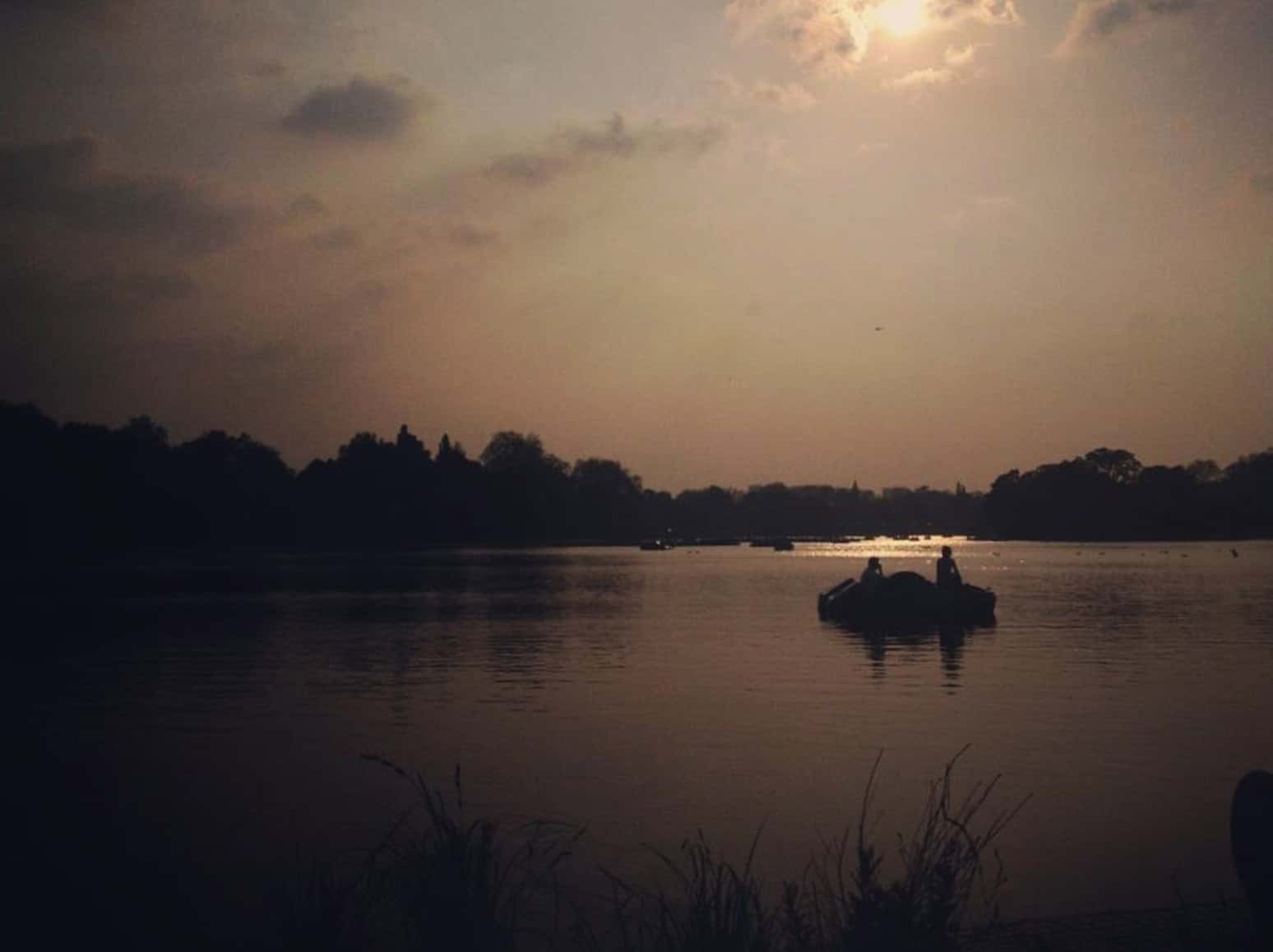
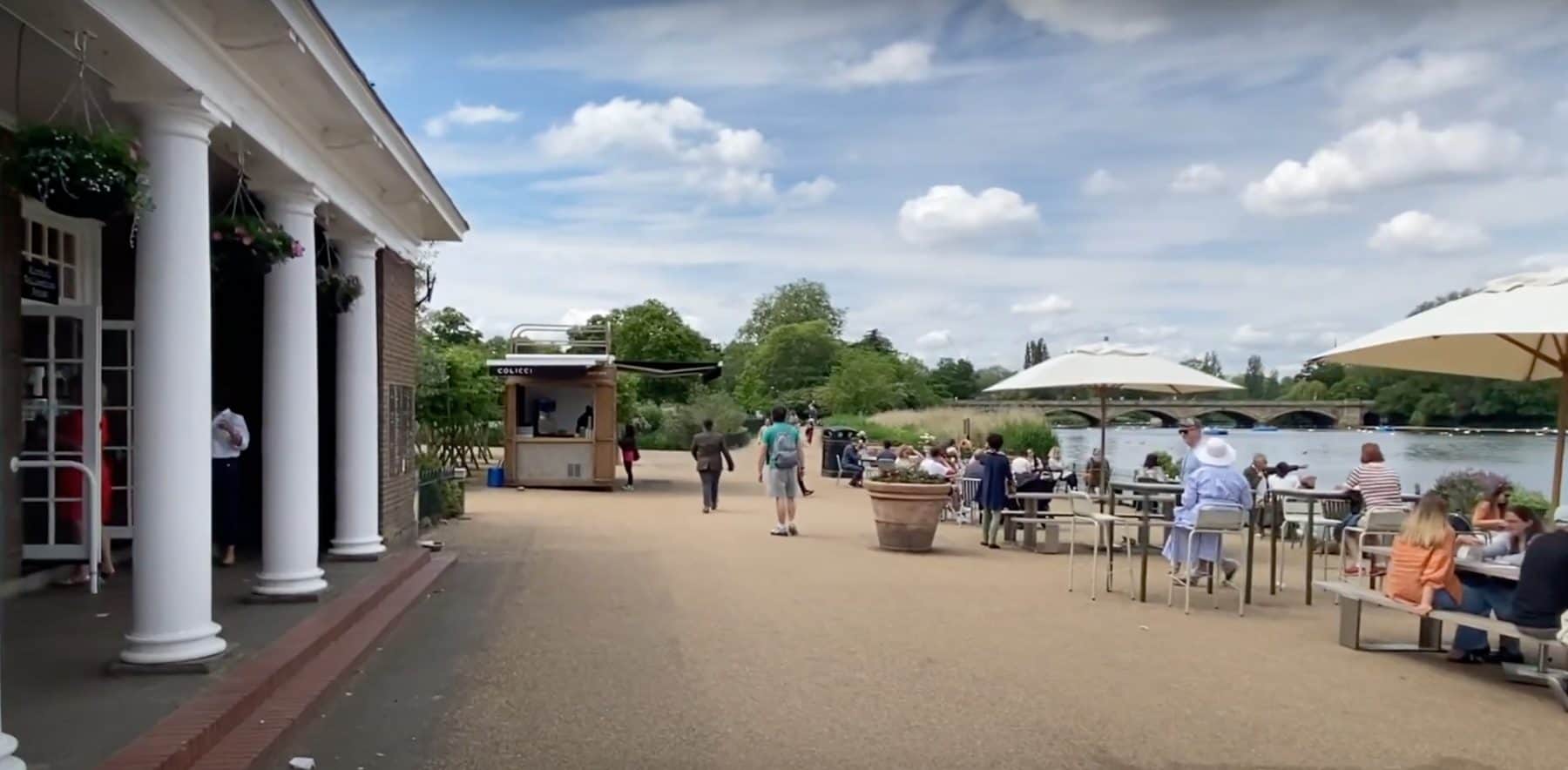
This is one of my favourite places to while away some time in the city! As 40-acre recreational lake, The Serpentine was created in 1730 at the behest of Queen Caroline.
Named after its snakelike shape, the Serpentine has two parts: the Serpentine, which is the part that is in Hyde Park, and The Long Water, which lies within the boundaries of Kensington Gardens.
In fact, the Serpentine Bridge, spanning this body of water, marks the official division between the Park and the Gardens.
The Serpentine was created to not only be beautiful, but also provide a location for leisure activities such as boating, and later, swimming.
In fact, the 2012 London Olympics was the venue for the men's and women’s triathlon and marathon swimming events!
It surprises some people when I tell them that it's actually possible to swim in the Serpentine. You can do so at the Serpentine Lido, a designated and marked area of the water that is open to the public from May to early September. I've done it a few times at recommend it as something unique to do. Although I will say I always find the water very cold and the stones along the shoreline are covered with slippery moss so some people might find that a turn-off.
If I don't feel like getting into the water, I'll just rent a rowboat or pedalo to take out onto the lake from April to October. Although take note that I find the pedalos to be a lot harder to power than you might think - I treat it as a leg day workout in its' own right!
Rotten Row
Rotten Row's sand-covered avenue is maintained as a bridleway and is part of Hyde Park's South Ride.
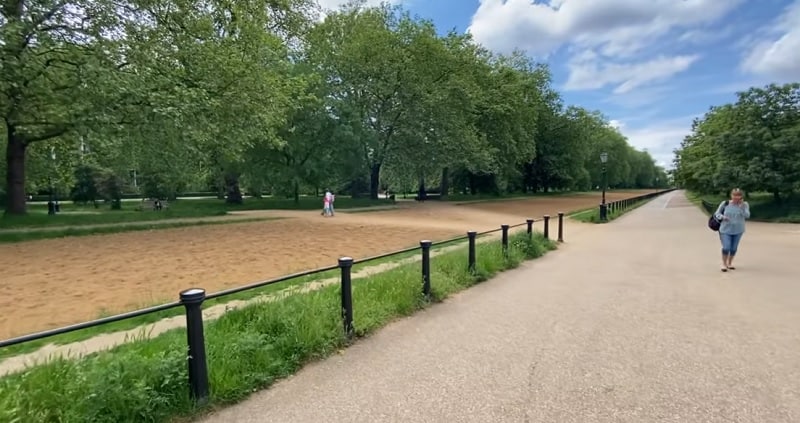
It is convenient for the horses of the Household Cavalry, who are stabled nearby at Hyde Park Barracks in Knightsbridge.
They use this track for practice, but also as a route to the Horse Guards Parade for the Changing of the Horse Guards ceremony - which I like to show my guests on our Royal Westminster Tour.
There are also a number of riding schools that operate in the park and I sometimes see people having riding lessons on their horses here. I've also noticed a number of people in our London Travel Tips Group asking about horse riding in London and I always direct them here.
For any history buffs reading this, I also want to point out that just on the other side of Rotten Row, once stood the Crystal Palace from the Great Exhibition of 185. It was later moved to South London, lending its' name to a neighbourhood where quite a few of my friends live these days.
Tour Apsley House and See the Apsley Gate
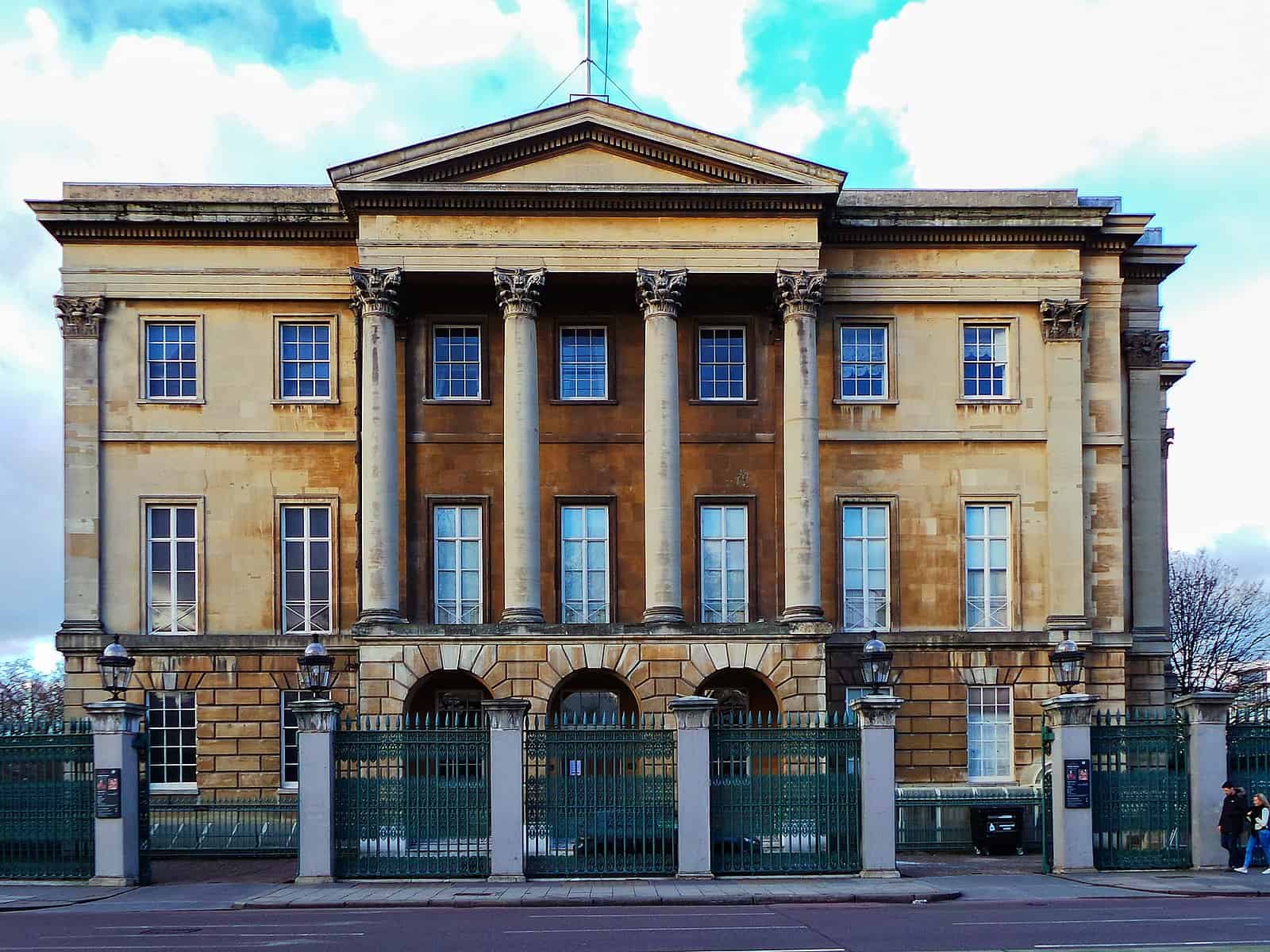
I've lived in London for over 20 years and I've had some pretty good addresses over the decades, but nothing beats this one: Number 1, London!
Originally built in 1771, and boasting that illustrious address, Apsley House has been home to the Dukes of Wellington for well over 200 years.
I find that not many people know about Apsley House, which surprises me given its' prime location at Hyde Park Corner, symbolically marking the boundaries between the City of Westminster and the boroughs of Belgravia and Kensington & Chelsea.
The House is open to the public as a Museum and an Art Gallery. It's run be English Heritage, of which I am a member, which means I get to visit for free! Take a look at the properties they manage as you may find it worthwhile to sign up for a membership before you get here.
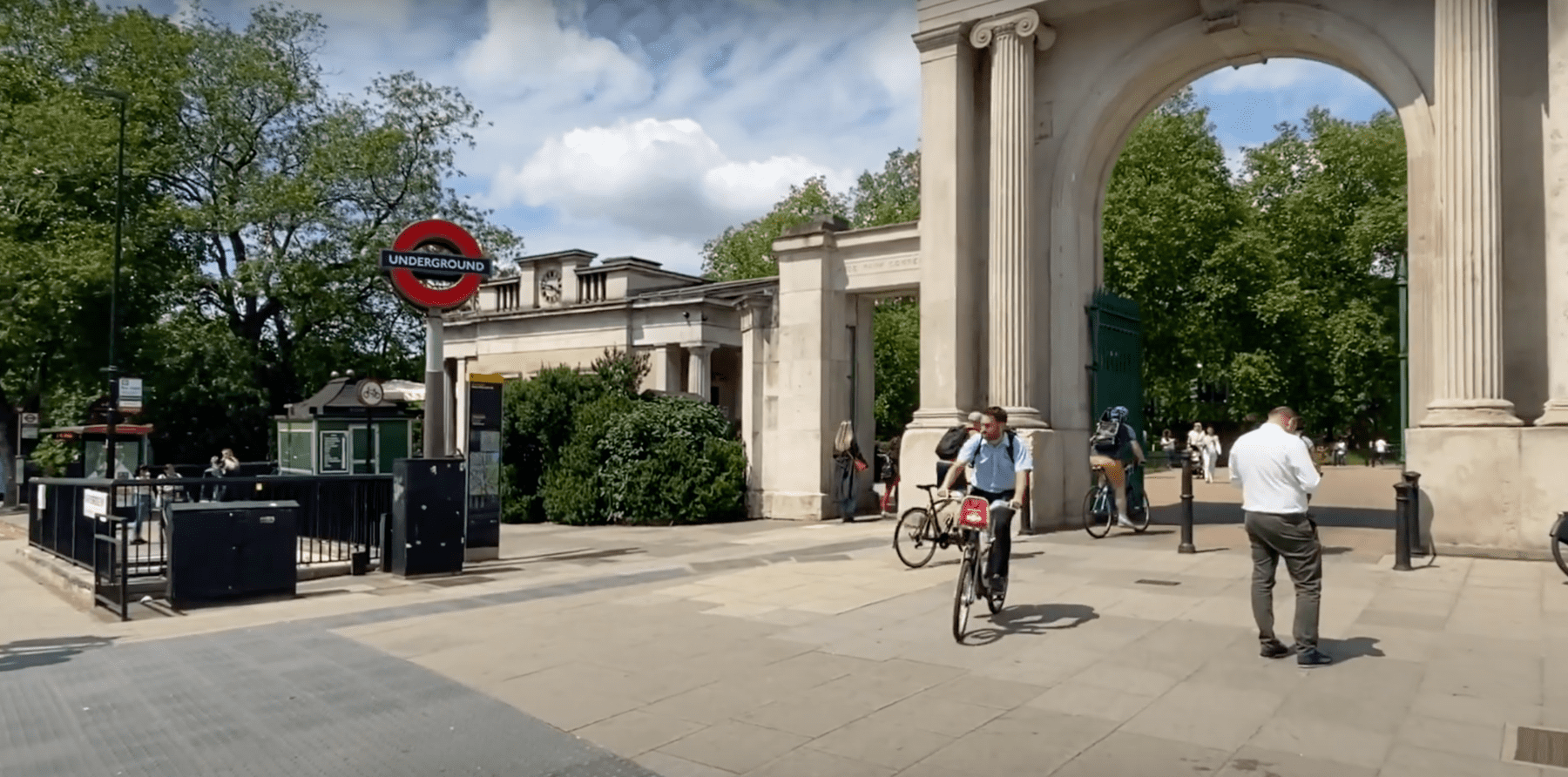
Adjacent to Apsley House sits Apsley Gate, a classical stone gateway with scroll-topped columns designed by Decimus Burton. It's not my favourite decorative structure in the city, if I'm being honest. It's a bit too plain for me.
Built between 1826 - 1829, the Portland stone gateway replaced a tollgate that had previously stood on the site. Built to provide an ‘official’ entrance to the park, it is sometimes also known as the ‘Hyde Park Screen.’
Decorative elements of the gate include columns and frieze by John Henning, which were copied from the Elgin Marbles. The classical-style lodge house just inside the gates was also designed by Burton. As was the next item on my list...
Stand Under The Wellington Arch
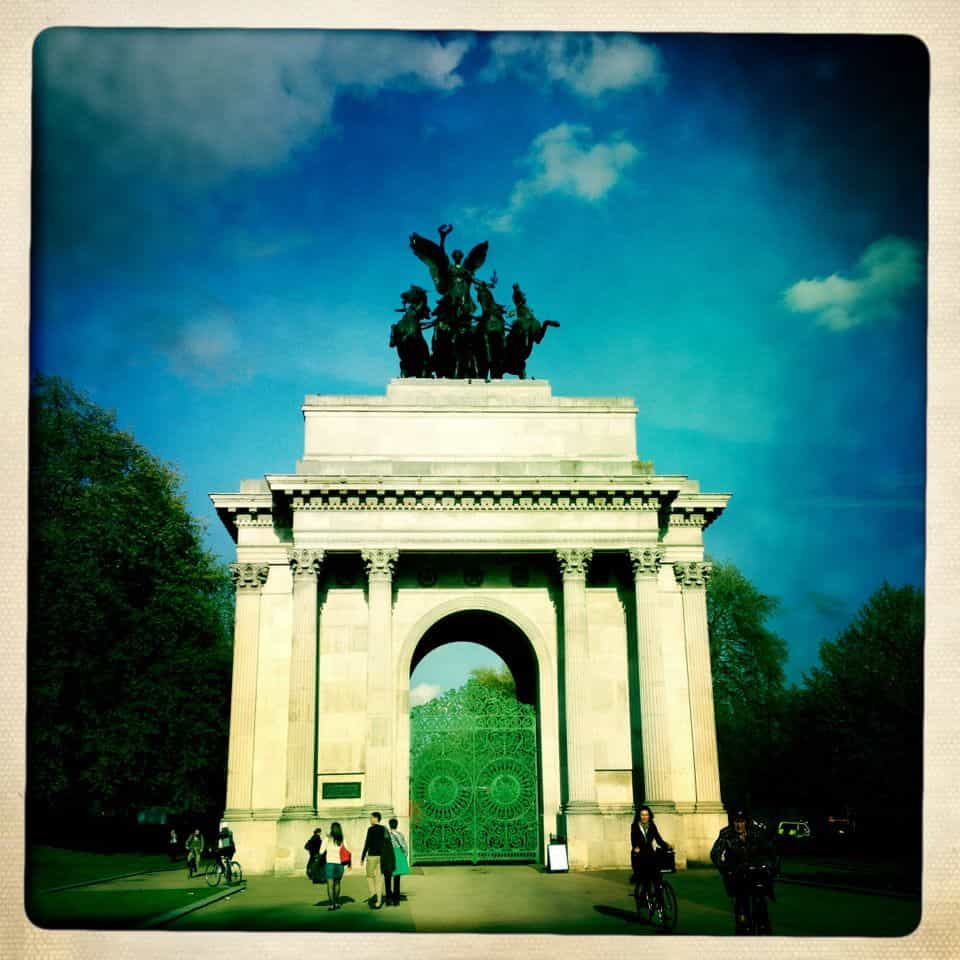
Ready for another stone arch in the middle of a busy London traffic junction? This is another one that I tend to see most often from the windows on the second floor of a double decker bus!
Constructed between 1826 - 1839, the Wellington Arch was created at the behest of King George IV, who wished to commemorate Britain’s victories in the Napoleonic Wars. The idea was that the Arch would provide a grand entrance into London from the West.
So, this location was often considered by Londoners and visitors to be the beginning of London (hence Apsley Houses’ address I mentioned to you above).
Originally, the Wellington Arch lined up with the Apsley Gate, but owing to increased traffic, the arch was moved to its current location in 1882.
It now lines up with Constitution Hill (where I like to start my Royal Westminster Tours) - the road that runs from Hyde Park Corner to Buckingham Palace.
Although, my absolute favourite fact about Wellington Arch is that directly underneath it is a ventilation shaft for Hyde Park Corner Underground Station. The hot air coming through this vent often appears as smoke on very cold days and, on average, the London Fire Brigade receives around 3 emergency calls per year from people reporting that there is a fire underneath the Arch!
I've written another blog post entirely about the Wellington Arch, if you'd like more information.
Admire the Queen Elizabeth Gate
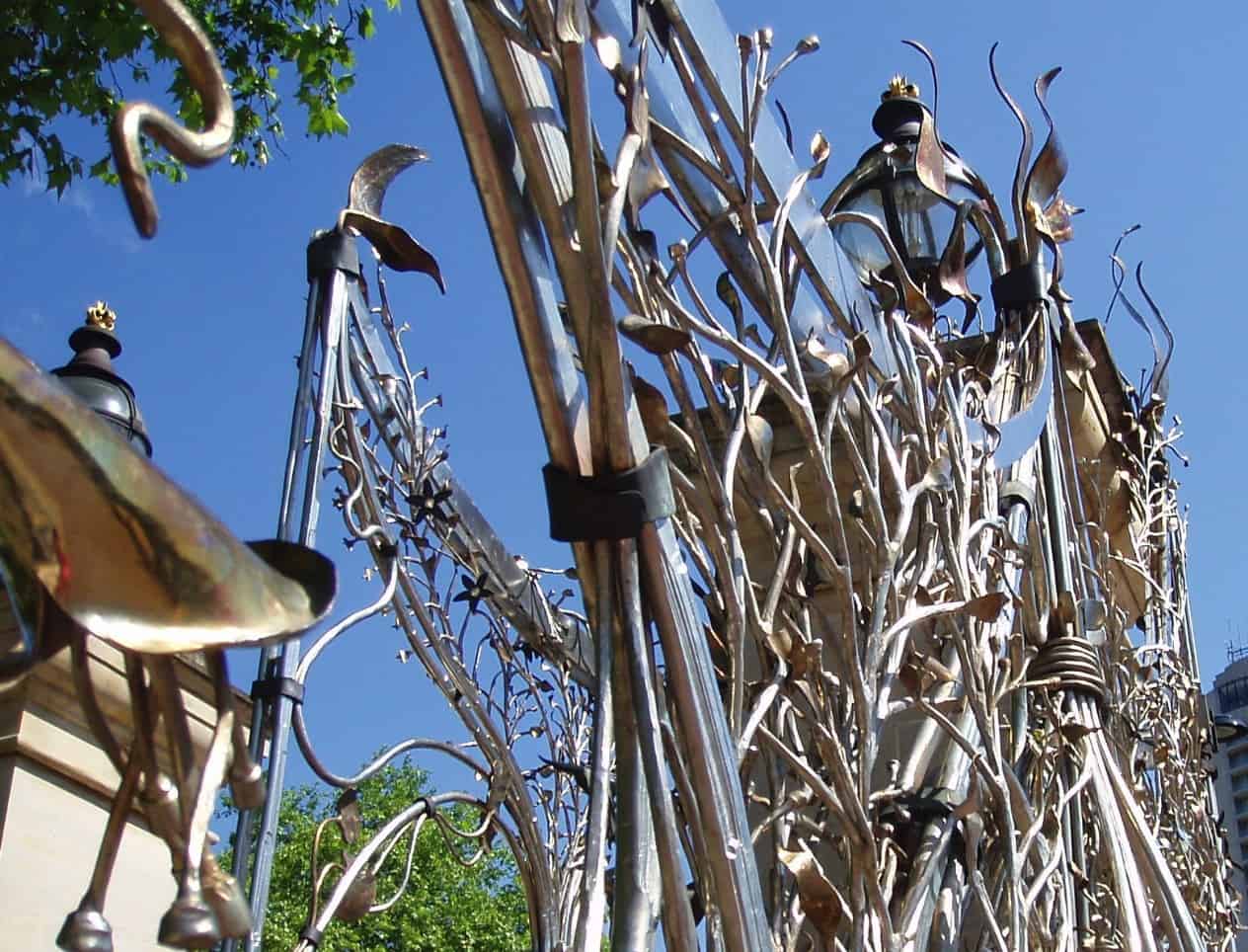
Installed to commemorate the 90th birthday of Queen Elizabeth, the Queen Mother, these highly decorative gates are made from stainless steel and were designed by Giuseppe Lund.
The loose and scrolling nature of the forged steel reflects the Queen Mother’s love of flowers and the central screen, which was designed by David Wynne, features the unicorn of Scotland and the Lion of England. I much prefer these to the Apsley Gate I mentioned above! Honestly, anything with a unicorn gets my vote, which is probably why I love Edinburgh Castle so much.
The gates were officially opened in 1993 (3 years after the Queen Mothers's birthday!) by Queen Elizabeth II. I also want to mention that sometimes people refer to this as The Queen Mother's Gate which is usually what I say just to differentiate between her and our late Queen Elizabeth II.
Explore the Serpentine Galleries
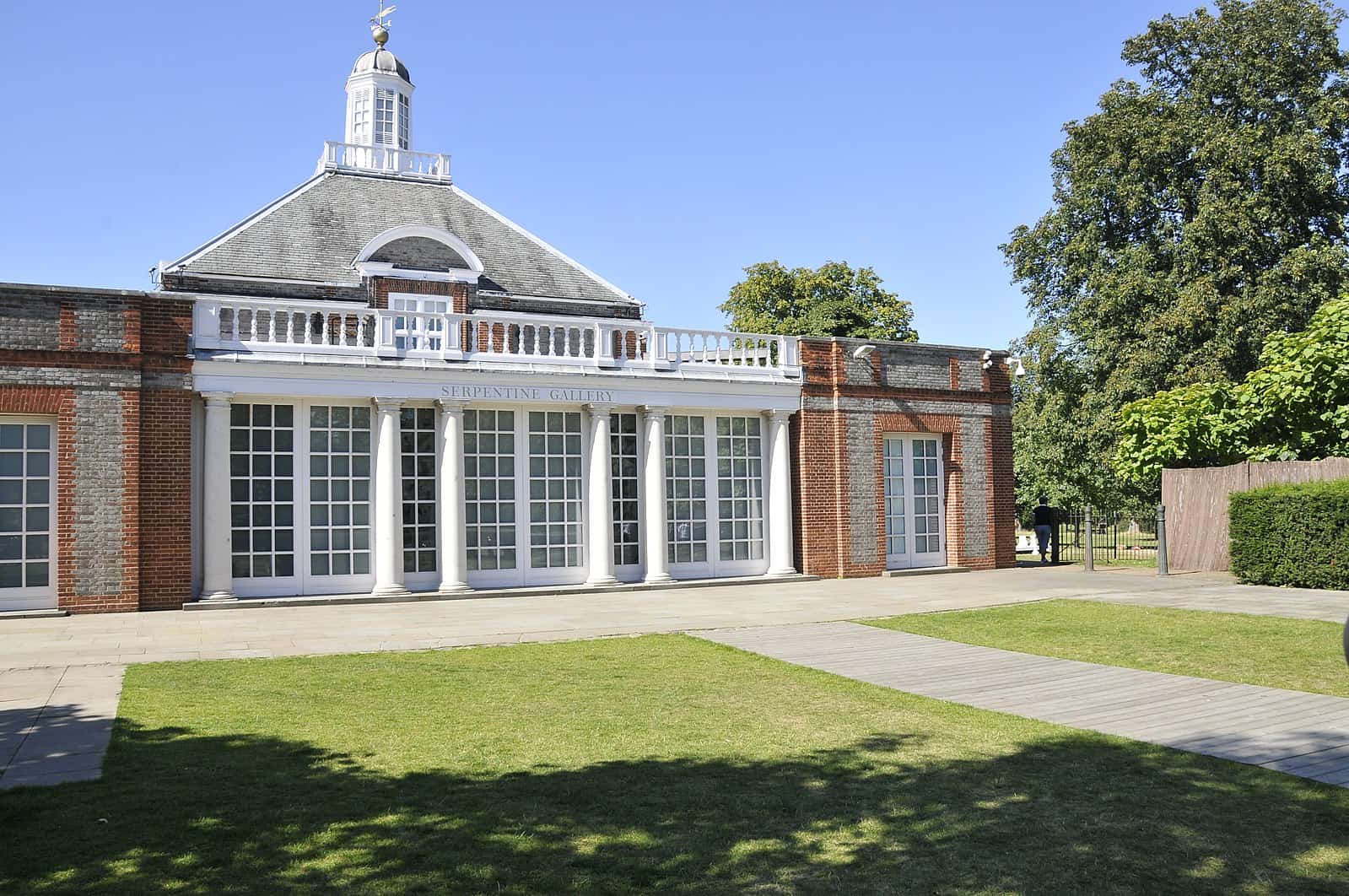
The Serpentine Galleries actually consist of two separate buildings, each one on either side of the Serpentine Bridge.
The Kensington Gardens side was the first, established in 1970 and located inside a former 1930s tea pavilion. The second was opened in 2013 and is located inside a former gunpowder store from 1805.
The Gallery features contemporary art by both well-known and up-and-coming artists and is completely FREE! I also like that sometimes the art isn't confined to the galleries, but is elsewhere in the park. For example, since July 2024 there has been a giant pumpkin near the Round Pond (by Yayoi Kusama).
I mostly visit in the spring or summer so I can combine my visit with a trip through the park. I always check their schedule before I go, though, to see what's happening so make sure you do, too!
Wander Through the Rose Garden
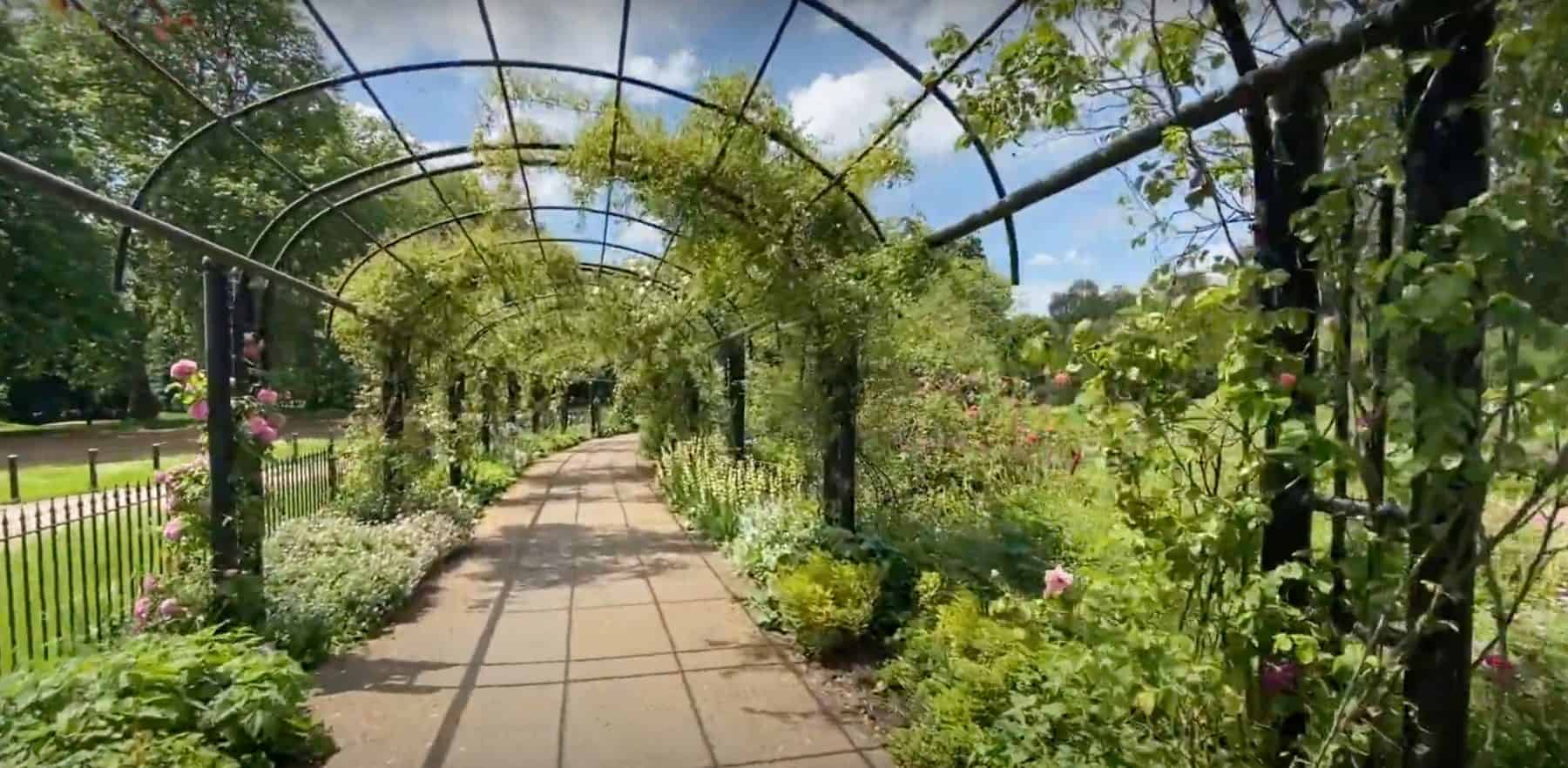
Situated in the southeast corner of Hyde Park sits the spectacular Rose Garden.
Opened in 1994 and designed by Colvin and Moggridge Landscape Architects, the garden not only features roses but also herbaceous plants and other seasonal flowers.
It’s a charming little slice of Hyde Park and a popular place for photography as well as quiet reflection. It's also my go-to spot if I'm going to have a picnic at the park.
Featured within the garden are a grand pergola and two fountains: the Boy and Dolphin (although it looks much more like a weird giant fish than a dolphin to me...) built in 1862 and the Diana the Huntress fountain built in 1899 (I love this one but I am a sucker for bronze art).
The best time to visit the Rose Garden is in early summer, but regardless of which time you visit, there is always something beautiful to see!
Walk Along the Diana Memorial Fountain
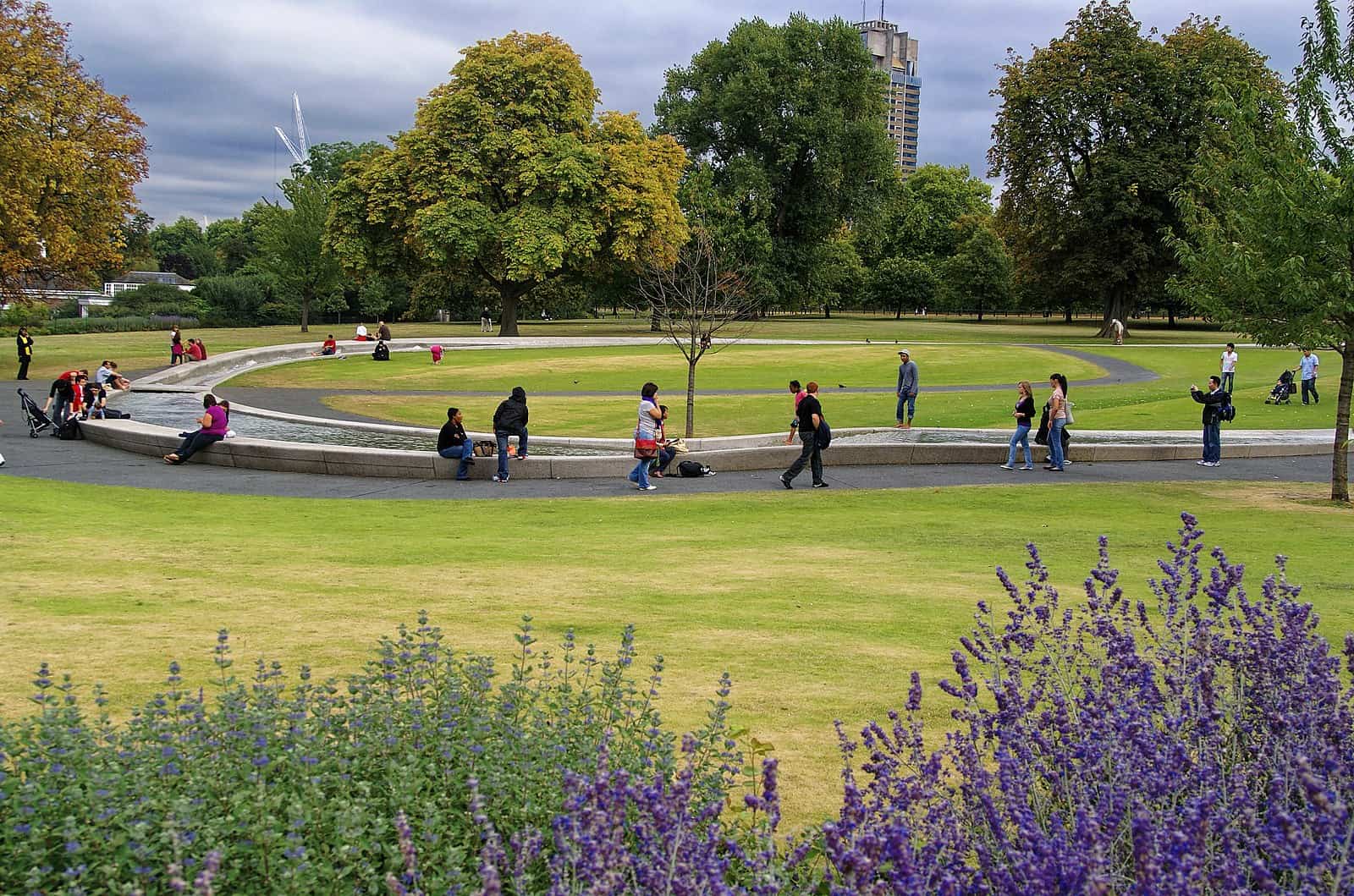
The Diana Memorial Fountain, designed by American landscape artist Kathryn Gustafson, has seen a fair share of controversy since it was first opened in 2004. I remember when it first opened, a lot of people complained about the name, stating that it's not really what we would consider a "fountain" to be. Which I somewhat agree with.
Secondly, when it first opened people were walking through it and slipping so many visitors actually broke their legs! I've been lucky enough to brave the waters and come out intact, thankfully.
And lastly, I hear a lot of people refer to it as ugly but I guess that is up to personal preference.
The fountain is easily accessible to the public to reflect Diana’s “inclusive” personality and the fact that she was seen as an “accessible” figure to the public.
Made up of 545 separate pieces of granite from Cornwall, the fountain is really more of an oval-shaped stream - hence the complaints I often hear about the name.
It’s circular, and the stream is around 3m - 6m (10ft - 20ft) wide at different points.
The fountain bed is not smooth, consisting of numerous cuts, elevated steps of different sizes, false rocks, and occasional smooth pieces, all meant to reflect the wildly tumultuous, but also occasionally happy, parts of Diana’s life.
Today it’s a popular place for children to splash in (and there is a playground nearby) as well as for visitors to walk along. Many people on my tours are surprised to hear that it gets hot in London but it does, and this is a nice way to cool off!
I've made an entire post about the Diana Memorial Fountain in case you'd like more information.
Visit the Holocaust Memorial and the 7 July Memorial
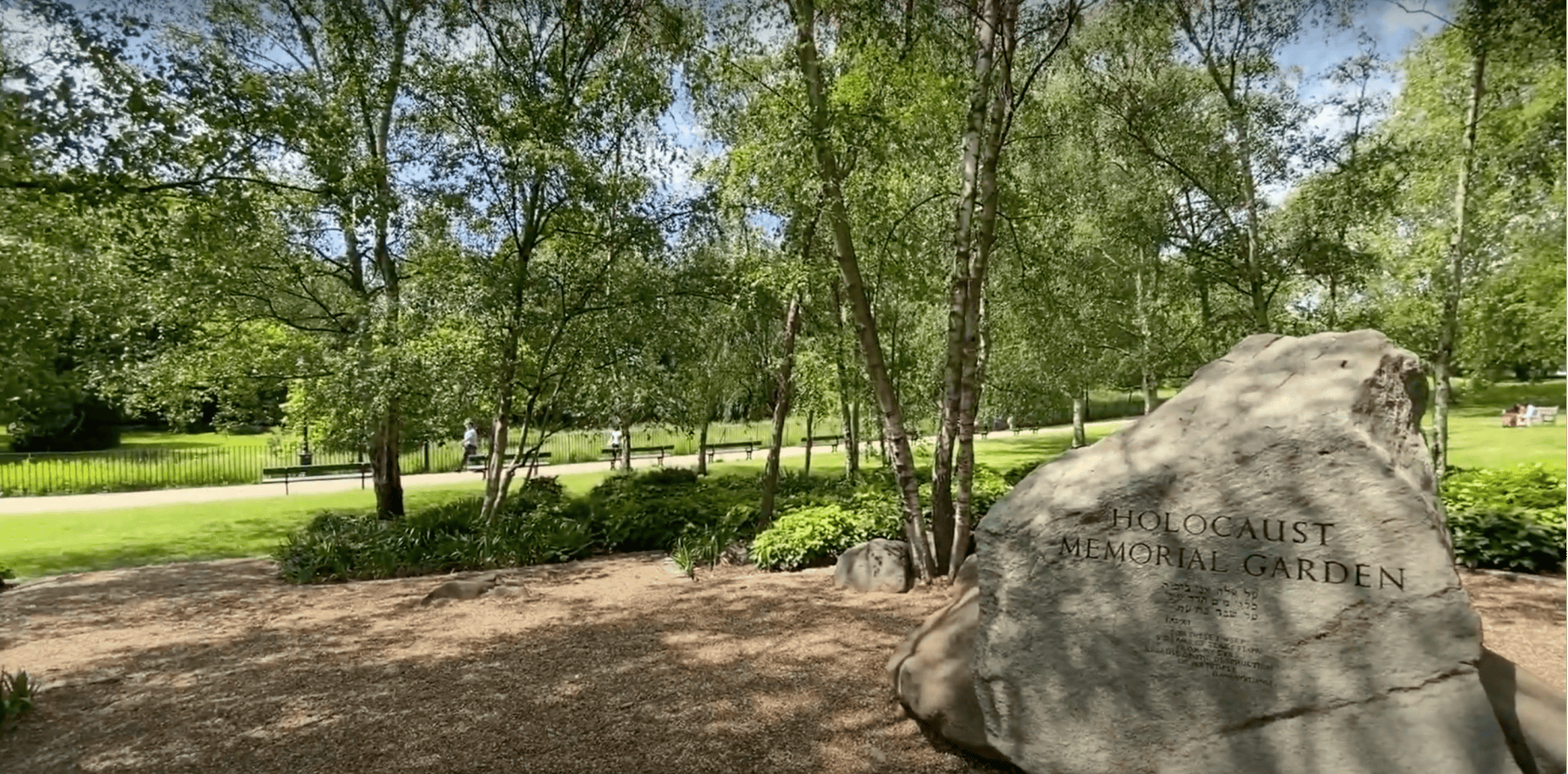
A garden of boulders, surrounded by white-stemmed birch trees, this Memorial was Britain’s first memorial to the victims of the Holocaust.
Situated just east of the Serpentine, the memorial was constructed in 1983 and was designed by Richard Seifert and Derek Lovejoy, and Partners. The memorial features an inscription from the Book of Lamentations on one of the boulders, inscribed in both English and Hebrew.
Today, Hyde Park’s Holocaust Memorial is the setting for yearly remembrance services every April.
Unveiled on the 4th anniversary of the 7 July 2005 London Bombings, the 7 July Memorial is located in the southeast corner of Hyde Park near the statue of Achilles.
The memorial comprises 52 stainless steel pillars, representing each of the 52 victims.
The pillars are grouped together in four interlinking clusters which represent the four locations of the incidents. At the eastern end of the memorial is a stainless steel plaque that lists the names of each victim.
One of the things I've noticed over the years is that these memorials are often visited by the public and I will frequently see flowers or other tributes left there, which I think is lovely.
See the Statue of Achilles
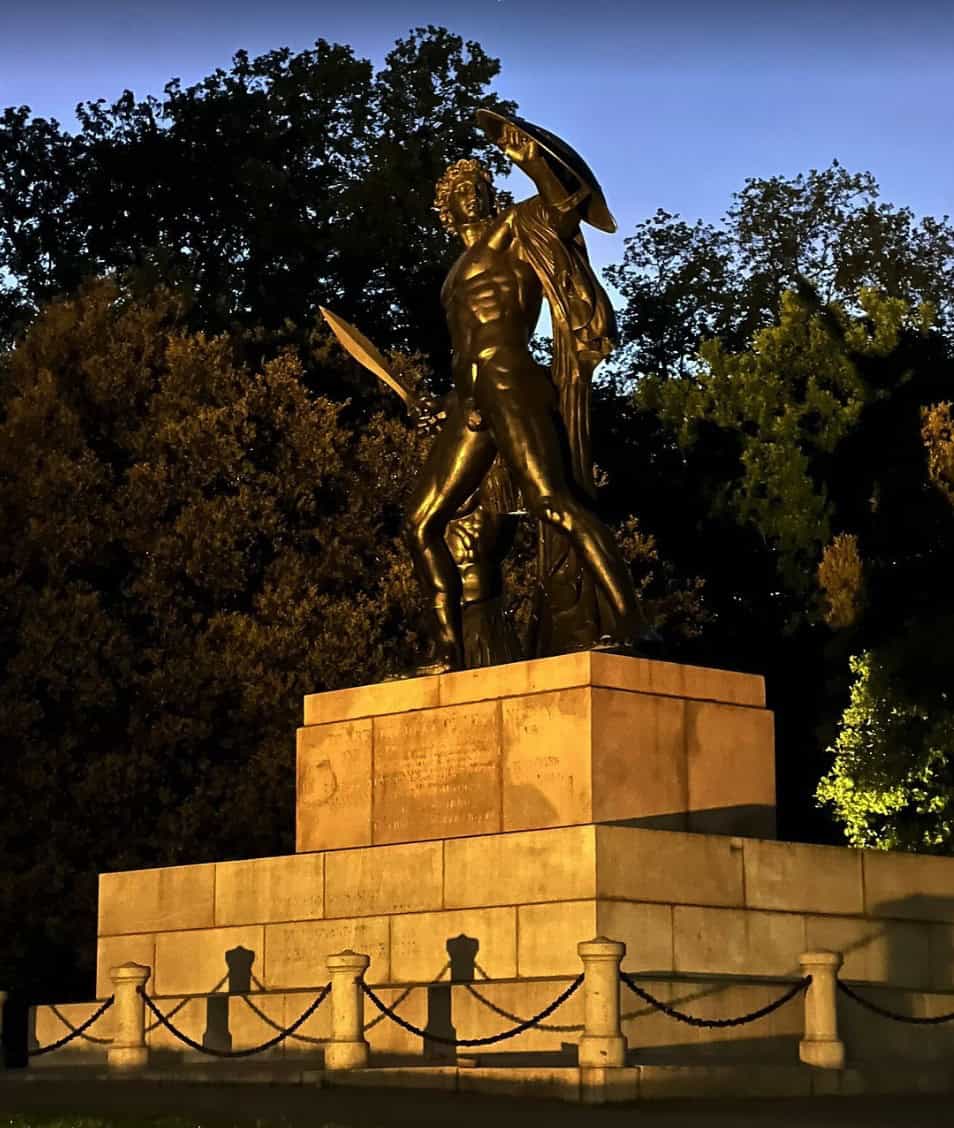
This statue surprises a lot of people on my tours and, to be fair, it is sort of unexpected!
An 18ft statue of Achilles, the Greek hero of the Trojan War, stands near the Queen Elizabeth Gate at Hyde Park Corner and represents Arthur Wellesley, 1st Duke of Wellington.
Ordered by King George III, and unveiled in 1822, the statue was made by Sir Richard Westmacott, created from 33 tonnes of bronze from cannon captured in Wellington’s military campaigns in France.
The head of the statue is said to be based on the Duke himself, although the body is that of a Roman figure on Monte Cavallo in Italy.
But my favourite thing about the statue is that when it was first unveiled, the figure was completely nude and there was so much public backlash, a small fig leaf had to be added!
Visit the Reformers Tree
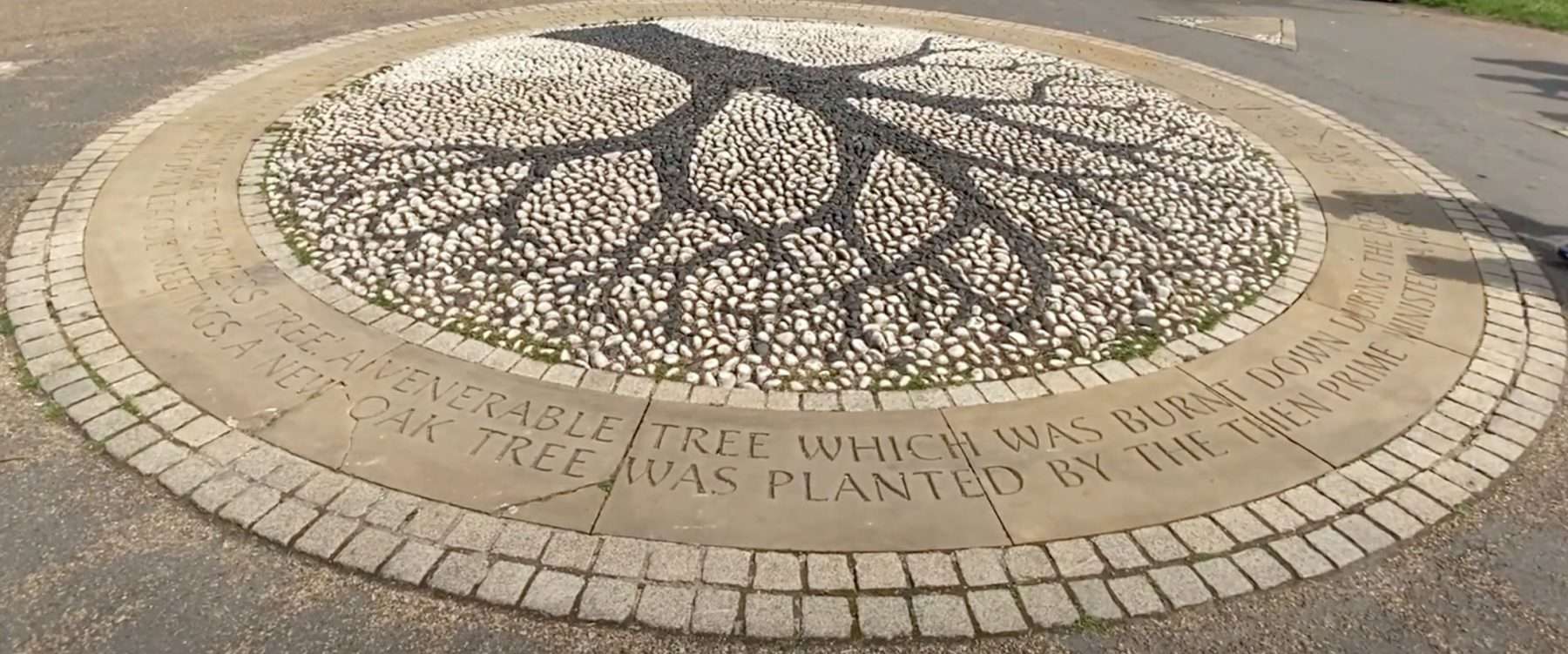
This is niche, but as a history lover, I had to put it on my list.
In 1866, an oak tree in Hyde Park became the focus of protests by the Reform League, a group campaigning to give all adult men the right to vote.
The tree became known as the Reformers’ Tree and, during one protest, was set on fire, leaving nothing behind but a charred stump.
However, that stump became a rallying point and notice board as well as a popular symbol of the right of people to assemble in the park.
Not long after, in 1872, Speakers’ Corner was officially designated by Parliament, and that then became the location for public speaking and protests. In 2000, on the site of the original Reformers’ Tree, a black and white mosaic was unveiled by Tony Benn, placed there to commemorate the history that took place on that site.
Parade Ground
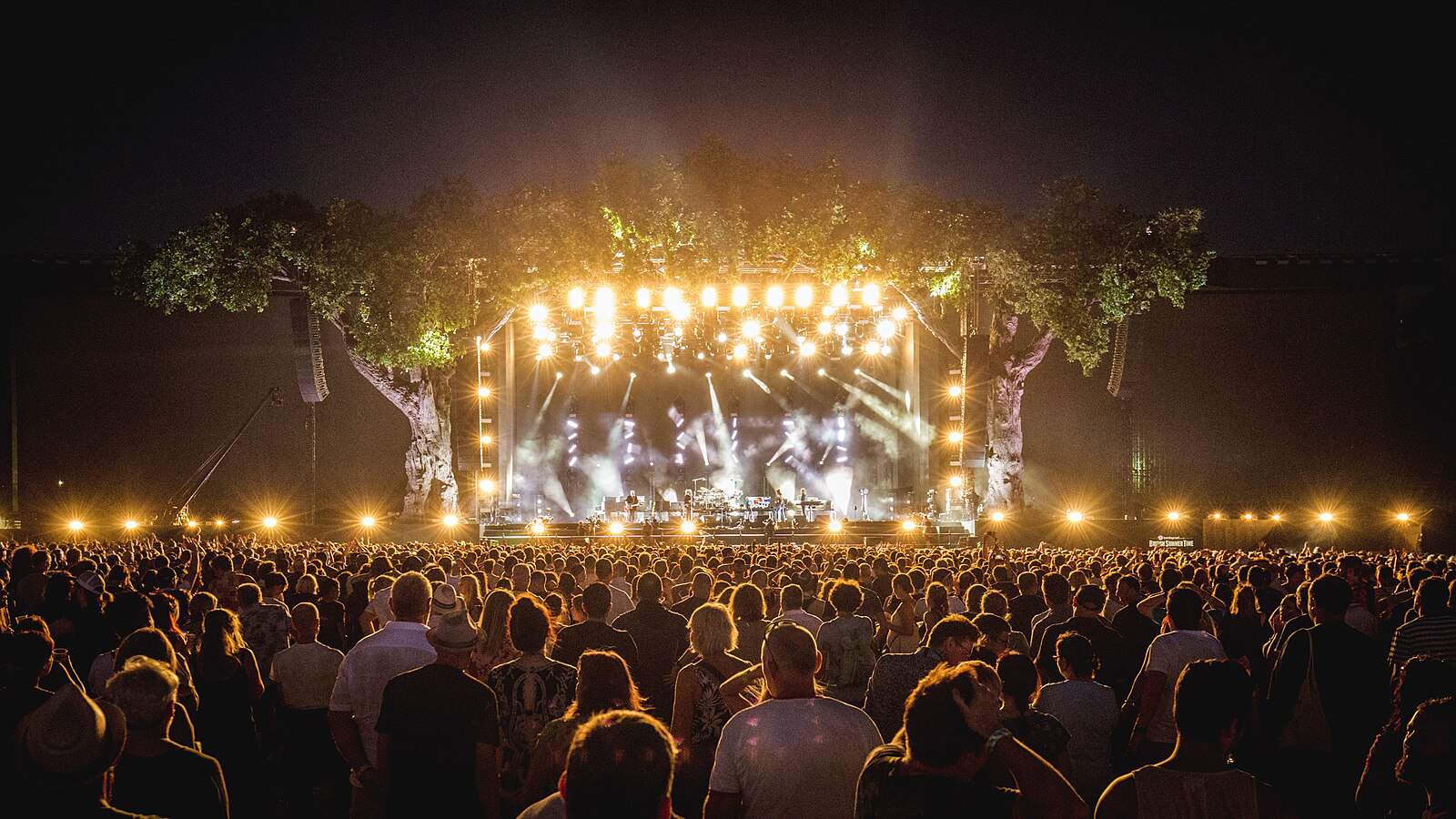
I think that this is the part of the park that changes the most! In spring and early summer I usually see families having picnics and kids playing ball, but from Summer to the end of the Christmas Season, it's entirely covered up and used for large events.
Since the creation of the British Summertime Concerts in 2013, many big-name bands have performed here, including Pink Floyd, Queen, The Rolling Stones, Elton John, Madonna, and Bruce Springsteen, just to name a few. It was recently announced that ELO would be performing in 2025 - along with Hugh Jackman, so you may very well see me there.
In the wintertime, this is where The Hyde Park Winter Wonderland takes place, which I mention below.
Take a Virtual Tour
If you can’t make it to Hyde Park on your own, let Tours By Foot London take you there virtually!
Winter Wonderland
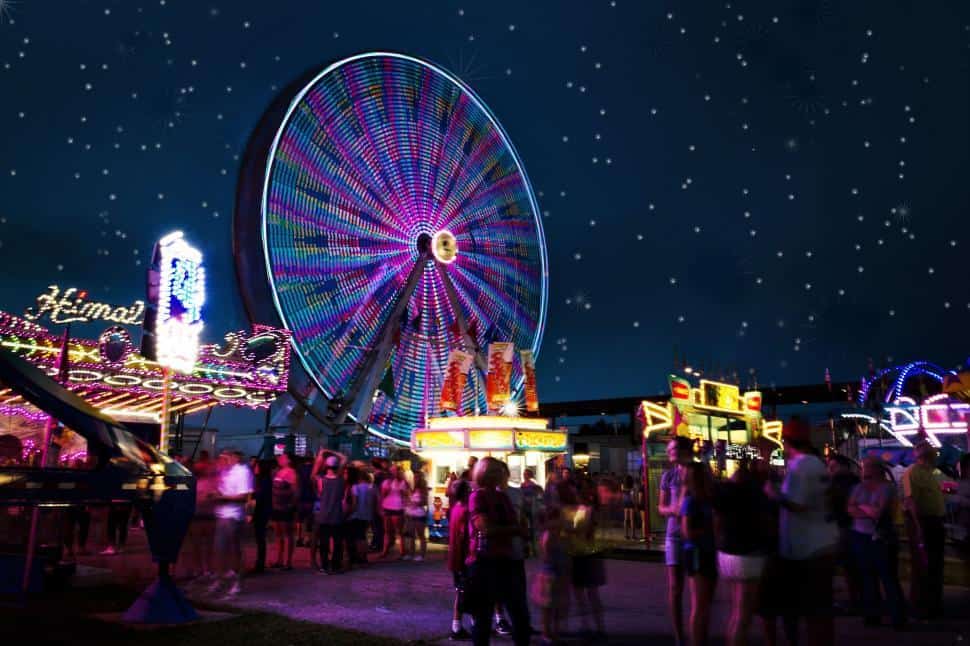
This is the biggest and most famous of all the Christmas events in London.
Winter Wonderland originally opened in 2006 and, speaking as somebody who was there for the inaugural year, it has come a long way since! Initially there was basically a carousel, a ferris wheel and an ice-skating rink...today it features the UK's largest outdoor ice-skating rink, a giant Ferris Wheel, a magical ice kingdom, countless food stalls and dozens of rides for kids and adults alike.
The Winter Wonderland is another topic that comes up a lot on our Facebook Travel Tips Page. A lot of people enjoy it while others think it is too crowded and overpriced. I can agree that in the evenings it gets a bit wild, so I like to go on weekday mornings before the crowds build up!
Things to Do Near Hyde Park
This section will list a few of the most notable landmarks, historic sites, and popular attractions to visit in the vicinity of Hyde Park.
If you have some extra time after visiting the park, consider walking over to one of the following locations.
Oxford Street
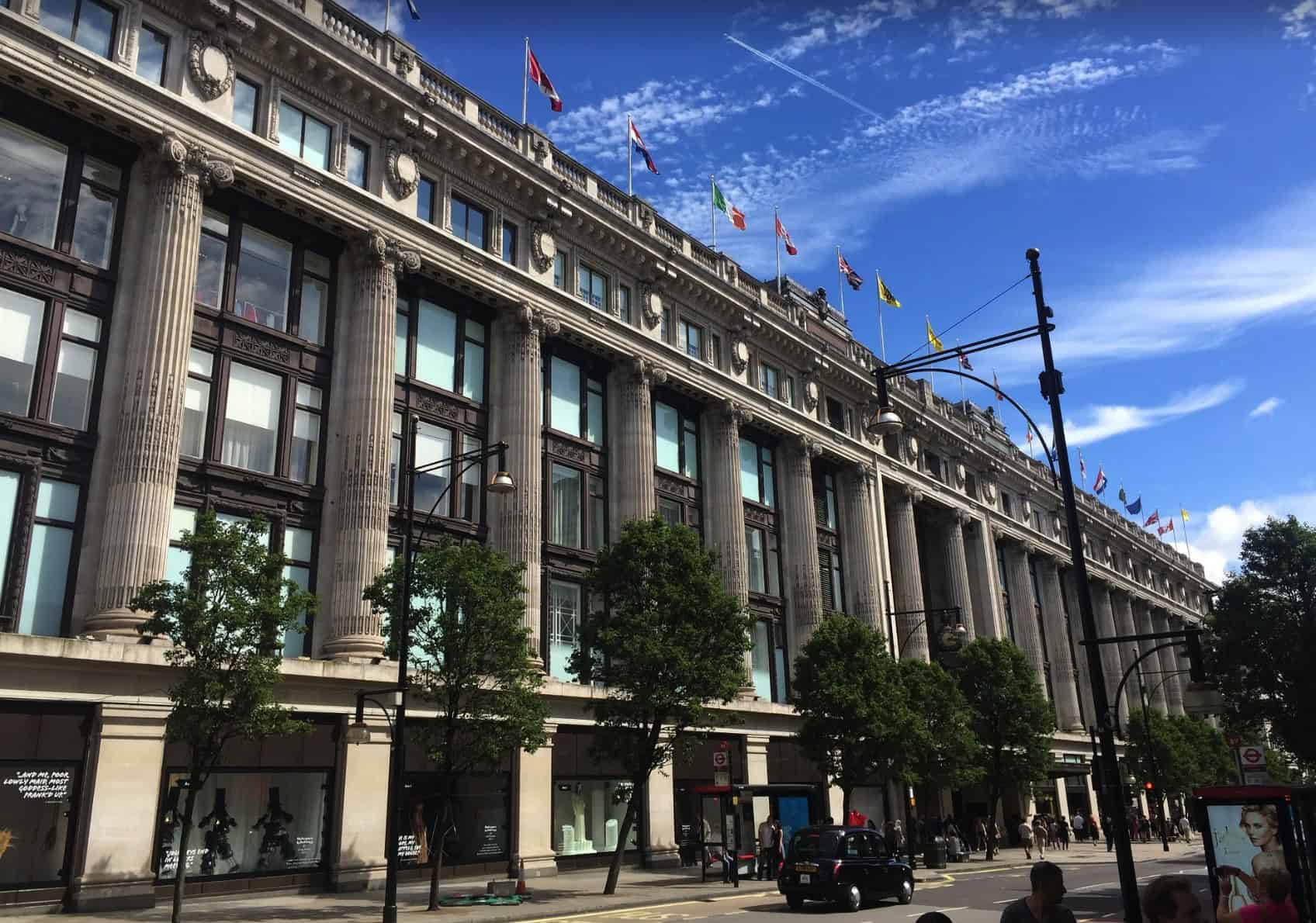
Just to the northeast of Hyde Park, and adjacent to Marble Arch, sits Oxford Street, Europe’s busiest shopping street. Oxford Street is one of those places that is visited by tourists and locals alike. You'll find me here at least once a week!
There's around 300 shops and an estimated half a million daily visitors. I prefer to go during weekday afternoons to avoid the crowds.
The street itself is the main thoroughfare that links western and eastern London and is served by multiple bus stops and 4 separate Underground stations. I always see proposals pop up to pedestrianise the street but so far, it's still open to traffic.
The street is especially popular to visit during the holiday season as it is home to some of the biggest and best displays of Christmas lights in London! Most Londoners avoid shopping here close to Christmas - myself included - as the crowds become overwhelming. But I like to wander down after the shops have closed to enjoy all the Christmas Lights.
I'm a big Christmas fan, so if you want to check out London's decorations check out the blog post I wrote on the best places to see the lights.
Kensington Gardens and Kensington Palace
Once the private gardens of Kensington Palace, Kensington Gardens are now part of the Royal Parks of London and are open to the public.
Sitting adjacent to Hyde Park, Kensington Gardens is one of the most beautiful parks in the city.
Containing a palace, an art gallery, numerous statues, picturesque fountains, and two bodies of water, Kensington Gardens is a great place to explore.
If you've been reading my blog posts or you have been on my tour, you will know that I'm a big fan of royal palaces and castles so, of course, I had to put one on this list!
Located within Kensington Gardens is Kensington Palace, largely designed by Sir Christopher Wren and built during the reign of King William III and his wife Queen Mary II in the 1680s.
Throughout the years, many royals have both arrived and departed this earth right here at Kensington Palace.
King William III, Queen Mary II, and her sister Queen Anne all died in the Palace, and our current Kings’ great-grandmother was born here in 1867.
It was also at Kensington Palace where Queen Victoria came into the world in 1819 and where she lived until her accession to the throne in 1837.
But I have noticed that more recently, my guests associate the palace with the late Queen's sister, Princess Margaret and, of course, Princess Diana. It was also here that the current Prince and Princess of Wales lived and where the Duke and Duchess of Sussex made their engagement announcement so I find that most people associate it with modern-day royals rather than its' historical residents.
If you want to explore Kensington Gardens, I've got a whole blog post dedicated to it that also includes a self-guided tour.
For more information on Kensington Palace, including tips on getting cheap tickets, check out my blog post about the Palace.
Albert Memorial and Royal Albert Hall
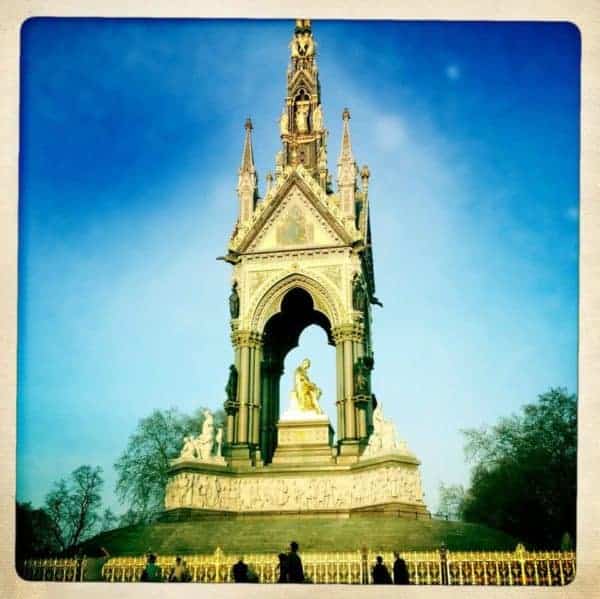
Prince Albert, Queen Victoria’s beloved husband of 21 years died unexpectedly in 1861 at the age of 42.
Victoria, who never recovered from the loss, commissioned a memorial dedicated to her husband, and the Albert Memorial was eventually opened in July 1872.
The memorial consists of an ornate canopy, sheltering a statue of the Prince, who is looking south, to the Royal Albert Hall and the Victoria and Albert Museum.
The entire structure is incredibly ornate with friezes, sculptures, and references to allegorical tales. My favourite fact about the Albert Memorial, though, is that the canopy is gilded with actual gold-leaf! I just love that.
Named after the ill-fated Prince Albert, the Albert Hall is a beautiful concert hall just a stone’s throw from Kensington Gardens.
Opened by Queen Victoria in 1871, the building quickly became one of the most high-profile musical venues in the country - and later, the world - hosting more than 350 events each year.
It’s possible to tour the Hall with a paid-for-guided tour and I really would recommend them - I've actually gone twice! My favourite part is that I got to see the separate entry for the Monarch which is a great 'behind the scenes' look at how they travel. Although we also got to sit in the Hall and listen to rehearsals for a classical performance later that night which was an incredible experience.
If you don't want to take the tour, it’s completely free to walk the entirety of the outside and admire the beautiful construction, carvings, and decorations that surround it.
Museums (V&A, Science, Natural History)
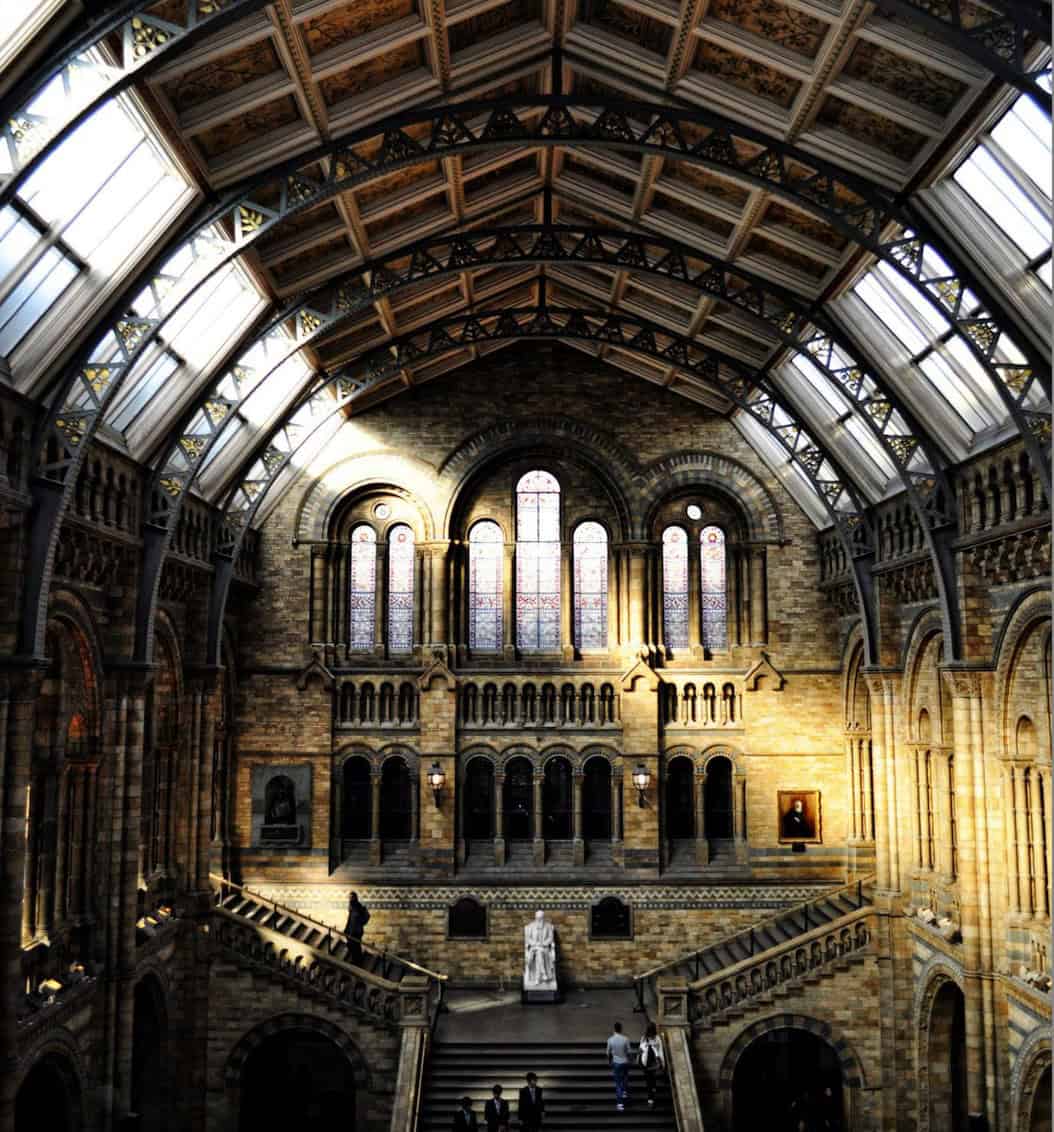
One of my favourite things about the many museums we have in London is that most of them are completely free!
Just to the southwest of Hyde Park sits three of London’s biggest and best museums: The Victoria & Albert, the Natural History Museum, and the Science Museum.
The V&A Museum was established in 1852 and is the world’s largest museum of applied arts, decorative arts, and design as well as owning the world’s largest collection of post-classical sculpture. The permanent collection contains over 2.27 million objects displayed throughout 145 galleries. My favourite sections are the historical musical instrument displays and the bust of King Charles II.
The Natural History Museum was established in 1881 and now holds over 80 million items within its five main collections, which include botany, entomology, mineralogy, palaeontology, and zoology. My favourite thing there are the incredible gemstones! But the robotic baby T-Rex is a close second.
The Science Museum was established in 1857 and focuses on subjects such as space, the modern world, medicine, and mathematics (just to name a few). With hands-on exhibits and a continually changing array of activities and events, this is the place I usually take my niece and nephews to and is my top-recommendation for family-friendly museums.
I've written an entire blog post about the best of London's Museums so check it out while you're planning your trip.
Harrods
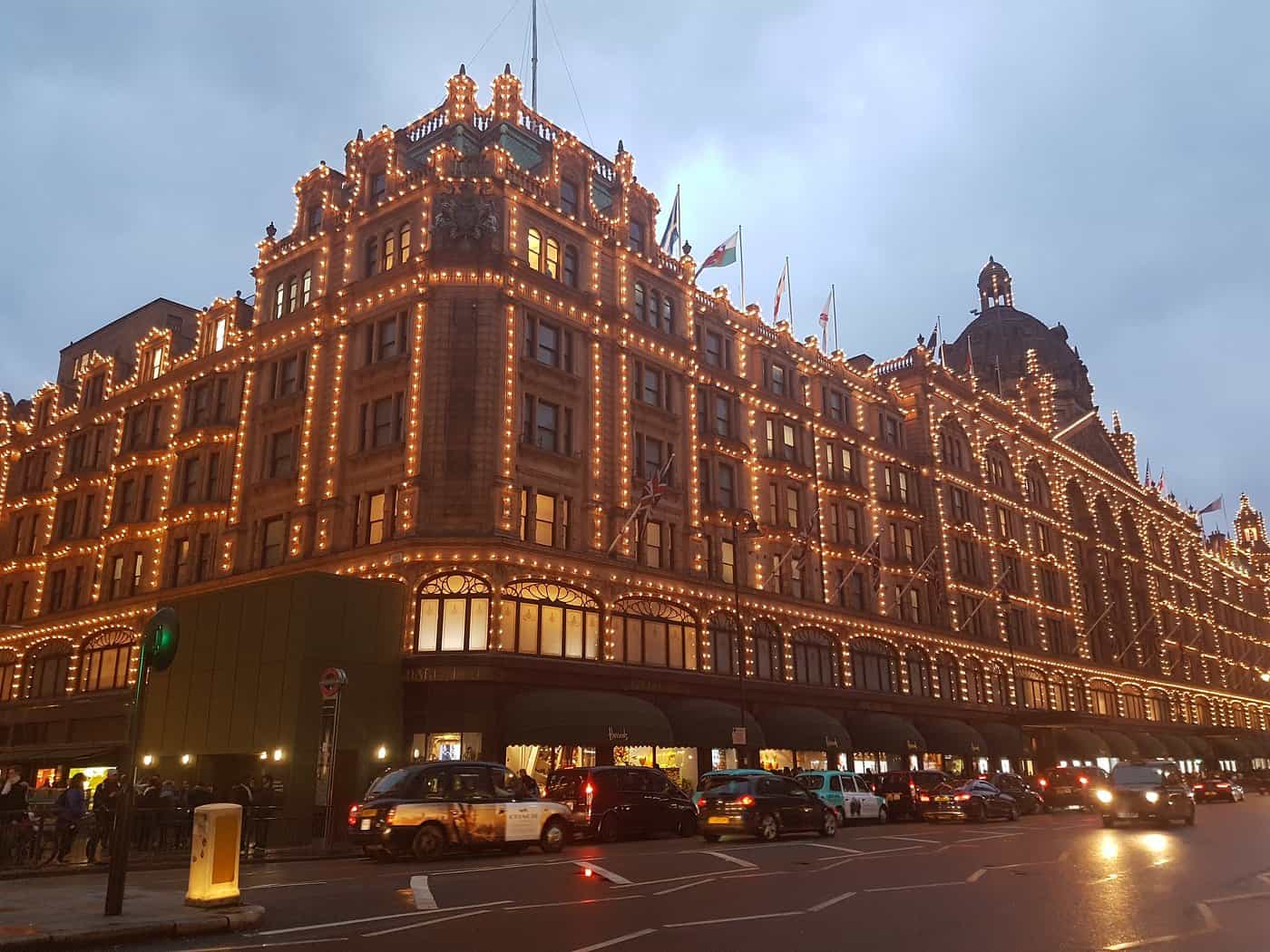
Perhaps the most famous department store in the world, Harrods is located in the upmarket London neighbourhood of Knightsbridge.
Founded in 1834, the store has been an international shopping destination for decades and continually boasts an annual revenue upwards of £650 million.
Spanning a 5-acre site and holding over one million square feet of selling space, Harrods is easily the biggest department store in Europe - with over 330 different departments inside.
I've had countless people ask me if Londoners really shop at Harrods and the answer is: sometimes! Honestly, I only ever visit during Christmas to pick up a new tree bauble or to visit the foothills (their salted caramel truffles are unbeatable). If
For more information on Harrods, including the dress code (!), check out our my blog post about this iconic store.
Animals at War Memorial
Located just outside the Park, near Brook Gate, stands the Animals in War Memorial, commemorating animals that died in wars and conflicts. I think this is one of the most unique memorials in the city and definitely one that I find gets overlooked.
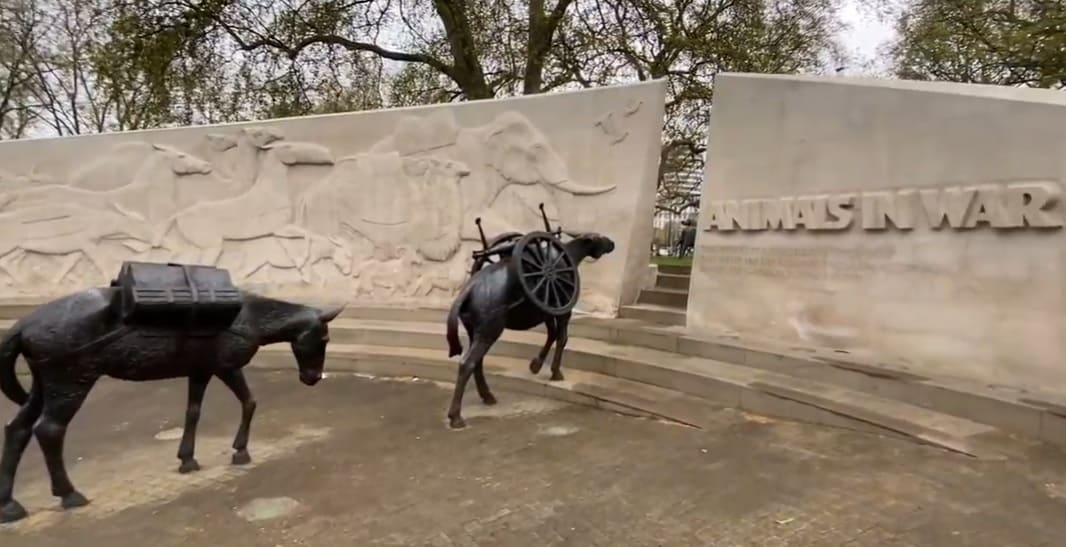
Unveiled in 2004, on the 90th anniversary of the start of World War 1, the monument features animals from mules (who were used during World War II, their vocal cords cut to ensure their silence), to glow worms (used by soldiers as sources of light in World War I).
Designed by David Backhouse, the memorial consists of a Portland stone wall, numerous carvings, and bronze statues. This is another spot that I notice small tributes and flowers left at, which again, I think is quite touching.
Buckingham Palace
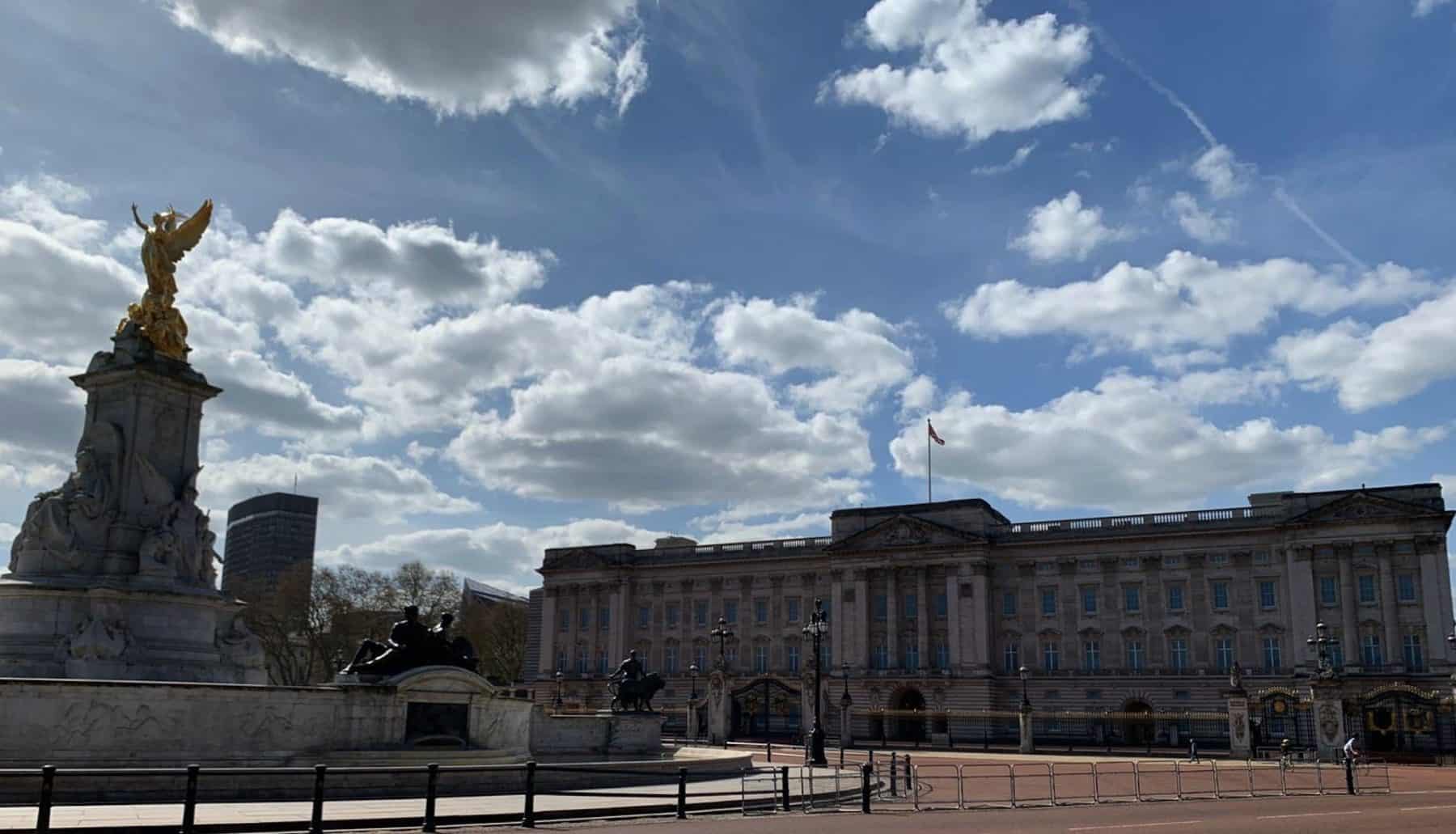
When it comes to London's Royal Palaces, my favourite will always be Hampton Court Palace, but I really believe you can't visit London without a visit to the most famous palace in the country: Buckingham Palace.
It’s only a 10 or so-minute walk from Hyde Park Corner to the gates of Buckingham Palace, and it's centrally located which makes it an easy visit for most tourists.
Originally built in 1703 as Buckingham House, the palace has been a home for the royal family since the reign of King George III, who purchased the house in 1761.
Throughout the years the palace has been expanded and updated into the building that stands today, becoming the official London residence of the British monarch on the accession of Queen Victoria in 1837.
The Palace is open for guided tours throughout the summer and on selected weekends in the winter season. There's also the King's Gallery, which has some fantastic exhibitions (the one on Georgian Fashion was the best I'd ever seen in my life) and the Royal Mews which is where the Royal carriages and Gold State Coach are on display which I think is definitely worth a visit.
For more information on the history of Buckingham Palace, and information on visiting, including guided tours, check out my blog post.
Or consider joining me on our Royal Westminster and All in One Tours, both of which include a stop outside Buckingham Palace and the chance to take some photos!
Not coming to London any time soon? Take the walk virtually.
Westminster Abbey
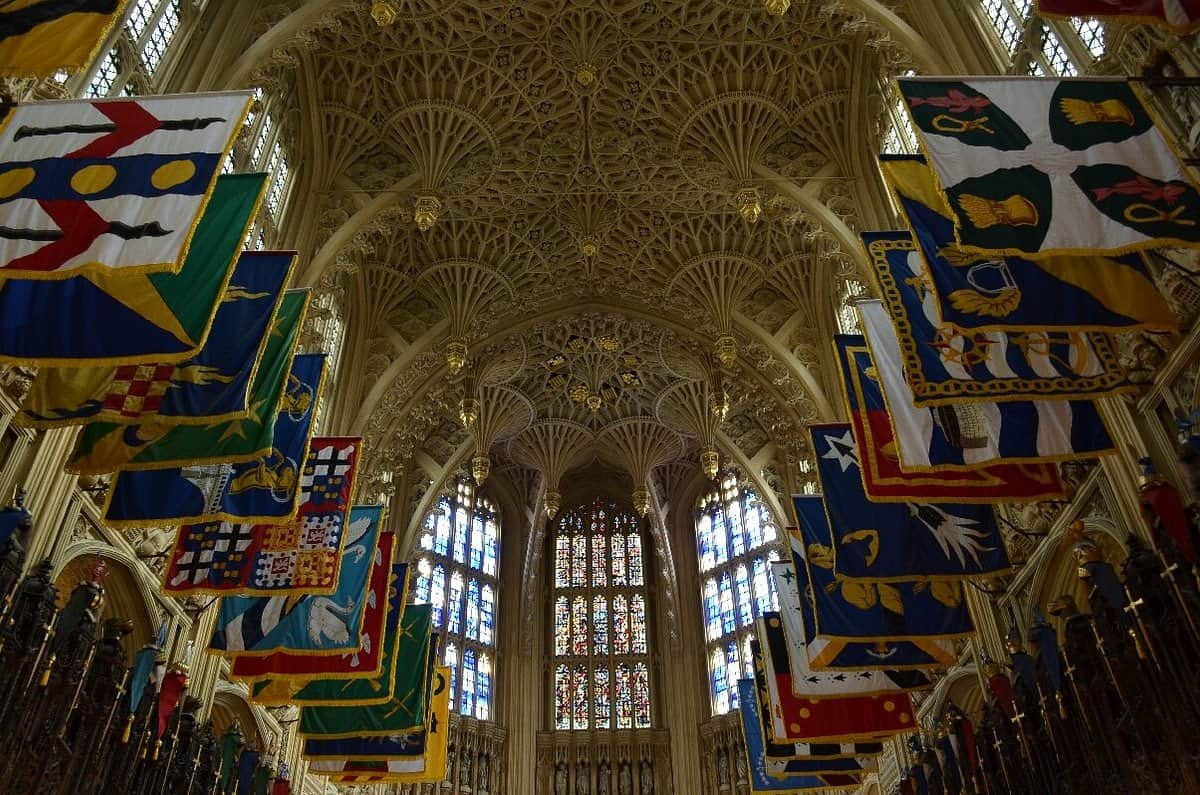
The Abbey isn't super close to Hyde Park, but it is walkable so I wanted to include it on my list! I get asked a lot of the Abbey is "worth it" and my answer is always yes. If you'd like to visit, I have a whole blog post with all the information you need.
I also want to point out that just next to the Abbey is the Palace of Westminster (Houses of Parliament) and Big Ben!
Amenities
Toilets: There are three toilets in Hyde Park. The Royal Parks website has a map you can view.
Accessible Toilets: The above-mentioned toilets are all accessible.
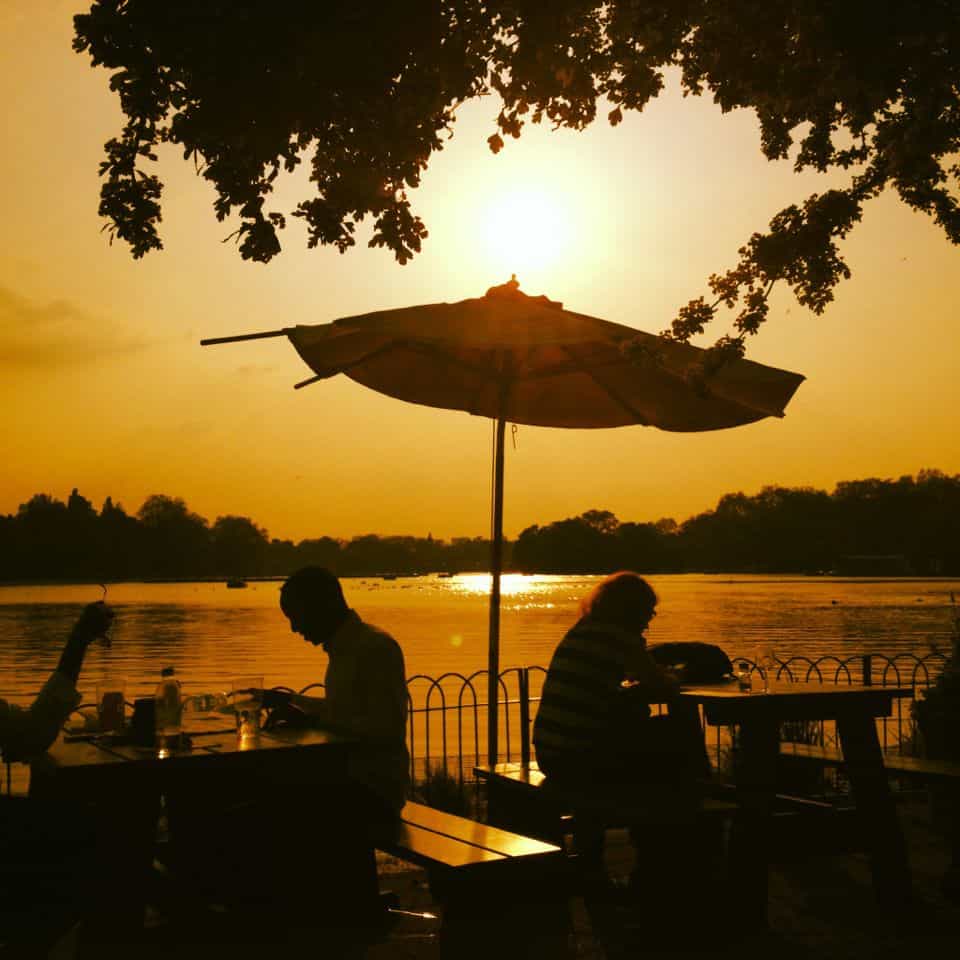
Food & Drink: There are two places to sit and eat/drink in Hyde Park: The Serpentine Lido Cafe and the Serpentine Bar and Kitchen - which does lovely coffees and cakes.
In addition, there are six refreshment point kiosks in the park and two drinking fountains which are all listed on the map above. Whenever I visit in the summer, I ALWAYS a 99 flake (soft serve ice cream with a chocolate flake) so try one out if you can!
Parking: Although there is parking at Hyde Park, I would strongly advise you to take public transport as parking is limited. The postcode for the car park is W2 2UH.
Parking is pay and display and there are no parking facilities between midnight and 9:00 am - I know somebody who had their car locked in one night so make sure you're out before they close!
Opening Times and Hours
Hyde Park is open from 5:00 am until midnight, all year round.
How to Get to Hyde Park
Nearest Underground Stations:
Hyde Park has its' own tube station, Hyde Park Corner, which is on the Piccadilly Line on the London Underground.
You can also reach it with the Central Line at Marble Arch Station. This is sometimes the way I will come as Hyde Park Corner station can get pretty busy, especially during Christmas.
Just north of the park is Paddington Station, which you can access with the Bakerloo Line, District Line, Hammersmith, and City Line, as well as the Circle Line.
Bus Routes: 2, 6, 7, 9, 13, 14, 19, 22, 23, 30, 36, 38, 52, 74, 94, 98, 113, 137, 148, 189, 274, 390, 414, 452